How to Choose Poster Tubes for Shipping in 2026
Choosing poster tubes for shipping in 2026 means protecting the artwork without adding unnecessary bulk or cost. A tube that is too narrow can crease a rolled print; one that is too loose lets it slide and scuff. Small details matter. Consider the print’s dimensions, paper weight, roll diameter, and destination before choosing a tube.
The U.S. Census Bureau reported that U.S. retail e-commerce sales reached an estimated $1.1926 trillion in 2024, representing 16.1% of total retail sales. This is useful context for businesses planning online orders, but it is not a measure of poster shipments specifically. That distinction matters. Packaging choices should reflect the actual product and shipping route, not a broad market statistic alone.
For a practical comparison, assess tube length, wall thickness, end-cap fit, and crush resistance. A sturdy tube should protect the contents when parcels are stacked, while secure caps help prevent prints from slipping out. Test a sample with a real poster before ordering in bulk. Check how easily it rolls, whether the edges remain protected, and how the tube handles routine parcel handling. There is no perfect tube for every job. I would reconsider any recommendation that ignores the artwork’s value, the shipping distance, or the carrier’s size limits. A lighter option may reduce packaging weight, but only if it still protects the print. In this guide, we’ll compare common materials, sizes, and closure styles to help you choose with evidence—not guesswork.
Assess Poster Size, Weight, and Shipping Distance
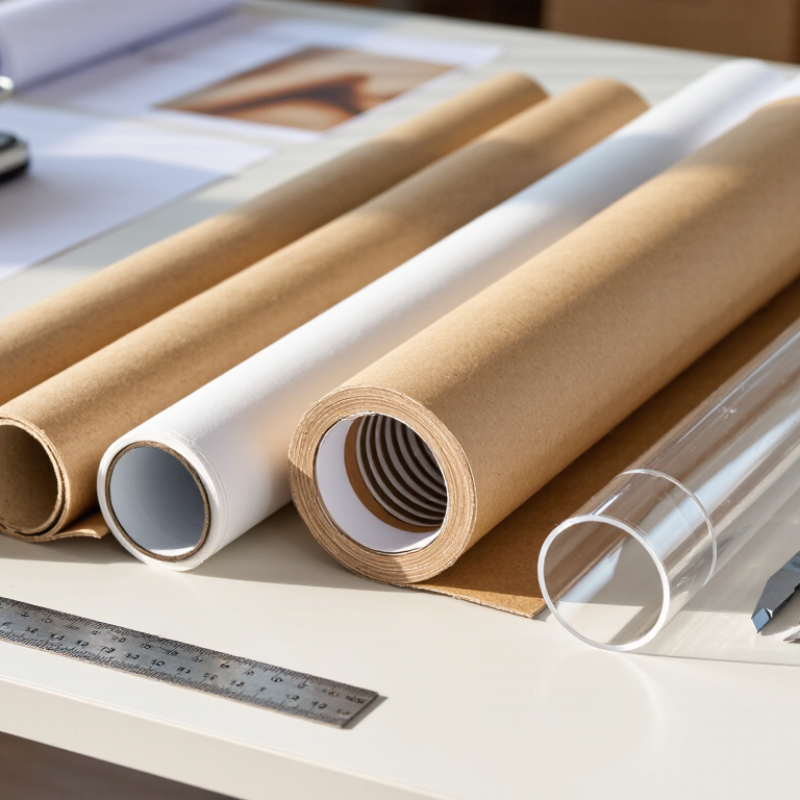
Measure the poster before choosing a tube. Its flat width determines the tube’s required interior length, with a few centimeters of clearance for the end caps. A tube that is too short can buckle the print; an overly long one may let it slide and crease. Check the rolled diameter too. Thick paper, multiple prints, or a protective sleeve can make a tight roll surprisingly bulky.
Weight matters as well. A lightweight print may travel safely in a sturdy spiral-wound tube, while heavier paper benefits from thicker walls and secure caps. Don’t rely on the tube’s outside dimensions alone: compare the usable interior space with the rolled poster. Small details matter. A loose cap can come off during sorting, so check that both ends fit firmly and add suitable closure if needed.
Shipping distance changes the risk. For a short local trip, a well-fitted tube may be enough; longer routes involve more handling, transfers, and pressure from other parcels. Consider a stronger wall and add cushioning around the print without crushing it. Do a shake test. If the roll shifts noticeably, adjust the fit before shipping. It is not a perfect test, but it can reveal a problem that measurements miss.
How to Choose Poster Tubes for Shipping in 2026 - Assess Poster Size, Weight, and Shipping Distance
| Poster Size |
Flat Sheet Dimensions |
Estimated Paper Weight at 200 gsm |
Suggested Tube Internal Length |
Suggested Internal Diameter |
Shipping Distance and Protection |
| A4 |
8.3 × 11.7 in (210 × 297 mm) |
About 12 g |
13–14 in (33–36 cm) |
2 in (5 cm) |
For short or domestic routes, use secure end caps and a snug fit to prevent movement. |
| A3 |
11.7 × 16.5 in (297 × 420 mm) |
About 25 g |
18–19 in (46–48 cm) |
2–3 in (5–7.5 cm) |
Suitable for most domestic shipments with a sturdy tube and sealed ends. |
| A2 |
16.5 × 23.4 in (420 × 594 mm) |
About 50 g |
25–26 in (64–66 cm) |
3 in (7.5 cm) |
For longer domestic routes, choose a crush-resistant tube and secure both end caps. |
| A1 |
23.4 × 33.1 in (594 × 841 mm) |
About 100 g |
35–36 in (89–91 cm) |
3 in (7.5 cm); consider 4 in (10 cm) for delicate prints |
For long-distance or international shipping, add protective end plugs and moisture-resistant outer packaging. |
| A0 |
33.1 × 46.8 in (841 × 1189 mm) |
About 200 g |
48–49 in (122–124 cm) |
3–4 in (7.5–10 cm) |
Long tubes can be more vulnerable to bending and may incur carrier size surcharges. Use a heavy-wall tube and check the carrier’s current limits. |
| 11 × 17 in |
11 × 17 in (279 × 432 mm) |
About 24 g |
18–19 in (46–48 cm) |
2–3 in (5–7.5 cm) |
For short and standard domestic routes, a rigid tube with tight-fitting caps is generally sufficient. |
| 18 × 24 in |
18 × 24 in (457 × 610 mm) |
About 56 g |
25–26 in (64–66 cm) |
3 in (7.5 cm) |
For extended routes, use a sturdy tube and immobilize the roll so it cannot slide during handling. |
| 24 × 36 in |
24 × 36 in (610 × 914 mm) |
About 111 g |
37–38 in (94–97 cm) |
3–4 in (7.5–10 cm) |
For international or multi-day transit, use a crush-resistant tube, reinforced end closures, and an outer moisture barrier. |
How to use these estimates: Suggested tube lengths include approximately 1–2 in (2.5–5 cm) of clearance beyond the poster’s longest dimension. Paper weights are estimates calculated from sheet area at 200 gsm; a 300 gsm sheet weighs about 1.5 times as much. Actual rolled diameter depends on paper thickness, coating, and roll tightness, so allow extra space for heavier or delicate stock. Tube dimensions shown are internal; check the carrier’s current size and dimensional-weight rules before shipping.
Choose a Tube Length and Diameter That Prevents Tight Rolling
Measure the poster before choosing a tube. The edge that runs parallel to the tube’s length determines the minimum usable length. Add about 1 to 2 inches of internal clearance so the paper does not press against the end caps. Check the tube’s inside measurement, not its outside length. A snug fit can crease corners during packing. Small detail, big difference.
Diameter controls how tightly the sheet must curl. A narrow tube may save space, but it can stress thick paper, fresh prints, or large sheets. For a 24-by-36-inch poster, identify the roll direction first, then choose a tube wide enough to let the sheet form a relaxed curve. A 3-inch inside diameter may suit some flexible prints; heavier stock may need more room. There is no universal size.
Test the fit with a clean, dry sheet before packing valuable artwork. The roll should slide into the tube without being squeezed, and the ends should not spring outward sharply. If you have to push hard, stop. The estimate can still be wrong; paper stiffness and humidity change how a sheet behaves. Leave a little extra room rather than forcing a tight roll.
Compare Tube Materials, Wall Thickness, and Durability
How to Choose Poster Tubes for Shipping in 2026
A tube’s material affects its weight, cost, and resistance to dents. Spiral-wound paperboard is a practical choice for many posters. Its layered construction offers useful stiffness without adding much shipping weight. Plastic tubes can resist moisture better, but may cost more and create extra disposal concerns. Feel the difference. Compare the tube’s actual construction, not just its material label.
Wall thickness matters, but thicker is not automatically safer. A sturdy wall can help resist crushing when parcels are stacked or handled roughly. Yet tube diameter, length, and winding quality also affect performance. A long, narrow tube may flex more than a shorter one with similar walls. Check whether the ends stay firmly capped, since loose plugs can let a rolled print slide out. Not always obvious.
For valuable or frequently shipped prints, test a sample tube before ordering a large quantity. Place a rolled poster inside, secure both ends, and check for movement. Then press gently along the tube and inspect it for dents or soft spots. Add a little padding if the print shifts, but avoid packing it so tightly that removal becomes difficult. No tube is indestructible. A tube that survives one careful test may still fail under a heavy load, so match its strength to the route and handling conditions.
Select End Caps and Protective Features for Secure Transit
A poster tube is only as secure as its end caps. Choose caps sized to the tube’s actual outside diameter, not just its label. A loose plastic plug can work free when parcels are handled roughly; a tight one may split a thin cardboard rim. Fit matters. Press each cap in by hand and check that it sits evenly without crushing the edge. For longer journeys, locking or reinforced caps can offer extra resistance to bumps and repeated handling.
Test the closure before packing valuable prints. Place a clean sheet inside, close both ends, then gently shake and tilt the tube. Listen for movement. If a cap shifts, add a compatible retaining band or choose a better-fitting closure. Avoid relying on tape alone: dust and moisture can weaken its grip. A small strip over the cap seam can still help show whether the tube has opened in transit. It is not a perfect seal.
Protective details inside the tube matter too. Use a sturdy wall thickness suited to the print’s length and weight, and leave enough room for a loose protective wrap. The poster should not press hard against either cap. Add a clear address label to the tube’s outer surface, away from the seam. One practical trade-off: extra padding can prevent movement, but too much makes removal awkward and may crease the print. Check the fit with the actual rolled item before shipping.
Check Carrier Rules, Labeling Needs, and Total Shipping Cost
Before buying poster tubes, check each carrier’s current size limits, longest-side rules, and handling surcharges. A tube that fits the weight limit may still exceed a length threshold. Measure the capped tube, not just the poster inside it. The 2024 Parcel Shipping Index estimated 161 billion parcels worldwide in 2023, up 3% year over year. That scale makes small packaging choices worth checking, though the figure does not predict your own shipping rate. Rules vary by service and destination. Confirm them before ordering a large batch.
Labels need a smooth, visible surface. Put the shipping label lengthwise on the tube, away from seams, tape, and curved end caps. If a barcode wraps around the tube, scanners may struggle. It happens. Ask the carrier whether its label format suits cylindrical packages, and test one shipment before printing a full roll of labels. Keep the delivery address and return address clear; do not rely on a handwritten note under clear tape.
Compare total cost, not tube price alone. Include postage, dimensional or nonstandard-package fees, end caps, tape, and labor. A longer tube can cost more even when the poster is light. But cutting it too close may crease the artwork. I would test two practical lengths and compare invoiced charges, not estimates. That extra check can feel fussy. It may still prevent a costly surprise.
Poster Tube Sizes: How Package Volume Can Affect Shipping Cost
These example tube volumes are calculated from length and diameter using the cylinder formula. Larger tubes take up more space and may increase dimensional-weight charges, depending on the carrier and service. Before shipping, check current size limits, packaging rules, labeling requirements, and the total cost for your chosen service. Use the smallest tube that safely fits the poster.