
Choosing a reliable China top cardboard tubes supplier requires more than comparing prices. Product quality, communication, production control, and delivery experience all matter. The right supplier should understand your packaging purpose, not simply offer a standard tube from a catalog.
Start by defining the tube’s inner diameter, wall thickness, length, paper grade, and printing needs. These details affect strength, appearance, and filling efficiency. Ask for physical samples before approving mass production. Check whether the tube keeps its shape after stacking, shipping, and exposure to ordinary warehouse humidity. A sample may look excellent, yet fail under real pressure.
Experience is visible in practical details. A professional supplier should explain winding methods, adhesive choices, edge finishing, and quality inspection steps clearly. Request recent factory photos, production videos, testing records, and relevant certifications. Confirm how the company handles color differences, damaged cartons, delayed shipments, and replacement claims. Reliable communication matters when specifications change.
Do not judge quality from a polished website alone. Speak with an experienced sales engineer or production manager. Their answers often reveal real manufacturing knowledge. Compare several suppliers, but avoid choosing the lowest quotation automatically. Unclear material grades or unusually low prices may create higher costs later.
Sustainability also deserves attention. Ask about recycled paper content, responsible sourcing, ink selection, and waste management. Requirements vary by market, so verify documents carefully. No checklist is perfect. We may still miss a hidden weakness during evaluation. However, careful samples, written specifications, and transparent communication can reduce unnecessary risk when selecting a China cardboard tubes supplier.
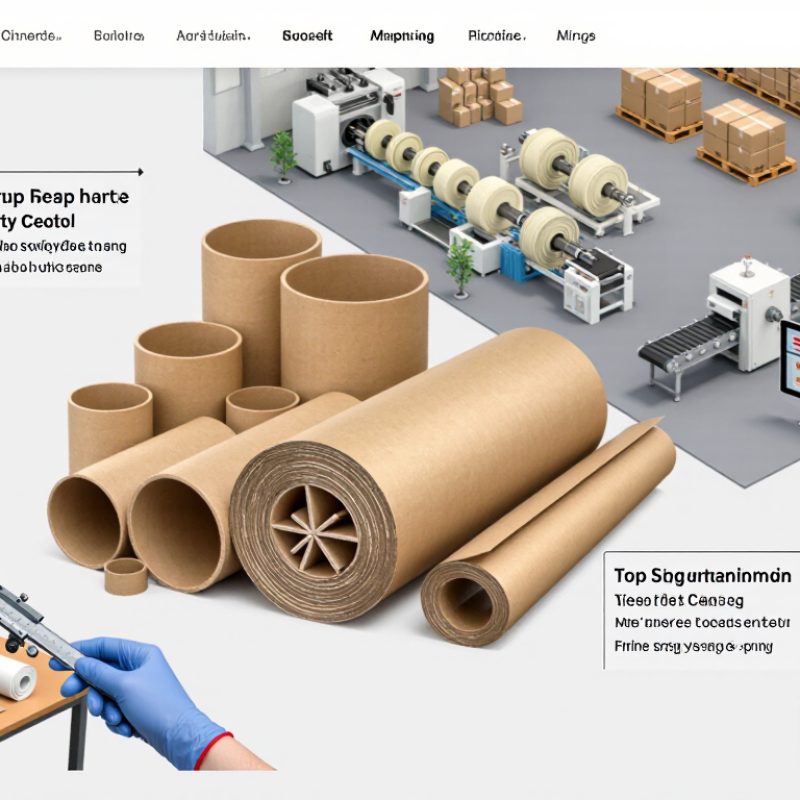
Cardboard tubes are rigid, lightweight paper cylinders made from wound layers of paperboard and adhesive. They protect posters, textiles, packaging materials, and industrial rolls during storage and transport. Their strength depends on wall thickness, paper quality, winding tension, and moisture resistance. A tube can look simple. Its performance is not.
Supplier selection matters because inconsistent production can cause crushed edges, loose seams, or inaccurate inner diameters. An experienced China-based supplier should understand your product dimensions, loading conditions, and packing process. From practical sourcing experience, clear technical communication prevents expensive rework. Ask for samples. Compare them carefully.
A reliable supplier should provide material details, size tolerances, production photos, and quality inspection records. Sample testing can include compression, drop, and humidity checks. These tests reveal weaknesses that a sales sheet may hide. A perfect specification sheet is not enough. I have seen buyers focus on price and overlook delivery stability, which later created warehouse delays. Environmental responsibility also deserves attention. Ask whether the paper comes from controlled sources and whether production waste is managed properly. Communication matters, too. Quick replies are useful, but accurate replies matter more.
Choosing the right cardboard tube starts with your product, not the supplier’s catalog.
Measure the inner diameter, outer diameter, length, and wall thickness carefully. A tube for posters may need a 76 mm inner diameter and a firm 3 mm wall. A tube for smaller packaging may require lighter paper and tighter winding.
Paper strength also matters.
Ask about compression resistance, moisture performance, surface smoothness, and end finishing. For printing, check whether the outer layer accepts ink without bleeding. For winding materials, confirm the core’s roundness and dimensional tolerance. Even a small size difference can cause machine stoppages or loose rolls. Sample testing is essential. A tube may look strong on a table but deform during stacking.
Tips:
Send your supplier a product sample, packing method, and storage conditions. Request a pre-production sample with measured specifications. Check the tube after transport, not only when it arrives. This step is often missed. Also, discuss acceptable tolerance in writing, such as ±1 mm for length. Some requirements may change after testing, and that is normal. A reliable supplier should explain material choices, test methods, and realistic limitations instead of promising everything. Ask for compression or drop-test records when your application needs stronger protection. Small details usually decide whether the tube performs well in daily use.
How to Evaluate a China-Based Cardboard Tube Supplier
A reliable supplier should show more than attractive product photos. Ask about paper grades, wall thickness, inner diameter, and moisture resistance. Request samples with your actual labels, fillings, or winding equipment. A tube that looks strong may collapse during transport. I learned this after testing only empty tubes once. That was a poor assumption.
Evaluate production experience through clear evidence. Check factory videos, inspection records, material sources, and documented quality procedures. Ask how workers measure diameter during production. Digital calipers, compression tests, and batch records indicate practical control. Confirm whether the supplier can maintain stable quality across repeated orders. One perfect sample proves very little. Honest answers matter more than polished promises.
Tips: Send a written specification sheet. Include size tolerances, paper color, printing needs, packing method, and monthly volume. Ask for a pre-production sample and an inspection report. Discuss lead times realistically, including holidays and port delays. A supplier should explain problems quickly, not hide them. You can also request references from similar packaging projects, while remembering that references are not absolute proof. Check communication speed and technical understanding before placing a large order.
| Evaluation Dimension | What to Evaluate | Practical Reference Benchmark | Recommended Evidence | Suggested Weight |
|---|---|---|---|---|
| Product Specification Capability | Ability to produce the required inner diameter, outer diameter, wall thickness, length, edge finish, and winding construction. | Supplier should provide a controlled tolerance for every critical dimension instead of using only general descriptions such as “standard size.” | Technical drawing, approved sample, dimensional inspection record, and written tolerance statement. | 15% |
| Paperboard and Adhesive Quality | Grade, basis weight, recycled or virgin fiber content, moisture condition, adhesive type, and consistency between production batches. | Materials should be suitable for the tube’s application, storage environment, and required compression performance. Moisture-sensitive applications require tighter material control. | Material specifications, safety data for adhesives where applicable, incoming inspection records, and batch traceability. | 12% |
| Mechanical Performance | Resistance to radial compression, axial compression, bending, crushing, and deformation during filling, stacking, and transport. | Performance targets should be defined by the application and verified using consistent test methods. A higher wall thickness does not automatically guarantee better performance. | Test reports showing sample conditioning, test method, load direction, failure point, and sample quantity. | 15% |
| Dimensional Consistency | Uniformity of diameter, length, wall thickness, roundness, cut quality, and concentricity across a production batch. | Measurements should remain within the agreed drawing tolerances, and the supplier should use calibrated instruments for routine inspection. | Inspection plan, calibration records, first-article report, and in-process quality-control data. | 10% |
| Customization and Printing | Ability to provide custom sizes, colored or kraft surfaces, labels, offset or flexographic printing, coatings, caps, and other components. | A capable supplier should clearly separate standard options from custom-development requirements and confirm artwork, color, finish, and proofing procedures. | Production samples, artwork approval workflow, color proof, tooling quotation, and change-control procedure. | 8% |
| Quality Management System | Formal control of purchasing, production, inspection, nonconforming products, corrective actions, and document retention. | The supplier should have documented procedures and objective records. Certification is useful, but actual process control should also be verified. | Quality certificate, process flow chart, internal audit records, corrective-action reports, and factory audit results. | 10% |
| Food, Cosmetic, or Sensitive-Use Compliance | Suitability for direct or indirect contact, migration requirements, recycled-fiber restrictions, odor control, and cleanliness. | Requirements depend on the destination market and end use. The supplier should not claim compliance without product-specific supporting documents. | Declaration of compliance, third-party laboratory reports, raw-material declarations, and applicable regulatory documentation. | 8% |
| Minimum Order Quantity and Pricing | Minimum order quantity, price breaks, tooling charges, printing costs, packaging fees, payment terms, and quotation validity. | The best offer should be compared by total landed cost, not unit price alone. Small custom orders may have higher setup and tooling costs. | Itemized quotation, commercial invoice example, payment terms, tooling ownership terms, and landed-cost calculation. | 8% |
| Production Capacity and Lead Time | Available machinery, monthly output, production scheduling, sample time, repeat-order lead time, and ability to handle demand changes. | Lead time should be stated separately for sampling, tooling, mass production, and export preparation. Capacity claims should be supported by production records. | Capacity statement, production schedule, machine list, sample timeline, and on-time delivery history. | 7% |
| Packaging and Export Protection | Protection against crushing, moisture, contamination, and movement during inland transport, container loading, and ocean shipment. | Packaging should match the tube dimensions and shipping method. Export packing must keep products dry and prevent deformation from excessive stacking. | Packing specification, loading photos, carton or pallet dimensions, moisture-protection plan, and shipping marks. | 5% |
| Communication and Documentation | Response speed, technical understanding, English documentation, quotation clarity, escalation process, and ability to manage specification changes. | A reliable supplier confirms unclear requirements in writing and keeps commercial, technical, and quality information consistent. | Completed specification sheet, meeting records, approved purchase order, inspection checklist, and change-request log. | 2% |
| Total Evaluation Weight | 100% | |||
China Top Cardboard Tubes Supplier: How to Choose?
Selecting a cardboard tube supplier requires more than comparing prices. Check the paper grade, wall thickness, winding strength, and moisture resistance. Ask for production samples, not only photographs. Measure the inner diameter and length against your equipment. Uneven edges can damage automatic filling lines. Weak spirals may collapse during stacking or transport. A reliable supplier should explain testing methods clearly and provide batch traceability. Request recent test reports and confirm their issuing laboratories. Certificates such as ISO 9001 or FSC may matter, depending on your market and material claims. A polished certificate file is not enough.
Tips: Compare three samples under identical conditions. Check odor, surface smoothness, print rub resistance, and compression strength. Keep one approved sample for future inspections. Small details matter.
Customization should be discussed in measurable terms. Share drawings with tolerances, tube diameter, length, thickness, paper color, end style, and packaging requirements. Confirm whether the supplier can maintain these dimensions across large orders. Printed designs need proof approval before production. Ask about ink suitability, color consistency, and protection during shipping. A factory audit, video inspection, or independent pre-shipment check can reveal practical weaknesses. Also review lead times, replacement procedures, and communication records. No supplier is perfect, and buyers sometimes overlook packing quality while focusing on the tube itself. That mistake can become expensive. A careful trial order usually exposes problems earlier.
Choosing a cardboard tube supplier in China requires more than checking online photos. Request samples with the exact paper grade, wall thickness, inner diameter, and printing method. Compare how each tube feels, cuts, closes, and protects the product during handling. I once accepted a sample that looked excellent but softened near the cap. That small weakness became expensive during packing.
Ask for a clear price breakdown. Confirm whether pricing includes tooling, printing plates, packaging, inspection, and shipping preparation. Compare equal specifications, not just unit prices. A cheaper quote may use thinner paper or exclude important setup fees. Request a written quotation with currency, validity period, payment schedule, and adjustment conditions. Keep the details visible.
Minimum order quantities can affect cash flow more than expected. Ask whether the MOQ applies to each size, color, or design. A supplier may offer a lower MOQ with a higher unit cost, which can help during product testing.
Delivery terms also need careful review. Confirm production time, sample approval time, loading date, and responsibility for transport documents. Ask how delays are reported. My own mistake was treating the shipping estimate as a fixed promise. It was only a planning range. Suppliers with documented quality checks, consistent communication, and traceable production records are easier to trust. A short video call can reveal more than polished images.
© 2025 Cardboard Tubes | Registered in England and Wales.
Company Number 2402078