

2026 Best Cardboard Tubes for Global Packaging?
Choosing the best cardboard tubes for global packaging in 2026 requires more than comparing prices. Products face different climates, shipping distances, handling systems, and recycling conditions. A tube that performs well in Germany may soften quickly in a humid Southeast Asian warehouse.
Dr. Susan Selke, a respected packaging researcher, offers a useful principle: “Packaging must protect the product without creating an unnecessary environmental burden.” This idea shapes our evaluation of cardboard tubes. We examine wall thickness, winding quality, compression strength, moisture resistance, closure design, recycled content, and print compatibility.
Small details matter. A loose end cap can damage rolled textiles. Poorly bonded layers may split during container loading. A rough inner surface can mark sensitive films or labels. Testing reveals these weaknesses before customers do.
A practical test.
The strongest options should balance protection, material efficiency, and dependable sourcing. They should also fit regional recycling infrastructure instead of relying on attractive claims alone. Certification, traceability, and supplier experience deserve equal attention. However, no single tube design is perfect for every market. That assumption needs questioning.
This guide compares leading cardboard tubes for international applications, including industrial rolls, posters, cosmetics, food-contact packaging, and e-commerce products. We consider real operating conditions rather than laboratory numbers alone. Some conclusions may remain imperfect because packaging performance depends on product weight, humidity, machinery, and transport routes.
The goal is straightforward: identify cardboard tubes that protect goods reliably while supporting practical sustainability and responsible global packaging decisions.
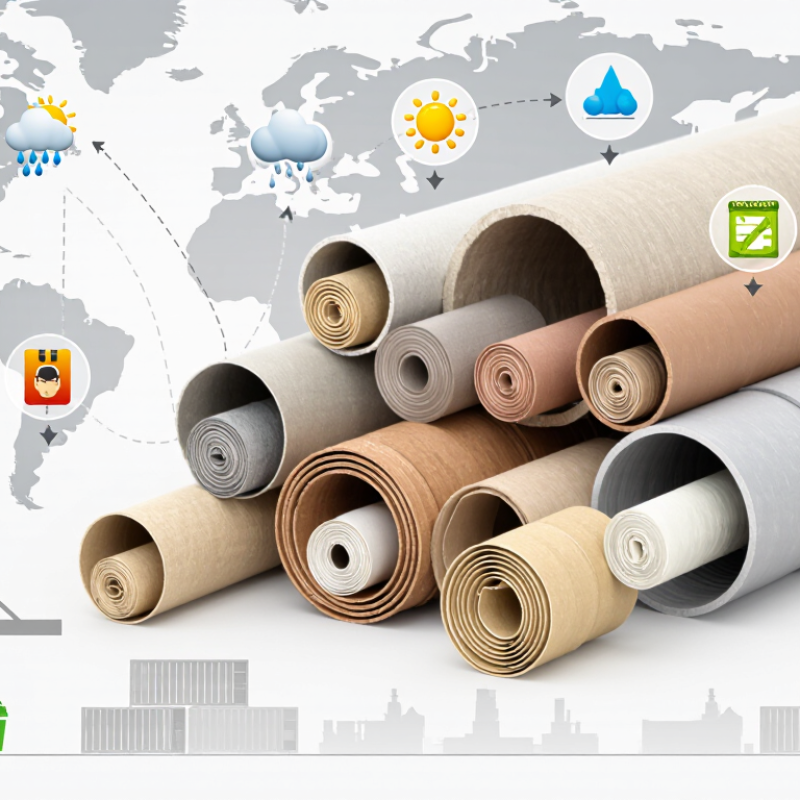
What Are Cardboard Tubes and Why Do They Matter in Global Packaging?
2026 Best Cardboard Tubes for Global Packaging?
Cardboard tubes are rigid, hollow packages made from wound paperboard layers. They protect posters, textiles, cosmetics, food ingredients, and industrial components. Their round structure resists crushing during storage and long-distance transport. It also uses less material than many rigid boxes of similar length. That advantage is practical, not automatic.
Global packaging demand is growing, while waste pressure is becoming harder to ignore. Smithers’ The Future of Global Packaging to 2028 valued the packaging market at about $1.17 trillion in 2023. The OECD reported that global plastic packaging waste reached approximately 142 million tonnes in 2019. Cardboard tubes can reduce plastic use, especially when their adhesives, labels, and closures support established paper recycling systems. However, a tube with metal ends or heavy coatings may lose that benefit. Real packaging trials matter more than attractive specifications. We sometimes underestimate moisture exposure.
Tips: Choose recycled paperboard with verified fiber sourcing. Test compression strength after humidity conditioning. Keep labels small and easy to remove. Match wall thickness to the product, not the shipping habit. Ask recyclers whether local facilities accept the complete tube.
The best tube for global packaging depends on climate, filling equipment, transport distance, and recovery infrastructure. ISO 18604 guidance supports designing packaging for material recycling, but local collection systems still vary widely. A strong design may fail in a wet warehouse. A recyclable tube may also be rejected when mixed materials cannot be separated.
2026 Best Cardboard Tubes for Global Packaging? - What Are Cardboard Tubes and Why Do They Matter in Global Packaging?
A practical comparison of common cardboard tube formats, material characteristics, applications, and global packaging considerations.
| Tube Type | Typical Construction | Common Dimensions | Typical Applications | Protection Level | Recyclability | Global Packaging Advantages |
|---|---|---|---|---|---|---|
| Spiral-Wound Paper Tube | Multiple paperboard plies wound diagonally and bonded with adhesive. | Inner diameter: approximately 25–300 mm; wall thickness: approximately 1.5–12 mm. | Posters, labels, textiles, film rolls, mailing containers, and industrial materials. | Medium to high; strength increases with diameter, wall thickness, and number of plies. | Generally recyclable when made from paperboard and recyclable adhesive without incompatible components. | Efficient use of fiber, good compression resistance, and adaptable dimensions for international shipping. |
| Parallel-Wound Paper Tube | Paperboard layers wound parallel to the tube axis for a smooth, rigid structure. | Inner diameter: approximately 10–150 mm; wall thickness: approximately 0.5–8 mm. | Labels, tapes, thin films, foils, medical rolls, and precision winding applications. | Medium; provides a smooth interior and consistent winding geometry but may be less crush-resistant than heavy spiral tubes. | Usually recyclable if free from plastic laminates, metalized layers, and excessive adhesive contamination. | Suitable for standardized roll goods and helps reduce empty space around wound products. |
| Composite Mailing Tube | Rigid paper tube combined with paper or paperboard end closures; optional protective outer wrap. | Typical length: 150–1,200 mm; inner diameter: approximately 40–100 mm. | Documents, posters, drawings, maps, calendars, and rolled promotional materials. | Medium to high against bending and impact; end protection depends on closure design. | High when all components are fiber-based and easily separable; plastic caps can reduce fiber recovery. | Lightweight, stackable, and suitable for long products that cannot be folded economically. |
| Protective Postal Tube | Heavy-duty spiral-wound tube with reinforced walls and fitted end caps. | Typical length: 200–1,500 mm; inner diameter: approximately 50–150 mm; wall thickness: approximately 2–10 mm. | Architectural plans, artwork, posters, technical drawings, and long retail products. | High against crushing, bending, and common parcel-handling impacts. | High if paper caps and paper labels are used; plastic closures should be removed where local systems require it. | Reduces creasing and damage during parcel transport while keeping product weight relatively low. |
| Paper Canister Tube | Rigid paperboard body with fitted metal, plastic, or paper-based ends and a printed outer layer. | Common diameter: approximately 50–120 mm; height: approximately 70–300 mm. | Dry foods, confectionery, tea, cosmetics, gifts, and household products. | Medium; strong against compression but requires an appropriate barrier for moisture, oxygen, grease, or aroma protection. | Depends on the barrier and closure system; uncoated fiber components are easier to recycle than multilayer structures. | Provides cylindrical shelf appeal, efficient pallet use, and a large printable surface for required labeling. |
| High-Barrier Fiber Tube | Paperboard tube with a moisture, grease, oxygen, or aroma barrier layer. | Common diameter: approximately 40–150 mm; wall thickness: approximately 1–8 mm. | Food powders, snacks, coffee-style products, personal-care products, and moisture-sensitive goods. | Medium to high, depending on the barrier material, seam integrity, and closure performance. | Best when the barrier is repulpable or designed for recognized paper-recycling systems; plastic or foil layers may require separation or special recovery. | Can reduce dependence on rigid plastic formats while supporting longer shelf life when properly engineered. |
| Heavy-Duty Industrial Tube | Thick multi-ply paperboard construction, often with reinforced edges or protective end components. | Inner diameter: approximately 75–500 mm; wall thickness: approximately 5–25 mm; length may exceed 2,000 mm. | Metal coils, construction materials, protective cores, industrial films, and large-format rolls. | Very high; designed for load-bearing, stacking, and protection of heavy or long products. | Generally recyclable when constructed primarily from clean paperboard; composite reinforcements may need separate handling. | High load-to-weight efficiency, dimensional customization, and reduced need for additional protective materials. |
Why Cardboard Tubes Matter in Global Packaging
- They use renewable paper fiber and can often enter established paper-recycling streams when coatings, closures, and adhesives are compatible.
- The cylindrical structure provides efficient resistance to crushing and bending, especially for long, rolled, or wound products.
- Low empty weight can help reduce transport-related energy use, although total environmental performance depends on sourcing, production, shipping distance, and end-of-life recovery.
- Tube dimensions can be customized to reduce unused space and improve pallet and container utilization.
- Printed paper surfaces support multilingual instructions, recycling guidance, regulatory information, and product identification for international markets.
- Barrier layers and closures must be selected according to the product’s moisture, oxygen, grease, aroma, hygiene, and tamper-resistance requirements.
Related Posts
-

Top 10 Cardboard Tubes for Shipping Needs Worldwide?
-

Top 10 Tips for Using Industrial Cardboard Tubes Effectively?
-

What Are Cardboard Tubes and How Are They Used?
-

Creative Uses for Cardboard Tubes Tips and Ideas?
-

Top Quality Mail Tubes for Global Buyers 2026?
-

How to Use Cardboard Postal Tubes for Safe Shipping and Storage?
© 2025 Cardboard Tubes | Registered in England and Wales.
Company Number 2402078