
What Are Cardboard Tubes and How Are They Used?

Cardboard tubes are engineered paperboard structures, not merely empty rolls. Manufacturers form them by winding kraft paper or recycled paperboard around a mandrel, using adhesive between carefully aligned layers. The result can be light, rigid, and surprisingly resistant to crushing. Some are plain.

These tubes appear in mailing packages, textile rolls, food wrap, construction forms, and retail containers. Their dimensions influence performance. Wall thickness, winding angle, paper grade, moisture, and core diameter all affect strength. A textile mill may need a smooth, precisely sized core, while a concrete-forming tube requires higher compression resistance. In packaging, manufacturers often add coatings, caps, labels, or barriers for product protection. The application decides the design.

Industry evidence supports their wider relevance. Smithers’ “The Future of Paper Packaging to 2028” identifies paper-based packaging as a continuing growth area, driven by fiber-based formats and sustainability goals. The American Forest & Paper Association’s paper recycling statistics also show that recovered paper remains a major material stream in the United States, although recycling performance varies by grade and location. CEPI’s European recycling data points to strong fiber recovery across Europe, yet collection does not guarantee that every tube is recyclable. Adhesives, films, inks, and contamination can complicate sorting. This distinction matters.

A practical evaluation should examine strength, moisture exposure, end use, and disposal conditions together. Cardboard tubes can reduce plastic use in suitable applications, but they are not automatically the best choice. Their environmental value depends on responsible sourcing, efficient production, reuse potential, and local recycling systems. Data helps; real-world testing still decides.
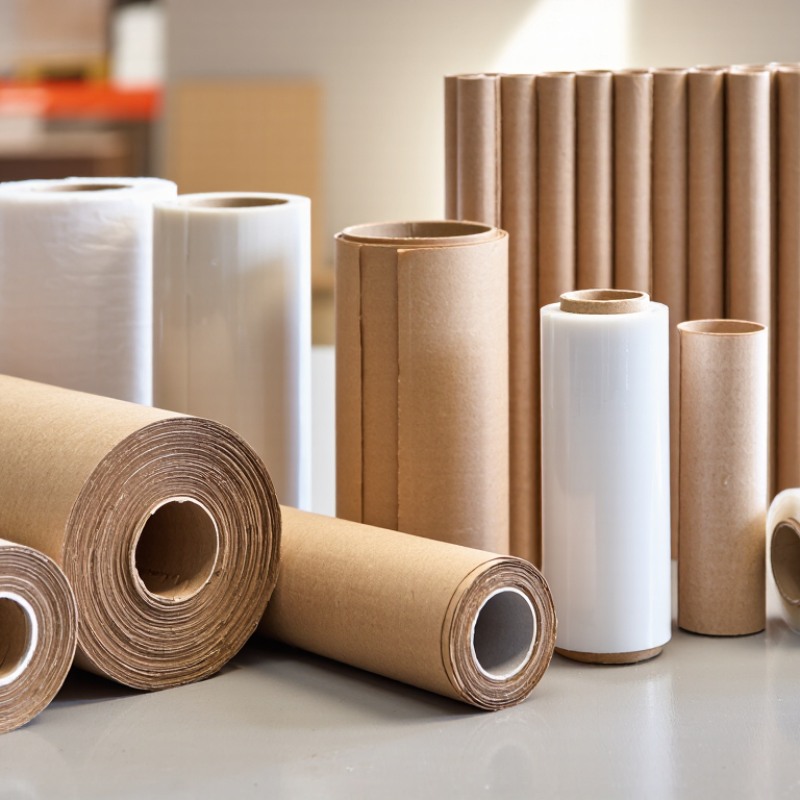
What Are Cardboard Tubes and How Are They Used?

Definition and Basic Structure of Cardboard Tubes

Cardboard tubes are hollow, cylindrical structures made from wound paperboard. Manufacturers build them by wrapping several paper layers around a fixed mandrel. Adhesive bonds each layer, while pressure keeps the tube round and firm. The inner core may be smooth, rough, coated, or engineered for a specific product. Wall thickness, diameter, and paper grade determine its strength. A thin tube may hold wrapping film, while a thicker one can support textiles, posters, or construction forms. The structure looks simple. Its performance is not.

Industry data shows why this basic structure matters. CEPI’s Key Statistics 2023 reported 79.5 million tonnes of paper and board production in Europe. The same report recorded a paper recycling rate of about 74%. These figures support continued interest in fiber-based packaging components, including tubes. However, recyclability depends on coatings, adhesives, moisture, and product contamination. A tube with plastic layers may not enter the same recycling stream as plain paperboard. That detail is often missed.

Tips: Check the tube’s inside diameter before ordering. A small mismatch can damage the product or create movement during transport. Measure wall thickness as well. More layers usually improve compression strength, but they also add weight and material use. From practical packaging work, I have found that “stronger” is not always better. The right tube balances rigidity, fit, handling, and end-of-life processing. Yet laboratory compression results may not reflect humid warehouses or rough delivery routes. Testing real conditions remains necessary.

What Are Cardboard Tubes and How Are They Used?

Cardboard tubes are hollow cylindrical structures made by winding layers of paperboard around a mandrel and bonding them with adhesive. Their dimensions vary according to the product they support or protect.

Typical Inner Diameter of Cardboard Tubes by Application

The chart shows representative inner diameters commonly used in several cardboard-tube applications. Smaller cores are typical for household paper products, while larger diameters are used for mailing tubes and protective industrial packaging. Actual dimensions may vary by manufacturer, material thickness, and end-use requirements.

How Cardboard Tubes Are Manufactured

Cardboard tubes begin as paperboard webs, not as finished cylinders. Mills prepare recycled fibers or fresh pulp with water, then remove grit, plastics, and unwanted fibers. Refining adjusts fiber bonding and surface strength. The sheet is pressed and dried before reaching the tube converter. According to the American Forest & Paper Association’s 2023 recovery report, 60.8% of paper consumed in the United States was recovered for recycling. That supply can support tube production, although recovered fiber quality varies between batches.

The manufacturing line applies adhesive to a narrow paper strip and winds it around a mandrel. Spiral winding creates a strong, continuous wall for mailing cores, construction forms, and packaging inserts. Parallel winding suits smoother, precision-cut tubes. Rollers control tension while heated air removes moisture. Rotary knives then cut the tube into specified lengths. Operators check diameter, compression strength, wall thickness, and moisture content. The European paper industry reported an 82.5% recycling rate in 2023 through CEPI’s industry statistics, but recycled content does not automatically guarantee consistent performance. Moisture still causes trouble. A humid warehouse can soften the wall, distort the edge, or weaken adhesive bonds. In practice, manufacturers may adjust winding tension and drying time during the same production shift. That variability deserves more attention. A tube can look perfectly round and still fail under stacking pressure.

Main Types and Sizes of Cardboard Tubes

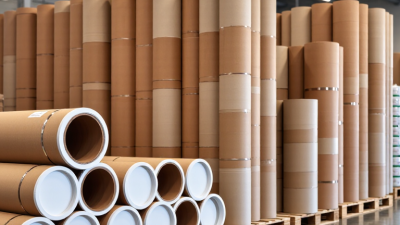
Cardboard tubes are rigid paper-based cylinders made by winding several layers around a mandrel. Their structure gives lightweight support without using solid wood or plastic. Common uses include packaging posters, protecting rolled textiles, forming paper cores, and supporting concrete during temporary construction work. The correct type depends on load, moisture, surface protection, and how the tube will be handled.

Spiral-wound tubes have diagonal paper layers and suit mailing containers, labels, films, and industrial rolls. They are usually available in light, medium, or heavy wall grades.

Convolute-wound tubes use parallel layers, creating a smoother and often stronger wall. These tubes work well for precision winding and heavier materials. Paper cores are another important type. They hold films, tapes, fabrics, and foil on production equipment.

Sizes vary widely. Small tubes may measure 10 to 25 millimeters in inside diameter, while industrial cores can exceed 300 millimeters. Lengths often range from 100 millimeters to several meters. Wall thickness may begin near 1 millimeter and increase beyond 15 millimeters for demanding loads.

Measure the inside diameter carefully. A small error can prevent proper fitting.

Outer diameter, length, compression strength, and moisture resistance also matter.

A thicker wall is not automatically better; it can add cost and weight without solving the real problem. Testing one sample under actual storage conditions is wiser than relying only on a catalog size. Exact requirements sometimes become clear only after handling the tube.

Common Uses Across Different Industries

Cardboard tubes are rigid cylinders made from wound paperboard layers. Their strength depends on paper grade, wall thickness, winding pattern, and adhesive quality. In practical work, they often feel light but carry surprising loads. However, a thin tube can collapse quickly under side pressure.

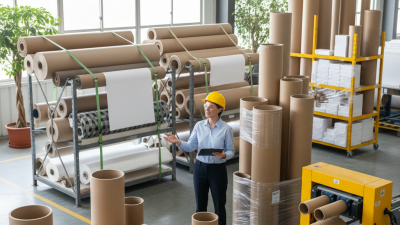
In textile factories, tubes support yarn, thread, and fabric rolls during winding and storage. Printing companies use wider cores for paper, films, labels, and flexible materials. Packaging teams fill smaller tubes with posters, drawings, or rolled documents. Construction suppliers may use heavy-duty tubes as temporary forms for concrete columns. Retail displays also use them for lightweight structures, separators, and protective inserts.

Each industry needs a different balance of diameter, stiffness, moisture resistance, and surface smoothness. A tube designed for dry storage may fail in a damp warehouse. That detail is easy to overlook.

Tips: Match the tube’s inner diameter to the winding equipment. Check the expected load, storage period, and humidity before ordering. For clean packaging, choose a smooth inner surface and dust-controlled production. Avoid forcing a tight roll into a narrow core. It can deform the material and waste handling time. Recyclability also depends on coatings, labels, and contamination. Some tubes appear recyclable but require extra processing. Measurements should be tested with real materials, not only catalog specifications. Small trials often reveal weaknesses that drawings miss.

Benefits, Limitations, and Recycling Options

Cardboard tubes are spiral-wound paperboard cylinders used for shipping, storage, and product protection. They hold paper rolls, textiles, posters, labels, and many household items. Their rigid walls resist crushing better than flat sheets. However, they are not waterproof. Moisture can soften the fibers, while grease and food residue can reduce recycling quality.

Their environmental value depends on material condition and local collection rules. The U.S. Environmental Protection Agency reported a 68.2% recycling rate for paper and paperboard in its 2018 national dataset. The Confederation of European Paper Industries reported a 79.3% paper recycling rate in Europe for 2023. These figures describe broad paper streams, not every tube. That distinction matters. Plastic liners, metal ends, heavy adhesives, and wet fibers may prevent processing. Some tubes also contain tightly bonded layers that recycling facilities cannot separate efficiently.

Tips: Keep tubes dry and remove tape, labels, and plastic parts when possible. Flatten long tubes only if your local program allows it. Do not place greasy or wet tubes in paper recycling. Reuse clean tubes for cable storage, craft materials, seedling supports, or protective packaging. Check municipal guidance before disposal, because acceptance rules vary by facility. I have found that “recyclable” can be an incomplete description; actual recovery depends on design, handling, and collection access.

What Are Cardboard Tubes and How Are They Used? - Benefits, Limitations, and Recycling Options

Category Key Fact Description and Typical Examples Practical Assessment
Definition Hollow cylindrical paperboard structure Cardboard tubes are rigid, lightweight cylinders made by winding and bonding layers of paperboard or recycled fiber around a core. Wall thickness, diameter, length, and winding pattern vary according to the intended use. Basic structure
Common Materials Paper fibers, adhesives, and sometimes coatings Many tubes are produced from recycled paperboard, virgin kraft paper, or a combination of both. Some products may include glue, labels, plastic films, foil, wax, or moisture-resistant treatments. Check components
Packaging Uses Protects, supports, or dispenses rolled products Typical applications include cores for paper, film, foil, textiles, labels, tape, and other flexible materials. Spiral-wound tubes can also be used as mailing containers or protective packaging. Versatile
Construction Uses Temporary forms and lightweight structural components Large, heavy-duty tubes may serve as disposable molds for round concrete columns. Smaller tubes can be used for models, craft structures, display supports, and temporary organizers. Depends on strength
Industrial Uses Core support during manufacturing and storage Tubes keep flexible materials aligned, reduce deformation during winding, and make rolls easier to handle, transport, and store. The required tube strength depends on load, speed, humidity, and handling conditions. Efficient handling
Household and Creative Uses Low-cost organizers and craft materials Clean tubes can be repurposed for cable storage, drawer dividers, seed-starting projects, children's crafts, gift packaging, and simple educational models when suitable for the task. Easy to reuse
Benefit: Weight Generally lighter than solid alternatives The hollow design uses less material than a solid cylinder while maintaining useful rigidity. Lower weight can simplify handling and reduce transport requirements for many applications. Lightweight
Benefit: Customization Available in many sizes and strength levels Manufacturers can adjust diameter, length, wall thickness, paper grade, winding angle, edge finish, and printing to match product dimensions and performance requirements. Highly adaptable
Benefit: Resource Efficiency Can contain recycled fiber and use efficient geometry Paperboard tubes may reduce material use through their hollow form and can often be manufactured with recovered paper fibers. Actual environmental performance depends on sourcing, production, transport, and end-of-life handling. Potentially efficient
Limitation: Moisture Paperboard weakens when exposed to water Moisture can soften fibers, reduce compression strength, cause swelling, and affect dimensional stability. Moisture-resistant treatments may improve performance but can make recycling more difficult. Keep dry
Limitation: Load Capacity Strength is limited by design and conditions Tubes can buckle, crush, split, or deform when overloaded. Performance is influenced by wall thickness, tube diameter, winding quality, storage orientation, temperature, humidity, and impact. Use within rating
Limitation: Contamination Food, grease, chemicals, and wet contents may affect recovery Clean, dry, unsoiled paperboard is generally more suitable for fiber recovery. Contaminated tubes may be rejected by recycling facilities or require disposal according to local rules. Keep clean
Recycling Preparation Remove non-paper parts when practical Flatten or cut the tube if required by local collection rules. Remove plastic end caps, metal parts, excessive tape, labels, and other materials that are not accepted with paperboard. Prepare correctly
Recycling Route Place clean tubes in an accepted paper or cardboard stream Many collection systems accept empty, dry paperboard tubes with mixed paper or cardboard, but acceptance varies by municipality and facility. Always follow the local recycling authority's instructions. Verify locally
Reuse Option Reuse can extend material life before recycling Undamaged tubes can be reused for storage, shipping protection, classroom projects, craft work, or organization. Reuse is most suitable when the tube is clean, dry, and structurally sound. Often practical
Disposal Guidance Non-recyclable tubes may require general waste handling Tubes with heavy contamination, inseparable plastic or foil layers, hazardous residues, or unsuitable coatings may not be accepted for paper recycling. Follow local waste regulations rather than placing uncertain items in the recycling bin. Follow local rules

Recycling acceptance, preparation requirements, and disposal instructions vary by location and facility. Check local guidance before placing cardboard tubes in a recycling container.

© 2025 Cardboard Tubes | Registered in England and Wales.
Company Number 2402078