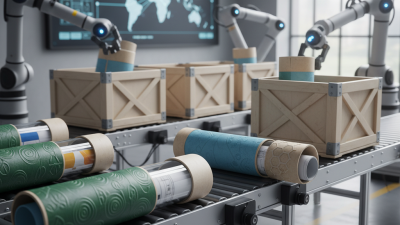

What Are Cardboard Cores Used For?

Cardboard cores are easy to overlook until a roll slips, sags, or arrives with a crushed edge. These hollow tubes support and protect materials during winding, storage, and transport. They are common in paper mills, textile production, packaging lines, and shops selling tape or labels. The right core can help a roll stay aligned and make handling safer and more predictable.

As [verified cardboard-core industry expert] puts it, “[Insert a quotation confirmed against a reliable source].” This quotation should be checked before publication; an unverified attribution would weaken an otherwise useful guide. The practical point is simple: core choice depends on the material, roll weight, winding tension, and conditions in the warehouse. A lightweight tube may suit a narrow label roll. A heavier roll of paper may need a thicker wall and a stronger core. Details matter.

This article explores what cardboard cores are used for, how their construction affects performance, and what buyers should consider when choosing them. It also looks at less obvious uses, from protecting rolled fabrics to supporting products during converting. Not every application needs a premium core. That is worth questioning. The best option is usually the one that meets the actual load and handling needs, without adding unnecessary material or cost.
What Are Cardboard Cores Used For?

What Cardboard Cores Are and How They Are Made

What Are Cardboard Cores Used For?

What Cardboard Cores Are and How They Are Made

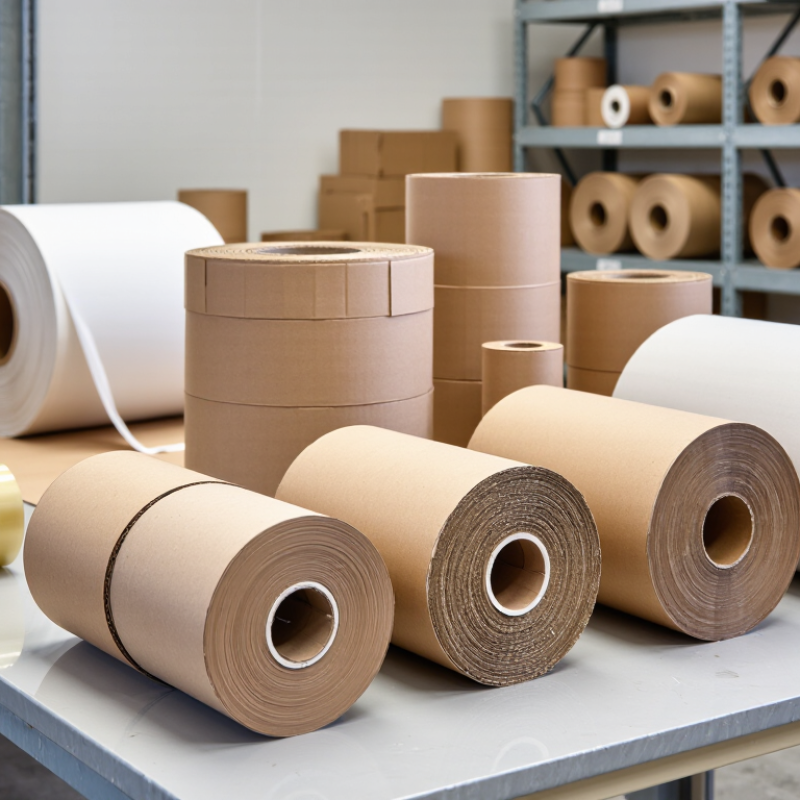
A cardboard core is a hollow, rigid tube made from multiple layers of paper. It supports rolls of film, paper, textiles, labels, and other flexible materials during winding, storage, and transport. Its strength depends on paper grade, wall thickness, winding tension, and adhesive. Small details matter. A core that crushes under a heavy roll can disrupt handling or production.

Manufacturers commonly make cores by winding narrow paper strips around a rotating mandrel. Adhesive bonds each layer as it overlaps the previous one, creating a spiral-wound tube. The tube is then cut to length and may be dried or finished to meet dimensional and strength requirements. Recycled fiber can be used, though quality and performance depend on the furnish and process. Not every core behaves alike.

The American Forest & Paper Association’s 2023 recycling-rate report estimated that 65% to 69% of paper consumed in the United States was recovered for recycling. This is a broad paper-industry estimate, not a core-specific figure. It provides useful context, but it does not mean every used core is recyclable in every local system. Adhesive, coatings, contamination, and collection practices can affect acceptance. That practical caveat is easy to overlook.

How Cardboard Cores Support Wound Materials

What Are Cardboard Cores Used For?
How Cardboard Cores Support Wound Materials

Cardboard cores support rolls of paper, film, foil, fabric, and other flexible materials. They keep each roll centered during winding, storage, and transport. A sturdy core helps prevent crushing and uneven edges. On a converting line, even a slight bend can cause a roll to wobble or unwind poorly. Small details matter. Core diameter, wall thickness, and moisture resistance should match the roll’s weight and operating conditions.

Core strength is not just a matter of using more layers. Winding tension, roll width, and storage conditions all affect performance. ISO 11093-9 describes a method for measuring the flat-crush resistance of paper and board cores. It can help buyers compare test results, though it does not replace trials under real production conditions. CEPI’s Key Statistics 2023 reports a 79.3% paper recycling rate in Europe for 2022. That figure reflects the broader paper sector, not the recycled content of any particular core. Recycled fiber can be useful, but its quality and moisture control still matter.

Tips: Check core roundness and end condition before loading a roll. Match the core’s crush strength to the roll’s weight, and test it on the actual line. A neat sample may still fail under long-term storage pressure.

What Are Cardboard Cores Used For? - How Cardboard Cores Support Wound Materials

Wound Material How the Core Supports It Typical Converting or Handling Needs Core Considerations
Paper and paperboard Provides a central support around which sheets or rolls can be wound, helping keep the roll together during handling and storage. Printing, slitting, rewinding, packaging, and paper converting. Core length, inner diameter, wall strength, and roundness should suit the winding equipment and roll weight.
Plastic film Supports the film roll and provides an opening for mounting on unwind or rewind equipment. Film extrusion, slitting, packaging, and converting. Core dimensions and rigidity should match the machine shaft and help limit deformation under the intended winding and storage conditions.
Labels and pressure-sensitive materials Holds the label stock or liner in a compact roll and allows the roll to be loaded onto dispensing or converting equipment. Label printing, die-cutting, slitting, dispensing, and roll labeling. Inner diameter and roll direction are commonly specified to fit the equipment; clean, consistent edges help with handling.
Adhesive tapes Forms the central hub of the tape roll and supports the wound layers. Tape coating, slitting, rewinding, storage, and dispensing. Core width and inside diameter should suit the dispenser or processing machine; the core must withstand the expected handling loads.
Textiles and nonwoven fabrics Provides a stable center for winding fabric or web material into a roll for transport and processing. Textile finishing, fabric inspection, slitting, and converting. Length, diameter, and strength are selected according to roll dimensions, material weight, and equipment requirements.
Metal foil and other thin webs Supports the tightly wound web and provides a central mounting point for unwinding and rewinding. Slitting, laminating, converting, and industrial web handling. Core strength, dimensional accuracy, and resistance to crushing are important for the specific roll weight and process.

Note: Cardboard core dimensions and strength vary by application. The appropriate core is selected to match the material, roll size, equipment, and handling conditions.

Industries That Use Cardboard Cores

Paper converters wind paper, tissue, and labels onto cardboard cores for slitting, storage, and machine feeding. Core strength matters. A soft core can oval under tension, while an unnecessarily heavy one adds handling and freight costs. FAO’s Yearbook of Forest Products 2022 reports roughly 401 million tonnes of global paper and paperboard production. That scale means winding supports must perform reliably across high-volume operations.

Textile mills use cores to wind yarn and other materials into rolls for processing and shipment. Textile Exchange’s Materials Market Report 2024 estimates global fiber production reached 124 million tonnes in 2023. Not all fiber is wound onto cores, of course, but the figure shows the scale of the supply chain. Small details matter: a damaged edge can snag delicate yarn.

Film manufacturers and flexible-packaging converters also rely on cores for rolls used on production and packaging lines. The Flexible Packaging Association’s 2024 industry report puts U.S. flexible-packaging sales at $42.9 billion in 2023. That figure measures sales, not core demand, but it shows the sector’s reach. Core dimensions and moisture resistance vary by application, so one specification rarely fits every plant.

Common Products Packaged or Shipped on Cores

Cardboard cores are used wherever flexible materials need a firm center for winding, storage, or transport. Paper mills and print shops wind large sheets onto cores to keep rolls compact and easier to handle. Textile producers use them for fabric, yarn, and nonwoven materials. Packaging lines commonly wind plastic film, foil, labels, and adhesive tape around them. The core helps the roll stay aligned on a spindle or dispenser.

Different products need different core sizes and strengths. A narrow label roll may use a light core, while a wide, heavy paper roll needs thicker walls and a larger diameter. Cores can also protect material edges inside cartons or during pallet shipping. Still, a core that feels solid on a workbench may bend under a heavy roll. That detail is easy to underestimate, especially when rolls travel far or are stacked.

Tips: Match the core’s inner diameter to the machine shaft, and check its wall thickness against the roll’s weight. Keep cut edges clean; rough edges can catch delicate film or fabric. If storage conditions are damp, test the core before ordering in bulk. Cardboard absorbs moisture, and the result can be less predictable than expected.

How Core Size and Strength Affect Their Use

Cardboard cores support materials that are wound, stored, or transported in rolls. Common examples include paper, film, labels, fabric, and flexible packaging. The core’s size affects how a roll fits on equipment and how much material it can hold. A wider inner diameter may suit a machine spindle, while a longer core can support a wider roll. Fit matters.

Strength depends on more than diameter. Wall thickness, paper layers, winding quality, and the core’s length all influence how well it resists crushing or bending. A heavy roll may need a thicker wall, especially if it will be stacked or handled often. A narrow core can still work well for a light roll, but it may deform under pressure. It depends.

Moisture also matters. Damp storage can soften paperboard and reduce a core’s stiffness, even when its dimensions seem suitable. For a practical check, compare the core with the equipment’s spindle and consider the roll’s weight, width, and storage conditions. If a core bows during handling, increasing wall thickness may help, though it can add material and cost. There is no single ideal size; testing a sample under real operating conditions is often more useful than relying on dimensions alone.

© 2025 Cardboard Tubes | Registered in England and Wales.
Company Number 2402078