
7 Best Cardboard Postal Tubes for Global Shipping?

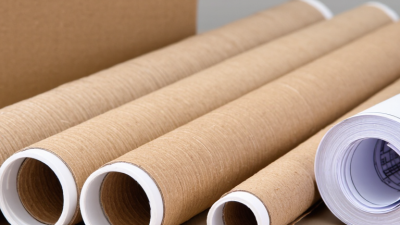
Choosing the right packaging can decide whether a poster arrives crisp or creased. This guide examines seven cardboard postal tubes for global shipping, focusing on protection, usability, and value. Each option suits different documents, artwork, maps, blueprints, and lightweight promotional materials.

The comparison considers tube diameter, wall strength, end-cap security, moisture resistance, and shipping weight. These details matter when parcels pass through sorting machines, warehouses, rain, and repeated handling. A sturdy kraft tube may protect a rolled print better than a cheaper tube with thin walls. Yet heavier packaging can increase postage costs. Small details matter.

Practical testing should include rolling a sample document, fitting the caps firmly, and checking for movement inside the tube. Additional tissue paper or a protective sleeve may prevent scuffing during transit. Clear labels and reliable tracking also support smoother international delivery. Packaging should never hide customs information or create confusion for carriers.

No tube is perfect. A product that works for posters may feel oversized for certificates. Another may resist crushing but lack strong end caps. This guide therefore avoids one-size-fits-all claims and compares realistic strengths and weaknesses. Product specifications can also change, so buyers should verify dimensions, materials, and carrier requirements before ordering.

The recommendations are designed for informed purchasing, not guesswork. They reflect common packaging practices and practical shipping concerns. Weather, route length, and handling conditions still vary. Careful preparation remains essential.
7 Best Cardboard Postal Tubes for Global Shipping?

Global Shipping Tube Basics: ISO 216 Sizes, Materials, and Closures

For global shipping, ISO 216 is a useful starting point, not a complete tube standard. These paper sizes describe sheets, while tube length and diameter require separate measurement. A4 measures 210 × 297 mm, A3 measures 297 × 420 mm, and A2 measures 420 × 594 mm. Choose a tube slightly longer than the rolled sheet. Leave room for end caps without crushing the edges. Seven practical formats include A4, A3, A2, oversized art tubes, narrow poster tubes, heavy-wall tubes, and adjustable-length tubes. That list sounds tidy.

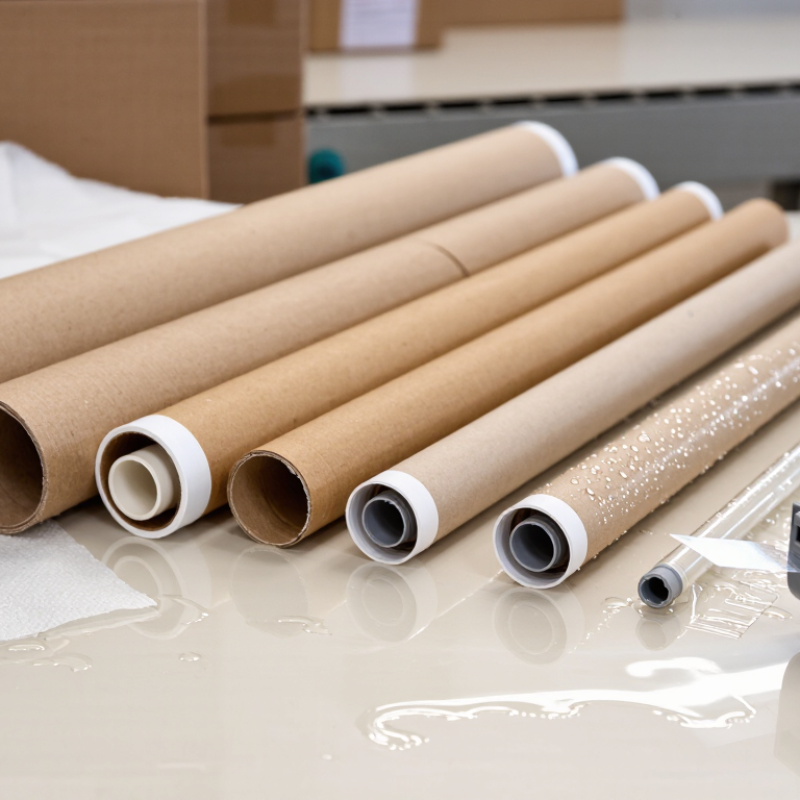
Material choice affects protection, weight, and customs handling. Spiral-wound cardboard usually offers strong resistance against bending. Multi-layer kraft board can protect technical drawings and posters during long transport. Check the wall thickness, internal diameter, and moisture resistance before ordering. Thin cardboard may save postage, but it can collapse under stacked parcels. I once underestimated this risk with a tightly rolled print. The outer tube looked sturdy, yet one end softened after exposure to rain.

Closures deserve equal attention. Plastic end caps fit quickly, while reinforced cardboard plugs can reduce material use. Push-fit closures should grip firmly without tearing the tube wall. Tape can add security, but it should not replace a properly sized cap. For valuable documents, use an inner sleeve and avoid excessive compression. Measure the finished parcel, including caps, because shipping charges often use external dimensions. Recheck the carrier’s size limits for each route. Small differences matter.

How ASTM D4169 Tests Reveal Tube Strength in Postal Handling

7 Best Cardboard Postal Tubes for Global Shipping?

Global parcel networks are unforgiving. The Pitney Bowes Parcel Shipping Index 2023 recorded 161.8 billion parcels worldwide in 2022. Many packages faced conveyor impacts, vehicle vibration, stacking pressure, and changing humidity. A cardboard postal tube must survive more than a simple drop test.

ASTM D4169-23 provides a structured way to evaluate shipping-unit performance. The selected distribution cycle can include rotational edge drops, repeated impacts, vibration, compression, and atmospheric conditioning. For postal tubes, testing should examine capped ends, spiral seams, wall thickness, and internal movement. A tube may look rigid but still crush near the closure. That failure is easy to miss.

The strongest seven tube options are not always the thickest. Engineers should compare measured compression strength, drop height, conditioning time, and test assurance level. ASTM D4169 does not automatically certify a tube for every international postal route. It models a defined distribution environment. That distinction matters.

In practical testing, place a rigid drawing or rolled document inside the tube, secure both ends, and inspect creases after each sequence. Humidity can soften paper fibers. Results may change significantly. Our own handling checks often reveal weak end caps before the main body fails. That is useful, although not perfect. A better specification records tube dimensions, load weight, closure type, and visible damage after testing. Postal packaging decisions should rely on repeatable evidence, not appearance alone.

7 Best Cardboard Postal Tubes for Global Shipping? - How ASTM D4169 Tests Reveal Tube Strength in Postal Handling

Rank Tube configuration Typical internal size Typical wall thickness Recommended contents Postal-handling advantages ASTM D4169 evaluation focus Global-shipping suitability
1 Heavy-duty spiral-wound kraft tube 50–75 mm diameter × 300–900 mm length 6–10 mm Posters, engineering drawings, maps and rigid documents High resistance to crushing, bending and end impact Compression, repeated impact, vibration and concentrated edge loading Excellent for long-distance parcel networks
2 Triangular postal tube with reinforced ends 75–100 mm side × 300–600 mm length 3–5 mm board equivalent Documents, certificates, prints and folded artwork Flat sides reduce rolling; shape improves stacking stability Stacking compression, vibration and corner/edge impact Excellent where automated sorting is expected
3 Standard spiral-wound document tube 50–75 mm diameter × 300–900 mm length 3–6 mm Letters, posters, architectural plans and calendars Good stiffness-to-weight ratio and low material use Compression and vibration with attention to cap retention Very good for routine international parcels
4 Telescoping kraft tube with locking cap 50–80 mm diameter × 250–1,000 mm adjustable length 4–7 mm Mixed-size documents and variable-length prints Flexible sizing can reduce empty space and movement Joint separation, end-cap retention, compression and vibration Good when the overlap is securely locked and sealed
5 Small-diameter rigid mailing tube 38–50 mm diameter × 200–600 mm length 3–5 mm Photographs, certificates, labels and narrow prints Compact format limits shifting and saves dimensional weight End impact, vibration and localized compression Very good for lightweight international documents
6 Long-format reinforced tube with fiber end plugs 75–100 mm diameter × 900–1,500 mm length 5–8 mm Large plans, banners, textile rolls and display graphics Reinforced ends protect against crushing and cap displacement Long-axis bending, compression, vibration and end impact Good with external strapping or a protective overpack
7 Lightweight recycled-paper tube 50–75 mm diameter × 250–750 mm length 2–4 mm Low-value posters, craft materials and non-fragile prints Low weight and generally compatible with paper recycling streams Compression, moisture exposure and cap retention require close review Moderate for short, low-risk international routes
ASTM D4169 is a distribution-system test practice, not a single universal tube-strength rating. A suitable laboratory protocol normally selects a distribution cycle, assurance level, hazard elements and test sequence that match the intended postal or parcel network. Actual performance depends on board grade, moisture, diameter-to-length ratio, closures, sealing method and package mass.
Reference basis: ASTM D4169 distribution testing concepts; common spiral-wound paperboard tube construction ranges; typical postal packaging design considerations for compression, vibration, impact and closure security.

Comparing 7 Cardboard Tubes by Diameter, Length, and Wall Thickness

Seven cardboard postal tubes can look similar on a packing table, yet their dimensions change shipping results significantly. A 2-inch diameter tube suits certificates, posters, and narrow prints. The 2.5-inch tube gives slightly more breathing room. For rolled artwork, a 3-inch diameter usually prevents tight curling and edge damage. I have found that forcing a wide sheet into a narrow tube often causes more harm than using extra cardboard.

Length matters just as much. A 12-inch tube works for compact documents, while 18 and 24 inches fit smaller posters. The 30-inch option handles standard art prints without excessive empty space. Larger 36, 42, and 48-inch tubes serve maps, banners, and long technical drawings. Empty length is not harmless. It allows movement, bending, and crushing near the ends. Add firm end closures and avoid oversized tubes when possible.

Wall thickness separates basic protection from dependable protection. Around 2 millimeters may suit lightweight paper and short domestic journeys. A 3-millimeter wall offers better resistance against warehouse pressure. Tubes near 4 millimeters are safer for valuable prints, long routes, and repeated handling. However, thicker walls increase weight and shipping cost. That trade-off deserves calculation. I once selected a very strong tube, then noticed its extra weight increased the total freight charge. My original choice was protective, but not efficient. Test each size with the actual contents, end caps, and packing material before ordering in bulk.

7 Best Cardboard Postal Tubes for Global Shipping

Comparison of representative standard tube sizes by outside diameter, length, and wall thickness. Dimensions are shown in millimetres and reflect commonly available postal-tube specifications.

Larger diameters and thicker walls generally improve crush resistance, while shorter tubes can reduce dimensional-weight charges for compact documents and posters.

Shipping Cost Analysis Using the 5,000 cm³/kg DIM-Weight Rule

7 Best Cardboard Postal Tubes for Global Shipping?

Shipping Cost Analysis Using the 5,000 cm³/kg DIM-Weight Rule

For global shipping, the best tube is not always the strongest one. Standard mailing tubes suit posters, documents, and lightweight prints. Heavy-wall tubes protect technical drawings and rolled textiles. Square-edge tubes reduce movement inside cartons. Triangular tubes resist rolling during sorting. Telescoping tubes handle unusually long items. Recycled tubes reduce material use. Short, wide tubes suit compact products. Selection should match the item, not just the advertised weight limit.

DIM-weight can change the shipping price quickly. Measure the packed length, width, and height in centimeters. Multiply them, then divide by 5,000.

A package measuring 80 × 10 × 10 centimeters produces 1.6 kilograms of DIM weight. If its actual weight is 0.8 kilograms, the carrier may charge using 1.6 kilograms.

Some carriers measure a round tube by its outer diameter, while others use a rectangular bounding size. Check the destination carrier’s published method.

My early estimates often ignored end caps and tape. That mistake increased the measured length by several centimeters. Small details matter. Choose a tube with minimal empty space, but keep enough room for protective wrapping.

A sturdy 90-centimeter tube may cost more than a lighter 80-centimeter tube when dimensional weight applies.

Record packed dimensions, actual weight, and destination surcharges for several test shipments. Rates and rounding rules vary across services, so one formula cannot predict every final invoice.

Best Tube Choices for Documents, Posters, Maps, and Artwork Worldwide

Choosing the right cardboard postal tube depends on the item, its size, and the journey ahead.

For certificates and rolled documents, a slim document tube keeps the package compact and economical. A standard poster tube suits cinema prints, classroom charts, and lightweight promotional artwork.

For large maps, choose a wide-diameter map tube that avoids tight rolling and permanent curl. Keep the roll loose.

A heavy-wall art tube offers stronger crush resistance for canvas prints and valuable illustrations.

An archival tube, made with acid-free materials, is better for photographs, limited prints, and delicate paper. A telescoping tube helps when artwork sizes vary, although its joining section can become a weak point. A reinforced triangular postal tube is another practical choice for posters because it resists rolling on conveyor belts. That small detail matters.

I check the tube length, internal diameter, wall thickness, and end-cap fit before packing.

A document should slide in without force, with acid-free tissue or glassine around the surface. Secure both caps firmly, then add a moisture-resistant outer layer when routes may cross humid regions.

Do not overfill the tube. I once used excessive padding and created pressure marks near a print’s edge. That mistake was avoidable.

Clear address details, an accurate contents description, and a readable customs label also reduce handling delays.

No tube is perfect, so match protection to the artwork rather than choosing the cheapest size.

© 2025 Cardboard Tubes | Registered in England and Wales.
Company Number 2402078