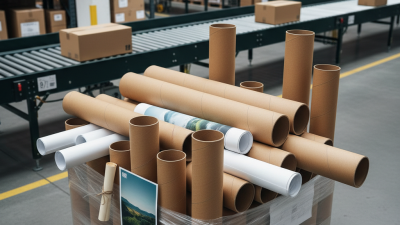
How to Choose Cardboard Tubes for Shipping in 2026?
Choosing cardboard tubes for shipping in 2026 requires more than comparing prices and diameters. The right tube must protect the product, control freight costs, and support a credible customer experience. Packaging expert David Luttenberger has repeatedly emphasized a simple truth: “Packaging is the product.” That idea matters when a tube arrives crushed, damp, or difficult to open.
This guide examines wall thickness, inner diameter, end closures, recycled content, and shipping length. It also considers automated fulfillment, carrier handling, and changing sustainability expectations. A poster, blueprint, textile roll, or architectural drawing may need different protection. One tube cannot solve every problem.
Small details matter. A three-inch tube may fit the product, yet leave too little space for protective wrapping. A tight cap can prevent movement. A loose cap can create damage. Moisture-resistant coatings may help during rainy delivery routes, but they can affect recyclability. The cheapest option may become expensive after returns and replacements.
Real-world testing should include compression, vibration, drop, and humidity checks. Measure the packed tube, not just the empty tube. This sounds obvious, but mistakes happen. I have seen packaging decisions focus heavily on appearance while ignoring warehouse stacking. That is an imperfect approach, and it deserves honest review.
This article explains how to evaluate cardboard tubes for shipping in 2026. It balances product safety, operational efficiency, customer expectations, and responsible material choices. The goal is not to find the strongest tube available. It is to find the most suitable one.
Understanding Cardboard Tube Types and Shipping Requirements
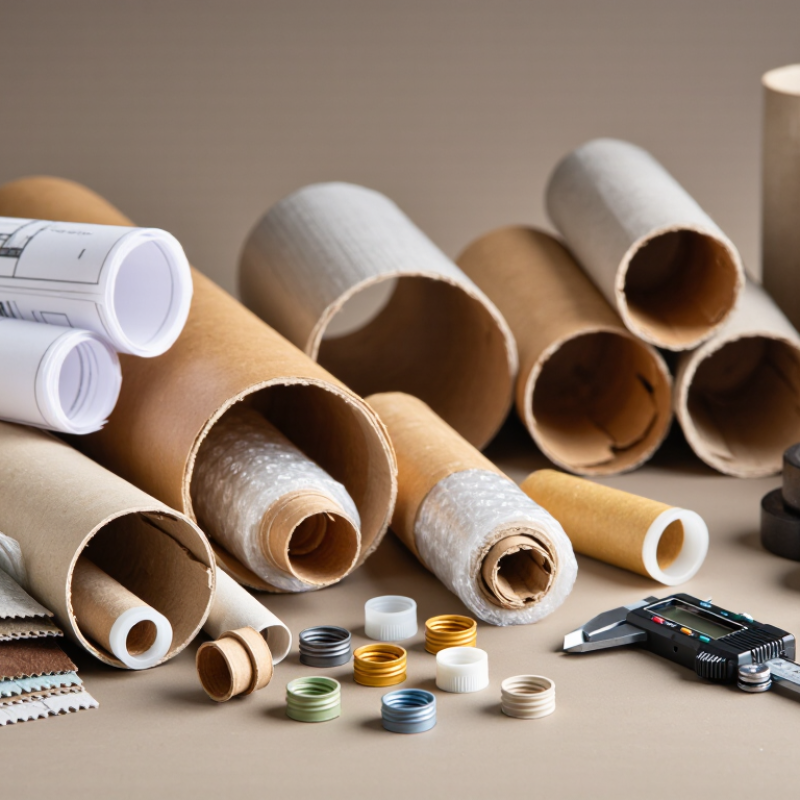
Cardboard tubes are not all built for the same job. Spiral-wound tubes use layers wrapped at an angle, making them a common choice for posters, plans, and lightweight rolled materials. Convolute-wound tubes have layers wrapped parallel to the tube’s length. They can offer greater rigidity for heavier contents, depending on their construction. Wall thickness, paper grade, and tube diameter all affect crush resistance. A tube that feels sturdy on a packing bench may still dent under stacked parcels.
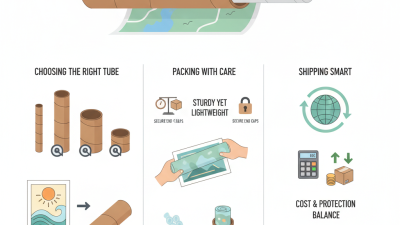
Match the tube to the item and its journey. Measure the product after rolling, then allow enough internal clearance for smooth loading without excessive movement. Long tubes need extra attention: unsupported ends can bend when parcels are handled or stacked. Secure end caps firmly, and check that they stay in place during a simple shake test.
Small details matter. If the contents are moisture-sensitive, consider a protective inner wrap; cardboard can soften in damp conditions.
Shipping requirements vary by carrier and service, so check limits for length, girth, and package shape before choosing a size. Some services may apply extra handling charges to unusually long parcels. For fragile prints, test a packed sample with realistic handling, not just a gentle squeeze.
It is easy to overestimate tube strength from appearance alone. I would also review the design after the first shipment; a slightly thicker wall or tighter cap fit may prevent repeat damage.
Matching Tube Dimensions to Product Size and Protection Needs
How to Choose Cardboard Tubes for Shipping in 2026?
Matching Tube Dimensions to Product Size and Protection Needs
Choosing a shipping tube starts with the product, not the catalog. Measure its length, width, and rolled diameter when applicable. Add clearance, but keep it modest. A tube that is too wide lets posters slide and crease at the ends. A practical target is 6–12 millimeters of internal space around the item. Check the tube’s usable length too. End caps can reduce available room by several millimeters.
Protection depends on the product’s stiffness and journey. Lightweight prints may need a spiral-wound tube with firm end closures. Heavier plans, fabric rolls, or multiple sheets need thicker walls and stronger plugs. For fragile surfaces, wrap the item with acid-free paper before inserting it. Avoid tight packing; pressure can leave a permanent curl. I once selected a tube by outside diameter alone. It looked suitable, but the inner space was insufficient after adding padding. That mistake was avoidable.
Test a filled sample before ordering in volume. Shake it gently, place it upright, and inspect both ends after handling. The item should not rattle. It should also slide out without force. Moisture exposure deserves attention in warehouses and delivery vehicles. A water-resistant outer layer can help, though it cannot replace dry storage. Dimension charts are useful, but real samples reveal weaknesses. Recheck measurements when the product material changes. Small differences matter.
Choosing the Right Tube Strength, Thickness, and Closure Style
How to Choose Cardboard Tubes for Shipping in 2026?
Choosing the right cardboard tube starts with its contents, length, and delivery conditions. A lightweight poster may need a single-wall tube with moderate thickness. Architectural drawings or rigid prints usually need stronger spiral winding and thicker walls. Tube diameter also matters. Too much empty space lets items slide and crease during handling. Too little space can crush the contents during insertion.
From practical packing tests, I check compression, drop resistance, and closure security before ordering in bulk. A tube can feel strong but still split near the end. Friction-fit paper plugs suit short-distance shipments and quick packing. Plastic end caps offer better resistance to moisture and rough handling. Adhesive closures provide security, but they slow fulfillment and can damage the tube during opening. Humidity is easy to underestimate. It can soften exposed cardboard overnight.
Tips: Match wall thickness to product weight, not appearance. Add a small protective wrap inside. Test a packed tube from desk height and inspect every seam. If the tube rolls freely, reduce internal space. If the cap loosens, change the closure style. I once selected a thick tube that looked ideal, but its narrow opening damaged a large print. That mistake changed my measurements. Practical testing should guide the final choice.
Evaluating Materials, Sustainability, and Shipping Costs
How to Choose Cardboard Tubes for Shipping in 2026?
Evaluating Materials, Sustainability, and Shipping Costs
Start with the item, not the tube catalog. Measure the rolled product and allow room for end caps, but avoid excess diameter. A tube that bends under a hand’s firm pressure may fail in a crowded delivery van. Compare wall thickness, paper grade, and moisture resistance; recycled fiber can perform well, but construction matters. Ask for compression or drop-test results for your product’s size and weight.
Sustainability claims need context. The U.S. Environmental Protection Agency’s 2018 materials report estimated that 96.5% of corrugated boxes were recycled. That figure is not specific to mailing tubes, so treat it as a useful paper-packaging benchmark, not a tube recycling rate. Choose tubes made with recycled content where practical, and check whether caps and labels can be separated easily. Small details matter. A recyclable body may still be harder to recover when mixed materials stay attached.
Shipping costs depend on both weight and package dimensions. A wider tube may trigger higher dimensional-weight charges, while an undersized tube risks dents, damage, and replacement shipments. Compare total delivered cost, including caps, packing labor, and likely damage—not just the quoted price per tube. Test a few samples on your actual packing line and through a real carrier route. The lightest option can be a false economy; still, a stronger tube is not automatically better.
Testing and Preparing Cardboard Tubes for Reliable Delivery
Before packing, check each cardboard tube for crushed edges, soft spots, and seams that have started to lift. Run your fingers along the full length. Small dents can become weak points under stacked parcels. Measure the tube’s inside diameter and length against the item, allowing enough room for end caps without letting the contents slide freely.
Test a sample under realistic handling conditions. Place the packed tube beneath a similar parcel, then inspect it for flattening or cap movement. Roll it gently across a hard floor. It should stay round and keep its ends secure. Not scientific? It is still useful. For valuable or unusually shaped contents, try a more controlled drop test using the expected packed weight and a consistent height.
Prepare the tube only after these checks. Wrap the item to prevent scratches, and add a small amount of cushioning at both ends. Avoid overfilling; pressure can push caps loose. Fit each cap firmly, then shake the package lightly and listen for movement. If the item shifts, revise the fit. Mark the parcel clearly, but do not rely on labels to compensate for weak packaging. I have seen a sound tube fail because one end cap was merely resting in place. Check both ends again before dispatch.
How to Choose Cardboard Tubes for Shipping in 2026?
Conditioning Tubes Before Testing for Reliable Delivery
ASTM D4332’s standard conditioning atmosphere specifies 50% relative humidity, with a tolerance of ±2 percentage points. Condition tube samples before checking fit, closures, and resistance to handling; also record temperature (23°C ± 1°C). Conditioning helps make comparisons more consistent, but does not guarantee delivery performance.