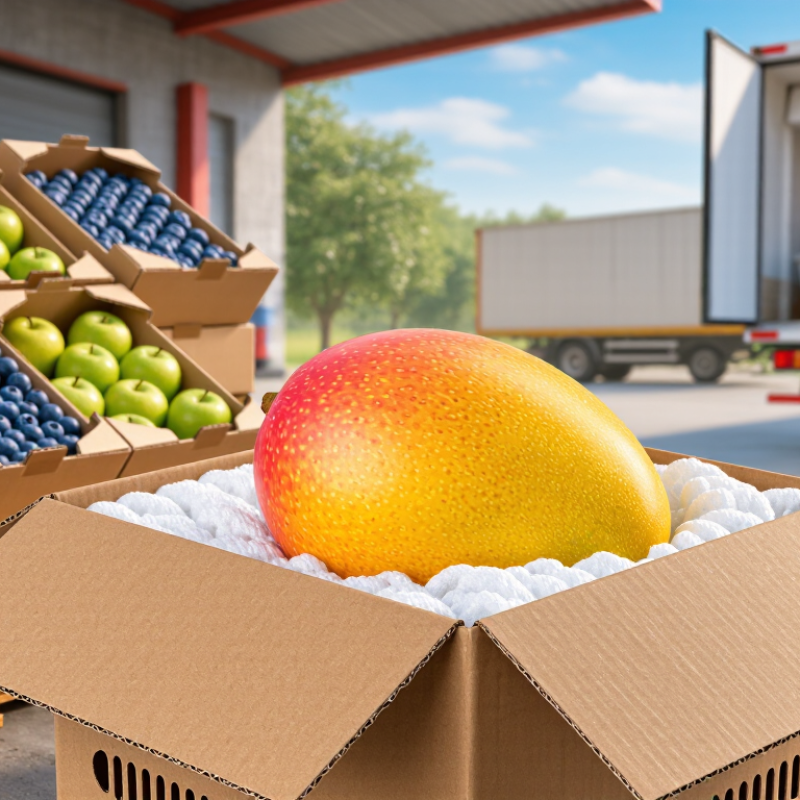
Fresh fruit travels through a demanding chain before reaching a customer’s hands. A mango may leave a warm orchard, enter a refrigerated truck, cross a border, and arrive days later. Every stage tests its packaging.
Fresh Fruit Export Packaging Solutions help control pressure, moisture, airflow, temperature changes, and handling damage. Strong cartons protect the fruit from crushing. Ventilation holes support cooling. Absorbent liners can reduce moisture around delicate berries. The right design also considers fruit variety, harvest maturity, transport distance, and retail display conditions.
Postharvest specialist Dr. Lisa Kitinoja has stated, “The best way to reduce postharvest losses is to prevent them from occurring in the first place.” Her observation explains why export packaging is more than an attractive box. It is a practical risk-management system.
Good packaging cannot rescue badly harvested fruit. That matters.
A reliable solution begins with field experience and measured testing. Exporters should examine compression strength, stacking patterns, condensation, pallet stability, and temperature records. A package that performs well for apples may fail with peaches. A cheaper material may also create more waste or product loss.
Fresh Fruit Export Packaging Solutions can improve freshness, handling efficiency, food safety, and customer confidence when selected carefully. Still, no design is perfect. Packaging teams must review failed shipments, listen to growers and logistics partners, and adjust specifications over time. This article explores why thoughtful packaging deserves attention before the first carton leaves the farm.
Fresh fruit export packaging is the engineered system that protects produce from harvest to overseas delivery. It includes cartons, crates, liners, cushioning, ventilation, labeling, and pallet arrangements. The system must manage impact, pressure, moisture, temperature, and airflow during handling and transit.
The need is measurable. The FAO’s State of Food and Agriculture 2019 report estimates that 14% of food is lost between harvest and retail, excluding the retail stage. Packaging cannot prevent every loss. It can, however, reduce bruising, compression, dehydration, and contamination risks.
A well-designed carton keeps peaches separated, supports stacked loads, and allows cold air to circulate through vent holes. Small details matter.
Fresh fruit export packaging also supports traceability and quality control. Labels can identify the lot, harvest date, origin, and handling requirements. The UN Environment Programme’s Food Waste Index Report 2024 reported 1.05 billion tonnes of food waste in 2022. That figure exposes a difficult truth: packaging decisions affect food waste, but excessive material can create another problem.
A thicker box is not always safer. Poor ventilation may cause condensation, while weak corners may collapse under pallet pressure.
Exporters should test packaging with real fruit, real humidity, and realistic transport vibration. Laboratory results alone can be incomplete.
Why Choose Fresh Fruit Export Packaging Solutions?
Fresh fruit packaging must match the fruit, not just the shipping route. During export trials, I have seen firm peaches arrive bruised because the carton absorbed vibration poorly. Stone fruits need rigid trays, soft cushioning, and enough ventilation to release heat. Excess pressure can damage them within hours. Pack designs should also support stable stacking without crushing lower layers.
Berries require a different approach. Their containers need small air openings, moisture control, and smooth inner surfaces. Condensation can quickly encourage mold. Small vents help, but oversized openings may cause dehydration. This balance is easy to miss. Citrus fruit usually needs stronger cartons and separators to reduce rubbing between peels. A waxy surface can still suffer from repeated impact. Careful compression testing is essential.
Apples and pears often travel longer distances. Their packaging should allow airflow while limiting moisture loss. Ethylene management may also help protect nearby produce during mixed loads. Temperature records, humidity checks, and drop tests provide practical evidence before shipment. Regulations for food contact materials and export labeling must be verified for each destination. I would not rely on one universal carton. It saves design time, but it can create avoidable waste. Even a well-tested package may need adjustment after seasonal changes in fruit size, harvest maturity, or transport conditions.
| Fresh Fruit Type | Typical Storage Temperature | Relative Humidity | Respiration and Ethylene Considerations | Recommended Primary Packaging | Ventilation and Moisture Control | Protection Requirements for Export | Typical Cold-Chain Objective |
|---|---|---|---|---|---|---|---|
| Apples | 0–4°C, depending on cultivar and storage duration | 90–95% | Moderate respiration; apples produce ethylene and should be separated from ethylene-sensitive produce when appropriate. | Corrugated fiberboard cartons, molded trays, cell packs, or protective bags | Vent holes for forced-air cooling; liners should not trap free moisture. | Prevent bruising, scuffing, compression, and temperature fluctuation during pallet transport. | Rapid pre-cooling and stable refrigerated transport |
| Table Grapes | Approximately 0°C | 90–95% | Low to moderate respiration; sensitive to dehydration, stem browning, and mold development. | Vented corrugated cartons, plastic punnets, or clamshells with suitable liners | High ventilation and careful condensation management; packaging should support rapid cooling. | Protect bunches from crushing and berry shatter while maintaining airflow through the carton. | Fast removal of field heat and continuous low-temperature handling |
| Strawberries | 0–1°C | 90–95% | Very high respiration; highly perishable and prone to gray mold. Do not allow condensation to remain on the fruit. | Vented single-layer punnets or clamshells with rigid support | Maximum airflow with drainage and moisture management; avoid sealed packaging unless designed for the product. | Prevent compression, vibration, surface damage, and temperature abuse. | Immediate pre-cooling and uninterrupted refrigerated distribution |
| Blueberries | Approximately 0°C | 90–95% | Moderate respiration; susceptible to water loss, decay, and abrasion that removes the natural bloom. | Rigid vented clamshells or small retail punnets inside ventilated cartons | Vent openings should align with carton airflow channels; avoid excess free water. | Use rigid packs to limit vibration and crushing; reduce handling that damages the bloom. | Rapid cooling and stable high-humidity conditions |
| Cherries | Approximately 0°C | 90–95% | High respiration; prone to stem dehydration, pitting, cracking, and decay. | Vented plastic punnets, clamshells, or small fiberboard cartons | Allow rapid cooling while limiting condensation and direct contact with standing water. | Provide cushioning and headspace to protect stems and fruit from impact. | Hydrocooling or forced-air cooling followed by continuous refrigeration |
| Peaches and Nectarines | Approximately 0–1°C for mature fruit; avoid chilling-sensitive cultivars during extended storage | 90–95% | High respiration after ripening begins; ethylene production increases as fruit softens. | Single-layer trays, molded fiber packs, or ventilated cartons | Ventilation is needed for cooling; packaging should limit moisture accumulation and contact damage. | Use individual cells or trays to reduce bruising and pressure marks. | Rapid cooling with careful temperature management based on cultivar |
| Pears | Approximately −1 to 0°C, depending on cultivar | 90–95% | Moderate respiration; produce ethylene during ripening and can develop pressure bruises. | Layer packs, molded trays, or ventilated corrugated cartons | Balanced ventilation for forced-air cooling; use moisture-resistant materials when condensation is likely. | Individual separation helps prevent bruising, skin scuffing, and compression damage. | Cold storage and controlled ripening according to maturity stage |
| Citrus Fruits | Approximately 3–10°C, depending on species and cultivar | 85–95% | Low to moderate respiration; susceptible to rind injury, water loss, and some chilling disorders. | Ventilated fiberboard cartons, plastic crates, or net bags inside protective cartons | Use ventilation to remove field heat and reduce condensation; avoid excessive air movement that causes drying. | Resist compression and abrasion while protecting the rind from punctures and impact. | Product-specific refrigeration without excessive chilling |
| Mangoes | Approximately 10–13°C for mature-green fruit; lower temperatures may cause chilling injury | 85–95% | High respiration during ripening; produce significant ethylene and should be managed by maturity stage. | Ventilated cartons with molded trays, fiber dividers, or protective sleeves | Provide airflow for cooling while preventing excessive moisture loss and condensation. | Protect against impact, latex staining, compression, and skin abrasion. | Temperature-controlled transport matched to maturity and destination |
| Avocados | Approximately 5–13°C, depending on cultivar, maturity, and storage period | 85–95% | Moderate to high respiration; ethylene-sensitive during ripening and vulnerable to pressure bruising. | Ventilated cartons with dividers, molded trays, or protective inserts | Maintain airflow without excessive dehydration; avoid packaging that compresses the fruit. | Control impact, compression, and vibration; provide strong pallet stability. | Stable temperature management and ripening control throughout the supply chain |
| Bananas | Approximately 13–14°C for mature-green bananas | 90–95% | High respiration during ripening; highly sensitive to chilling temperatures and ethylene exposure. | Ventilated corrugated cartons with liners or molded support systems | Ventilation must support cooling and ethylene removal while limiting moisture loss. | Prevent crown damage, finger bruising, compression, and temperature-related skin injury. | Strict avoidance of chilling and controlled ripening after arrival |
| Pineapples | Approximately 7–13°C, depending on maturity and cultivar | 85–95% | Low to moderate respiration; vulnerable to chilling injury, dehydration, and mechanical damage. | Strong ventilated cartons, molded pulp supports, or protective sleeves | Use airflow openings while preventing excessive moisture accumulation around the crown. | Protect the crown, skin, and base from impact, puncture, and compression. | Temperature selected according to maturity and transit duration |
| Kiwi Fruit | Approximately 0°C | 90–95% | Low respiration in storage; ethylene exposure can accelerate softening and reduce storage life. | Vented cartons with molded trays, punnets, or protective liners | Support rapid cooling and maintain high humidity without allowing free water to remain on the fruit. | Limit abrasion and compression; maintain carton strength under humid conditions. | Continuous cold storage with ethylene management where required |
| Pomegranates | Approximately 5–7°C | 90–95% | Low respiration; susceptible to dehydration, rind browning, and decay from surface damage. | Vented corrugated cartons with dividers or molded trays | Use controlled ventilation and moisture-resistant carton construction where condensation may occur. | Prevent rind abrasion, crown damage, cracking, and compression during stacking. | Stable refrigerated handling with humidity control |
| Watermelons | Approximately 10–15°C | 85–90% | Low respiration; chilling-sensitive and vulnerable to impact damage and internal breakdown. | Heavy-duty corrugated cartons, reusable plastic crates, or protective pallet configurations | Packaging should allow airflow without creating excessive dehydration; avoid sealed packs for whole fruit. | High load-bearing strength, anti-roll stability, and protection from impact and vibration. | Avoid low-temperature exposure and maintain stable handling conditions |
| Table Figs | Approximately 0°C | 90–95% | Very high perishability; moderate to high respiration and rapid quality loss after harvest. | Rigid vented clamshells, shallow punnets, or single-layer trays | Prioritize rapid cooling, airflow, drainage, and prevention of condensation. | Single-layer support reduces crushing, skin splitting, leakage, and mold development. | Immediate pre-cooling and highly reliable refrigerated transport |
| Raspberries and Blackberries | Approximately 0°C | 90–95% | Very high respiration; extremely delicate and prone to leakage, mold, and mechanical damage. | Small rigid vented clamshells or shallow punnets | Maximize airflow and drainage; avoid excess headspace that permits movement. | Use rigid, shallow packaging to prevent crushing and berry-to-berry compression. | Immediate cooling and uninterrupted cold-chain distribution |
| Important: Temperature and humidity ranges are general commercial guidelines. Actual packaging specifications should be validated against fruit cultivar, maturity, harvest condition, transit duration, destination climate, pallet configuration, and applicable food-contact and export regulations. | |||||||

Fresh fruit export packaging must protect produce through lifting, stacking, vibration, temperature changes, and delays. A strong package does more than hold fruit. It controls pressure, limits bruising, and supports airflow around each piece.
Packing teams often use ventilated cartons, molded trays, absorbent liners, and firm corner supports. These details help prevent fruit from rubbing against rough surfaces. Openings also allow cold air to move through the load during refrigerated transport. However, too many openings can weaken the carton. Balance matters.
During handling, workers may move cartons several times before delivery. A secure package keeps fruit stable when pallets shift or vehicles brake suddenly. Moisture-resistant materials also reduce softening after condensation forms. In practical packing tests, small changes can matter. A slightly deeper tray may reduce contact damage. A poorly placed vent may do the opposite.
No package is perfect. Excess protection can increase weight, waste, and freight costs. Lightweight designs may fail under heavy stacking. Exporters should check fruit size, maturity, route length, humidity, and handling conditions before selecting materials. Trial shipments can reveal problems that laboratory checks miss. That lesson is easy to overlook.
Reliable packaging depends on careful inspection. Workers should check crushed corners, loose dividers, wet cartons, and shifting fruit. Clear handling instructions can also reduce avoidable damage. Freshness begins with the fruit, but it survives through thoughtful packaging.
Why Choose Fresh Fruit Export Packaging Solutions?
Sustainable packaging can protect fruit while controlling export costs. The FAO’s The State of Food and Agriculture 2019 reports that 14% of food is lost between harvest and wholesale. For exporters, bruised peaches, leaking berries, and poor ventilation can turn packaging into a hidden expense. Strong, lightweight cartons with calibrated air holes reduce compression and help maintain airflow during long journeys. Less material can also mean lower freight weight.
The OECD’s Global Plastics Outlook 2022 found that packaging generated about 40% of global plastic waste. This makes material selection a practical environmental decision, not just a marketing claim. Recyclable corrugated fiber, water-based coatings, and reusable crates may reduce waste when local recovery systems actually exist. They need testing first. Moisture resistance, stacking strength, and cooling performance still matter more than attractive labels.
Cost efficiency appears across the supply chain. Compact package dimensions can improve pallet utilization, while standardized formats simplify warehouse handling. The European Commission reported 188.7 kilograms of packaging waste per person in the EU in 2021, showing the scale of the packaging challenge. Yet no solution fits every fruit, route, or climate. A carton that works for apples may fail for ripe mangoes. Exporters should compare damage rates, material use, labor time, and end-of-life options through real shipment trials. Small failures are useful evidence.
Sustainable packaging can support export compliance, material recovery, and efficient resource use. The chart compares the EU minimum recycling targets for major packaging materials under Directive 94/62/EC and Regulation (EU) 2025/40.
Key takeaway: Paper and cardboard packaging has a 2030 recycling target of 85%, making recyclable fiber-based formats a practical option for many fresh-fruit export applications. Final packaging decisions should also consider moisture resistance, ventilation, stacking strength, product protection, and transport costs.
Source: European Commission, Packaging and Packaging Waste legislation. Targets shown are minimum EU recycling targets, not measured company performance.
Why Choose Fresh Fruit Export Packaging Solutions?
Factors to Consider When Choosing an Export Packaging Supplier
Choosing an export packaging supplier requires more than comparing carton prices. Fresh fruit loses quality quickly when airflow, humidity, and temperature are poorly controlled. The FAO’s State of Food and Agriculture 2019 estimates that 14% of food is lost between harvest and retail. Packaging cannot solve every supply-chain failure. However, it can reduce bruising, moisture buildup, and compression damage during transport.
Start by checking the supplier’s technical experience with your fruit, route, and shipping method. A reliable supplier should recommend ventilation patterns, cushioning, stacking strength, and moisture-resistant materials. Ask for compression tests and transport simulations, not only attractive samples. Small fruit may shift inside a large carton. That detail matters.
Traceability is equally important. Request material specifications, food-contact documentation, production records, and consistent quality checks. Export packaging should also fit cold-chain handling, pallet dimensions, customs requirements, and warehouse equipment. According to the UNEP Food Waste Index Report 2024, households, food services, and retailers wasted about 1.05 billion tonnes of food in 2022. Better packaging is only one part of prevention, but supplier decisions still influence avoidable loss. Sustainability claims deserve careful questioning. Recyclable materials may perform poorly if they collapse in wet conditions. A lower unit price can become expensive after rejected shipments, repacking, or damaged produce. No supplier is perfect. The better choice is the one that shares test results, admits limitations, and improves designs through real shipment feedback.
© 2025 Cardboard Tubes | Registered in England and Wales.
Company Number 2402078