

A Canteen Bottle can be a practical companion when your day moves from a dusty trail to a quiet campsite. Its familiar, simple shape is easy to pack, carry, and reach for during a walk. That matters outdoors. When choosing one, consider more than appearance: capacity, weight, opening size, cap security, and how easily the bottle can be cleaned all affect daily use.
The right capacity depends on your route, weather, and access to refill points. A larger bottle may reduce refill stops, but it can feel heavy in a full daypack. A compact option takes less space, though it may need more frequent refills. Check whether the bottle fits your pack pocket or cup holder, and inspect how firmly the lid closes. A leak can soak spare clothing or a paper map. Small details count.
Materials also shape the experience. Stainless steel is often selected for durability, while lighter materials may suit trips where every ounce matters. No design fits every outing. It is not perfect. A narrow opening, awkward cap, or difficult-to-clean interior can become irritating after a few days. Before buying, review the manufacturer’s care guidance and match the bottle to the conditions you expect. The useful choice is not necessarily the toughest or most expensive one. It is the bottle you can carry comfortably, refill easily, and maintain reliably.
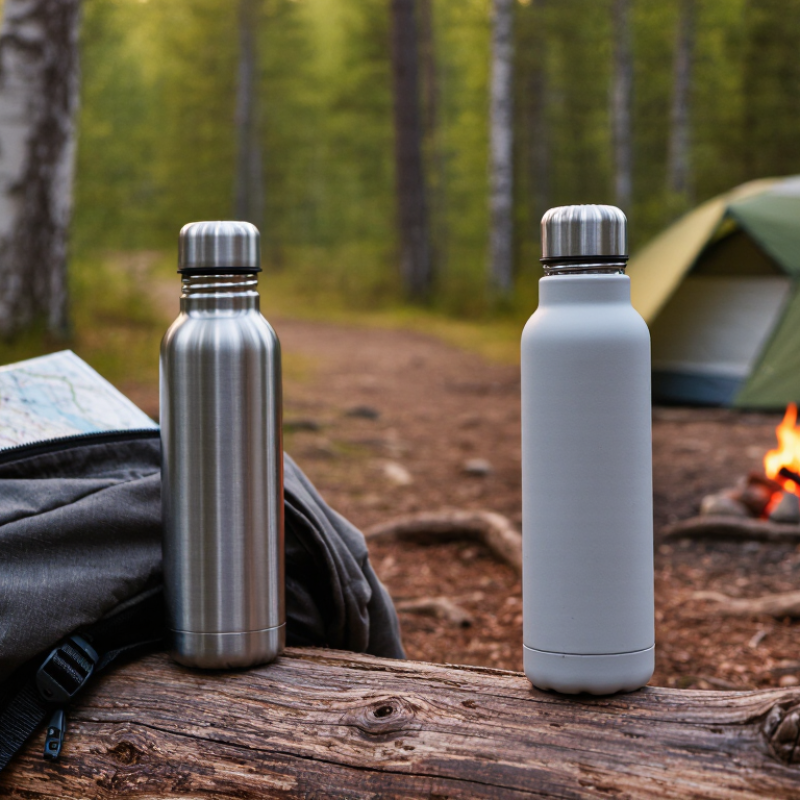
A canteen bottle for outdoor use is defined less by its silhouette than by how reliably it carries water through changing conditions. It should sit close to a pack without taking up useful space, yet have an opening wide enough for easy refilling. Practical fit matters.
Its body should withstand routine knocks against buckles, rocks, or a vehicle floor. A secure cap and dependable seal help prevent leaks when the bottle tips sideways. On cold mornings, a wide opening makes cleaning and adding ice easier; on dusty routes, a covered drinking opening can help keep grit away. Choose food-safe materials suited to repeated use. Insulation is useful when temperature control matters, but extra features can add weight and cleaning effort. More is not always better.
The carrying method matters, too. A loop, strap, or compatible pouch can make the bottle easier to reach, though loose attachments may snag on branches. Capacity involves a trade-off: a larger bottle means fewer refill stops, but adds weight with every sip carried. A shape that looks ideal on a shelf may feel awkward once a pack is full. Test it filled. Check that it fits your pocket, stays put, and seals before heading out.
A canteen bottle’s flattened, close-fitting shape sits neatly against a backpack or hip. Its profile can reduce swinging while walking and makes the bottle less likely to roll away on uneven ground. That matters. On a rocky rest stop, a rounded bottle can travel farther than expected. The shape is not perfect, though: some narrow openings are harder to clean, especially after holding a sweet drink.
Materials affect how the bottle handles outdoor use. Stainless steel can resist everyday knocks, while aluminum is often lighter to carry. Neither material is indestructible; a hard fall can dent the body or damage the cap. Double-wall construction can help keep drinks at a steadier temperature, but it usually adds weight. A simple single-wall bottle may suit short hikes better, though its contents can warm quickly in direct sun. Check that the lid seals securely, and inspect the threads for grit after dusty trips.
Tips: Keep the bottle where you can reach it without unpacking your bag. Rinse it after use and let it dry with the lid off. If a dent affects the seal, don’t assume it is still leakproof.
A canteen bottle suits outdoor activities where reliable access to water matters more than carrying the lightest possible load. On a day hike, it can sit within reach in a pack pocket or attach securely to a belt. That makes quick sips easier on a dusty trail, especially during steady climbs. Cold mornings matter. A sturdy bottle can also handle the bumps of ordinary trail use, though durability depends on its materials and construction.
Camping is another good fit. A canteen can hold drinking water beside a tent, at a picnic table, or near a cooking area. For longer trips, check its capacity and weight before packing; a full bottle adds noticeable weight. Cyclists and anglers may also appreciate a bottle that is easy to grip with damp hands. Still, it should be fastened securely, not left loose where it could fall or spill.
For paddling, beach walks, and casual outdoor events, a canteen offers a practical way to keep water close. Choose a lid that seals well and is simple to clean, since grit and drink residue can collect around the opening. That helps. One small drawback is easy to overlook: a bottle that is comfortable on a short walk may feel bulky after several hours. Try carrying it loaded before a longer outing.
A canteen bottle’s flattened shape sits close to a backpack, while a round bottle may roll when set on a sloping rock. Its broad opening can make adding ice or rinsing grit easier. The trade-off is real: a wide cap can leak if it is not tightened properly. Compared with a hydration bladder, a canteen is easier to inspect and refill, but it does not provide hands-free sipping on a steep trail. Small details matter.
Against disposable bottles, a reusable canteen avoids carrying a fresh container for every refill. The U.S. Environmental Protection Agency’s 2018 Advancing Sustainable Materials Management report found that 8.7% of all plastic waste generated was recycled; this figure covers many plastic products, not just drink bottles. Reuse is not automatically the greener choice, though. Material, manufacturing, lifespan, and washing all affect its footprint. Stainless steel can be durable, but it is heavier than many plastic bottles. Insulated models keep drinks cool longer, yet add weight and bulk. I would check the cap seal and carry comfort before choosing; a canteen that stays unused in a pack helps no one.
| Comparison Factor | Canteen Bottle | Disposable Plastic Bottle | Insulated Vacuum Bottle | Hydration Reservoir | Glass Bottle |
|---|---|---|---|---|---|
| Typical construction | Rigid, reusable container, commonly made from metal or durable plastic; often designed with a wide body and screw cap. | Usually lightweight, single-use PET plastic with a narrow opening and a screw cap. | Typically double-wall stainless steel with a vacuum-insulated space between the walls. | Flexible plastic reservoir with a drinking tube, carried inside a backpack. | Rigid glass vessel, often protected by a silicone sleeve or fabric cover. |
| Ease of carrying outdoors | Often easy to pack and carry; some designs include a cap loop, pouch, or attachment point. | Very light and convenient, but the bottle can crumple or deform as it is used. | Convenient for day trips, though steel construction and insulation generally make it heavier and bulkier. | Useful when hands-free drinking is important; usually requires a compatible backpack or carrier. | Suitable for careful transport, but its weight and breakability make it less practical for rough activities. |
| Resistance to bumps | Generally a sturdy choice, but resistance to dents, cracks, and leaks depends on the material, cap, and construction. | Can be punctured, crushed, or damaged more easily than most reusable bottles. | Often robust, but the outer steel can dent and the vacuum insulation can be compromised by severe damage. | Flexible and less likely to shatter, but the reservoir or tube can be punctured or damaged. | Can break if dropped or struck, even when covered by a protective sleeve. |
| Temperature retention | Usually limited unless the bottle is specifically double-wall insulated. | Little temperature retention; the drink warms or cools toward the surrounding temperature. | Usually the strongest option here for keeping drinks hot or cold, though performance varies by design and use. | Generally offers little insulation unless used with an insulating sleeve or backpack compartment. | Usually offers little temperature retention; glass itself is not vacuum insulation. |
| Refilling and cleaning | A wide opening on many models makes filling and washing easier; narrow-neck designs can be harder to clean inside. | Can be refilled in some situations, but disposable bottles are not designed for long-term repeated use or thorough cleaning. | A wide-mouth model is easier to clean; narrow openings and complex lids may need extra attention. | Can be awkward to clean and dry, especially the tube and bite valve; follow the manufacturer’s cleaning instructions. | The smooth interior is generally easy to wash, but the bottle needs careful handling during cleaning. |
| Drinking while moving | Usually requires stopping or using both hands unless the cap or drinking system is designed for one-handed use. | Simple to drink from when stopped; usually not hands-free. | Often requires unscrewing or opening a lid, so it is most convenient when stationary. | Designed for hands-free sipping through a tube, making it useful while walking or cycling. | Usually best used when stationary because it requires careful handling. |
| Best suited to | Hiking, camping, and everyday outdoor use when a reusable, relatively rugged container is preferred. | Occasional convenience or situations where a lightweight bottle is needed temporarily. | Trips where keeping a drink hot or cold for longer is a priority. | Long hikes, running, or cycling when frequent hands-free access to water is helpful. | Everyday use or short outings where taste preference and careful handling matter more than impact resistance. |
| Main trade-off | Insulation, weight, and leak resistance vary by model; check the material, cap design, and cleaning instructions. | Less durable for repeated outdoor use and creates more packaging waste when discarded after use. | Can be heavier and may take up more space than a simple single-wall bottle. | Requires a compatible pack and more involved cleaning than a basic bottle. | Heavier and more breakable than most plastic or metal alternatives. |
Features vary by design and material. For outdoor use, check the stated capacity, closure type, leak resistance, care instructions, and whether the bottle is insulated.
Choosing a canteen bottle for outdoor use starts with the conditions you expect, not the biggest capacity on the shelf. For a short walk, a compact bottle may fit a side pocket; longer, hotter outings call for more water, though extra weight becomes noticeable on steep ground. Stainless steel resists dents and odors well, while a lightweight plastic bottle is easier to carry. Check that the material is food-safe and that the cap seals firmly. A small leak can soak a map. Simple details matter.
Look at the mouth opening, too. A wide opening is easier to fill using a water filter and lets you reach inside for cleaning, but water can slosh out if the cap is removed carelessly. A narrow neck may make sipping neater, yet can trap residue around its threads. Choose a lid that opens with cold or gloved hands, and inspect the hinge or tether; tiny parts are easy to lose. If insulation matters, check its effect on weight and bulk. I would not treat a rugged finish as proof of durability. Inspect the seams and cap after repeated use. And clean it.
A canteen bottle can be a practical choice for carrying water on hikes, camping trips, and other outdoor activities. Prioritize features that suit your route, expected water needs, and cleaning routine.
How to read this: Scores are an illustrative selection guide, not survey results or product-test measurements. Consider leak resistance, suitable capacity, durability, carry comfort, and ease of cleaning when comparing bottles.
© 2025 Cardboard Tubes | Registered in England and Wales.
Company Number 2402078

