

A Corrugated Box Maker is a person, machine, or specialized company that produces boxes from corrugated fiberboard. The term can feel confusing. In packaging discussions, it often describes a manufacturer rather than one single machine. Its work begins with paper liners and fluted medium. These layers are bonded to create a lightweight structure with useful strength.
A professional Corrugated Box Maker may operate several connected systems. Corrugators form the flutes with heated rollers. Printing units add logos, handling marks, or product information. Die cutters shape openings and folds. Folder-gluers then prepare flat blanks for shipment and assembly. Operators monitor paper moisture, flute direction, dimensions, and adhesive coverage. Small changes can affect stacking performance.
Quality matters beyond appearance. A reliable maker checks compression strength, edge crush, print accuracy, and joint durability. These tests help match a box with its product, storage conditions, and transport route. A box for glass bottles needs different protection from one for lightweight clothing. Experience often reveals practical issues that a specification sheet misses, such as crushed corners after repeated warehouse handling.
Still, no box design is perfect. Excess material can increase cost and waste, while a weak structure may damage goods. Responsible manufacturers review recycled content, sourcing records, production consistency, and customer requirements. They also follow applicable packaging and workplace standards. Understanding what a Corrugated Box Maker does helps buyers ask better questions. It clarifies whether they need custom design, high-volume production, short runs, or technical testing.
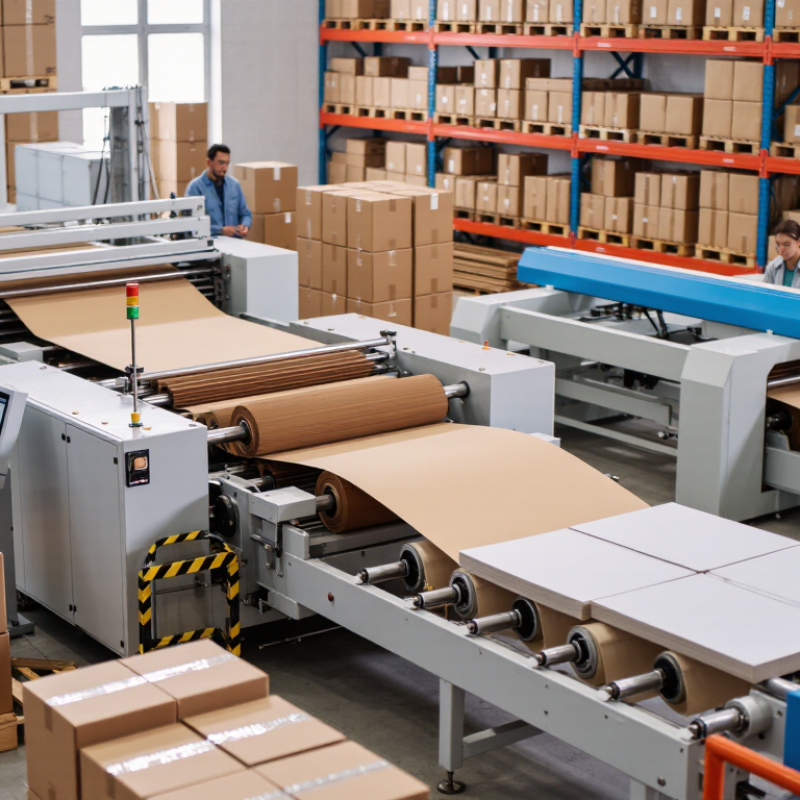
A corrugated box maker converts paperboard into strong, practical packaging. The process begins with linerboard and fluting paper. Heat and adhesive join these layers into corrugated board. The fluted middle layer cushions products and improves stacking strength.
On a production floor, large sheets pass through printing, cutting, folding, and gluing equipment. Operators adjust dimensions, compression settings, and feeding speed. Small changes can affect box quality. A box that looks correct may still collapse under uneven weight. This is where production experience matters. Measurements, material selection, and regular inspections help reduce waste and protect products during transport. The work looks simple. It is not always.
Tips: Choose board strength according to product weight and shipping conditions. Check crease lines before folding. Test a sample box with realistic contents. Watch for crushed edges, weak glue joints, and inaccurate cuts. Humidity also matters because paperboard can soften or warp. A rushed setup may save minutes but create costly failures later. I would also review damaged samples honestly, since one overlooked problem can repeat across thousands of boxes. A reliable corrugated box maker keeps improving the process, even when the finished package appears ordinary.
A corrugated box maker turns paper materials into protective, stackable packaging. The work starts with choosing suitable linerboard and fluting. Linerboard forms the flat outer and inner surfaces. Fluting creates the ridged middle layer. Together, they provide strength without making every box unnecessarily heavy.
A 3-ply board contains two linerboards and one fluted layer. It suits lighter products, retail cartons, and short-distance handling. The air pockets between the ridges help absorb pressure and minor impacts.
A 5-ply board adds another linerboard and fluting layer. It offers better stacking strength for heavier goods or longer transport.
A 7-ply board uses three fluted layers and four linerboards. It is selected for demanding loads, large containers, or repeated handling.
More layers are not always better. They can increase weight, cost, and storage space. A careful box maker checks product weight, box dimensions, humidity, and stacking conditions before selecting the board. In practical testing, edge crush and compression results matter more than appearance alone. Moisture can soften paper quickly. That detail is easy to overlook.
Flute height, paper weight, and bonding quality also affect performance. A small production flaw may weaken an otherwise strong board.
Some specifications still need adjustment after real transport testing. A reliable maker measures samples, records failures, and improves the design instead of trusting assumptions.
A corrugated box maker turns paper rolls into protective packaging for shipping, storage, and retail use. The work begins in the corrugating machine. Heat and moisture soften the fluted medium, which passes between grooved rollers. Adhesive then joins it with one or two flat liners. This creates a strong, lightweight board with air channels for cushioning.
Printing comes next. Many box makers use flexographic printing to apply clear graphics, handling marks, or product information. Ink coverage must remain even without weakening the paper. Die-cutting shapes handles, windows, vents, and unusual outlines. Folding and gluing then convert the printed sheet into a usable box.
Experienced operators check fold lines carefully because a small alignment error can affect assembly.
Quality checks often include board thickness, compression strength, moisture levels, print clarity, and joint accuracy.
The process is precise, but never perfectly automatic.
Tips:
Choose board strength according to product weight and travel conditions. Test a sample before full production. Ask for measurements of flute direction, box dimensions, and compression performance. Keep printed surfaces dry and avoid excessive stacking pressure. One detail is easy to miss: a box can look strong but still fail when humidity changes. Regular testing helps reveal that weakness before shipment.
What Is a Corrugated Box Maker?
A corrugated box maker converts paperboard into protective packaging for specific products. Good box design begins with recognized FEFCO style codes. These codes describe common structures, such as regular slotted cartons and self-locking designs. They reduce confusion between buyers, engineers, and production teams. However, a familiar style is not automatically the best choice. Product shape, filling material, closing method, and warehouse handling still matter.
Flute profiles control cushioning and stacking performance. E-flute creates a fine surface for printing and small retail packs. B-flute offers balanced strength and flexibility. C-flute provides greater cushioning for heavier goods. BC double-wall board adds durability but increases thickness and material use. Board grades also need careful evaluation. Paper weight alone can mislead. Edge crush strength, burst resistance, moisture exposure, and box dimensions give a more reliable picture. A box maker should test samples with real products, filled weight, and realistic stacking time. I have seen boxes pass a quick hand check and fail after overnight storage. That result deserves attention, not excuses.
Tips: Ask for the FEFCO code, flute profile, and board grade before approving production. Check internal dimensions, not external measurements. Test the packed box on a rough surface, too. A perfect drawing can still hide a weak corner. Keep notes from every trial, because small changes in score lines or humidity may alter performance.
Box Design Standards: FEFCO Styles, Flute Profiles, and Board Grades
What Is a Corrugated Box Maker?
A corrugated box maker converts paperboard into protective packaging for storage, shipping, and retail handling. A reliable maker does more than cut, crease, fold, and glue. It checks whether each box can resist crushing when conditions become difficult.
Quality Testing: ECT Under ISO 3037 and Compression Under ISO 12048
Edge Crush Test, or ECT, measures the force needed to crush a corrugated board edge. Under ISO 3037, technicians prepare controlled samples and load them vertically. The flute direction matters. So does moisture. A box can look strong but perform poorly after absorbing humidity.
Compression testing under ISO 12048 examines a complete, filled package. The tester applies force until the package reaches a defined condition or fails. This reflects warehouse stacking more closely than ECT alone. Box size, contents, joints, and load distribution all influence the result. A high ECT value does not guarantee excellent compression strength. That assumption can fail.
Tips: Condition samples before testing, and record temperature and relative humidity. Use realistic contents and stacking patterns. Inspect crushed corners, panel buckling, and seam movement. Repeat tests across production batches. One test is not enough. Results may still vary, especially when recycled fibers or uneven filling are involved. That limitation deserves attention, not silence.
| Quality Dimension | Test Method | Test Object | Key Measurement | Unit | Anonymous Reference Result | Quality Interpretation |
|---|---|---|---|---|---|---|
| Edgewise crush resistance | ISO 3037 | Corrugated fibreboard specimen cut perpendicular to the board flutes | Maximum compressive force divided by specimen width | N/m or kN/m | 5.20 kN/m | Recorded ECT value |
| Edgewise crush resistance | ISO 3037 | Corrugated fibreboard specimen | Average result from a controlled specimen set | kN/m | 5.08 kN/m | Lower than the highest individual result; variation should be reviewed against the product specification. |
| ECT repeatability | ISO 3037 | Multiple specimens from the same board sample | Difference between the highest and lowest recorded ECT values | % | 4.6% | Indicates relatively consistent flute structure and liner performance within the tested sample. |
| Board conditioning | ISO 187 | Corrugated fibreboard before mechanical testing | Standard laboratory atmosphere commonly used for paper and board conditioning | 23 °C / 50% RH | 23.1 °C / 50.2% RH | Conditioning result is close to the reference atmosphere used for comparative testing. |
| Box compression strength | ISO 12048 | Complete filled transport package or representative test package | Maximum compressive load sustained before failure or specified deformation | N or kN | 4.82 kN | Recorded compression value |
| Compression performance | ISO 12048 | Complete package placed between compression platens | Maximum load divided by the package footprint area | kPa | 2.41 kPa | Useful for comparing packages with different base areas; it is not a universal pass/fail limit. |
| Compression deformation at maximum load | ISO 12048 | Filled corrugated transport package | Vertical displacement measured during compression | mm | 8.6 mm | Lower deformation generally indicates greater resistance to stacking-related collapse under the same test conditions. |
| Compression test repeatability | ISO 12048 | Replicate packages from one production sample | Coefficient of variation of maximum compression load | % | 6.3% | Provides an indication of consistency among replicate package specimens. |
| Failure mode | ISO 12048 | Tested corrugated box during compression | Observed structural failure under load | Qualitative record | Vertical panel buckling | Failure observation should be recorded together with the maximum load and deformation. |
| Result reporting | ISO 3037 / ISO 12048 | Laboratory test report | Method, specimen details, conditioning, equipment, result and failure observations | Report record | Complete | Traceable reporting supports comparison between production lots and package designs. |
| ECT under ISO 3037 evaluates the edgewise crush resistance of corrugated fibreboard. Compression testing under ISO 12048 evaluates the load-bearing performance of complete filled transport packages. The numerical results shown are anonymous reference values for presentation and data-structure purposes; acceptance limits must be established from the package design, board grade, contents, stacking pattern, transport environment and customer specification. | ||||||
© 2025 Cardboard Tubes | Registered in England and Wales.
Company Number 2402078

