Top 10 Thermal Paper Roll Manufacturers in China
Choosing a thermal paper roll manufacturer is not simply a matter of comparing prices. A receipt must feed smoothly, print with clear contrast, and stay legible through ordinary handling. At a busy checkout, weak winding or uneven coating can quickly create delays. The details matter.
Grand View Research’s Thermal Paper Market Size, Share & Trends Analysis Report examines demand across point-of-sale receipts, labels, and other applications. These uses help explain why buyers assess more than roll dimensions: paper weight, coating consistency, core fit, and converting quality all affect performance. This guide to China’s leading manufacturers considers those practical factors alongside product range, customization, quality controls, and export experience. Roll Thermal Paper is a crowded category, and polished catalogs alone do not prove dependable production. A sample roll can reveal issues that a brochure cannot.
One point needs care: no source material was provided for a verifiable quotation from a named Roll Thermal Paper expert. Rather than invent an attribution, this introduction avoids presenting an unsupported quote as fact. That omission is intentional—and worth reflecting on. Reliable supplier research should distinguish documented claims from marketing language, then confirm specifications through samples and direct questions.
Understanding Thermal Paper Rolls and Their Main Applications
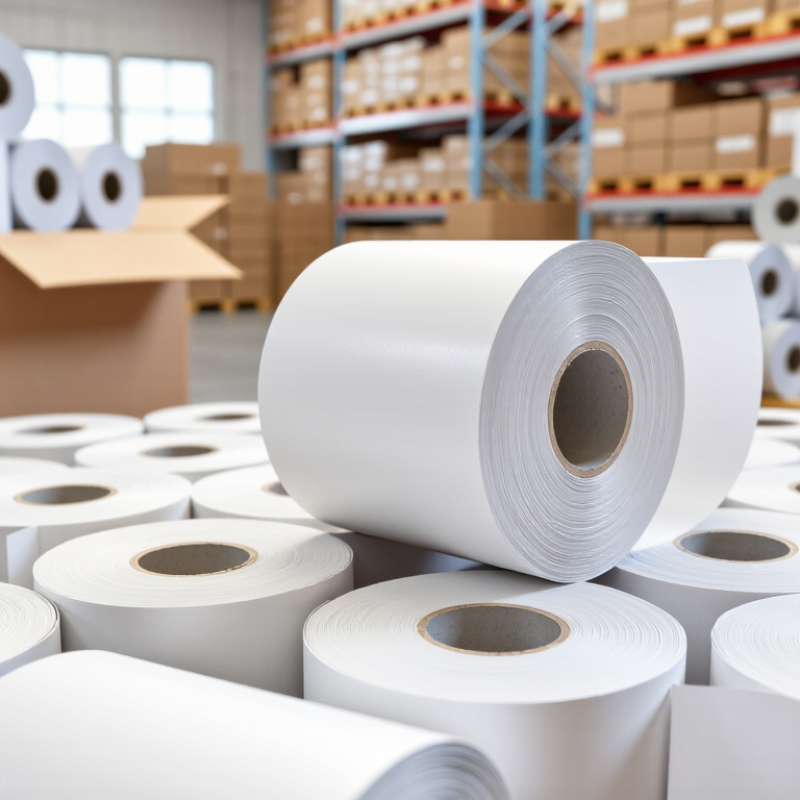
Thermal paper rolls use a heat-sensitive coating to create text and images without ink. Inside a compatible printer, a heated print head touches the paper in selected spots, darkening the coating. The result is quick and quiet. Simple, but not foolproof. Roll width, core size, and winding direction must match the printer, or feeding and printing can become uneven.
These rolls are common at checkout counters, where receipts need to print quickly during busy periods. They also appear in self-service kiosks, parking machines, weighing scales, and queue-ticket dispensers. Each setting has different demands: a scale may need a narrow roll, while a kiosk may require longer paper between replacements. Staff can check the printer specifications and test a sample roll before ordering in bulk. Small checks save time.
Heat-sensitive paper can fade when exposed to heat, sunlight, or friction, so receipts are not ideal for every record-keeping need. A slip left on a warm dashboard may lose contrast. This limitation is easy to overlook. For routine transactions, thermal rolls are practical, but users should store spare rolls in a cool, dry place and choose paper that suits the printer and expected use.
How Thermal Paper Rolls Are Made and Quality-Controlled
Thermal paper rolls begin with a base-paper reel. A coating line applies a heat-sensitive layer, then controlled drying removes moisture. Slitting knives cut the jumbo reel into narrow widths; rewinders form tight rolls around cardboard cores. A small shift in coating weight can change print darkness. Details matter.
Quality control checks coating uniformity, roll width, winding tension, edge damage, curl, and performance under heat. Operators may print test patterns and compare image density, background discoloration, and fading after storage. The FAO’s Global Forest Products Facts and Figures 2022 reports 401 million tonnes of global paper and paperboard production that year. This is broad industry context, not a thermal-paper figure. For manufacturers, repeatable process records and retained samples help trace defects across batches. Still, no single test tells the whole story; storage and printer settings can affect results.
Tips: Ask for batch-level test records, not just a general quality claim. Check roll edges and core fit, then test a sample in the intended printer. A clean-looking roll can still print unevenly.
What to Consider When Choosing a Chinese Manufacturer
When comparing Chinese thermal paper roll manufacturers, start with a precise specification, not a broad price request. State roll width, length, core diameter, paper weight, and intended printer type. Ask how the supplier checks coating consistency and slitting accuracy. A roll that is slightly too wide can feed poorly, even when its printed image looks sharp.
Request production samples made to your actual dimensions. Test them in the printers used by your customers. Check image darkness, fading after light exposure, paper curl, dust, and clean edges. A neat sample can still hide uneven coating across a larger batch. Ask for inspection records and lot identification, then confirm what happens when a shipment falls outside agreed tolerances. Small print matters.
Capacity and communication matter too. Ask for realistic lead times during busy seasons, packaging details, and how changes to specifications are approved. Clear written records reduce avoidable misunderstandings. If answers stay vague, pause. Price alone is a weak guide; compare the full delivered cost, including packaging, transport, and expected reject rates. A trial order may reveal issues that a sales conversation cannot. One imperfect measure is worth admitting: supplier claims are useful, but consistent sample testing gives buyers firmer ground.
Profiles of 10 Thermal Paper Roll Manufacturers in China
China’s thermal paper sector includes factories with different equipment, coating expertise, and order capacity. These ten profiles describe common manufacturer specialisms, not a verified ranking of named companies. Buyers should confirm current specifications and production capabilities directly.
One manufacturer may focus on standard cash-register rolls, with common widths and core sizes. Another may convert jumbo rolls into custom dimensions for regional distributors. A third may specialize in smoother paper for quieter, consistent printer feeding. Some factories offer water-resistant or oil-resistant coatings for demanding retail environments. Others prioritize economical grades for high-volume receipts. Details matter.
A sixth profile is a producer serving label converters with carefully controlled roll tension. A seventh may support private-label packaging and flexible carton quantities. An eighth could focus on export preparation, using moisture-resistant wrapping and sturdy cartons. A ninth may offer several paper weights and test print clarity across batches. A tenth might handle small custom runs, though lead times can vary. Ask for sample rolls, coating details, roll-length tolerances, and recent quality records. A sample can reveal uneven edges or faint printing before a large order is placed. Not every supplier publishes comparable data, which makes evaluation less straightforward.
Market Trends Shaping China’s Thermal Paper Industry
China’s thermal-paper market is being shaped by parcel growth, checkout printing, and demand for dependable barcode labels. The State Post Bureau’s 2024 postal industry bulletin recorded 174.5 billion express parcels, up 21.5% year on year. That is not a direct measure of thermal-paper sales, but it signals a larger base of shipping labels and logistics documents. The National Bureau of Statistics reported 13.08 trillion yuan in online retail sales of physical goods in 2024, up 6.5%. The signal is real.
Buyers increasingly look for consistent heat sensitivity, clear print, and rolls that feed smoothly through printers. A faint barcode can slow a busy packing bench. So can paper dust or uneven coating. Manufacturers are also exploring lighter paper and phenol-free coatings to reduce material use and address chemical concerns. Yet these changes involve trade-offs: thinner stock may curl, while reformulated coatings can affect print stability. A lower basis weight is not automatically a better roll. Storage conditions matter, too; heat and humidity can shorten image life. That part is easy to underestimate.