

China Best Plastic Food Container Manufacturers?
Choosing among China’s best Plastic Food Container manufacturers requires more than comparing factory prices. Buyers must examine resin quality, mold precision, food-contact documentation, leak resistance, and production traceability. A clear supplier audit can reveal whether a container survives freezer storage, microwave heating, and repeated transport. Small details matter, including lid fit, wall thickness, and odor after opening.
Industry data explains why this evaluation matters. The OECD’s Global Plastics Outlook reports that global plastic waste reached 353 million tonnes in 2019. Packaging represented approximately 40% of that volume. The report also highlights weak collection and recycling systems in many regions. Therefore, responsible sourcing should include material reduction, practical reuse, and realistic end-of-life planning. Claims about “eco-friendly” products need evidence, not attractive wording.
Sander Defruyt, a packaging circularity expert at the Ellen MacArthur Foundation, stated, “We cannot recycle our way out of the plastic pollution crisis.” His warning applies directly to food containers. Recyclability alone cannot replace durable design and controlled material selection. Strong Chinese manufacturers usually provide test reports, factory inspection records, batch codes, and clear specifications for polypropylene, polyethylene, or recycled-content products. However, no supplier is perfect. Some catalogs look impressive but hide inconsistent dimensions or incomplete compliance files. This guide will compare manufacturers through measurable criteria, including product safety, customization capability, quality control, export experience, and sustainability evidence. The goal is practical: identify suppliers that can deliver reliable Plastic Food Container products without sacrificing performance, transparency, or responsible manufacturing.
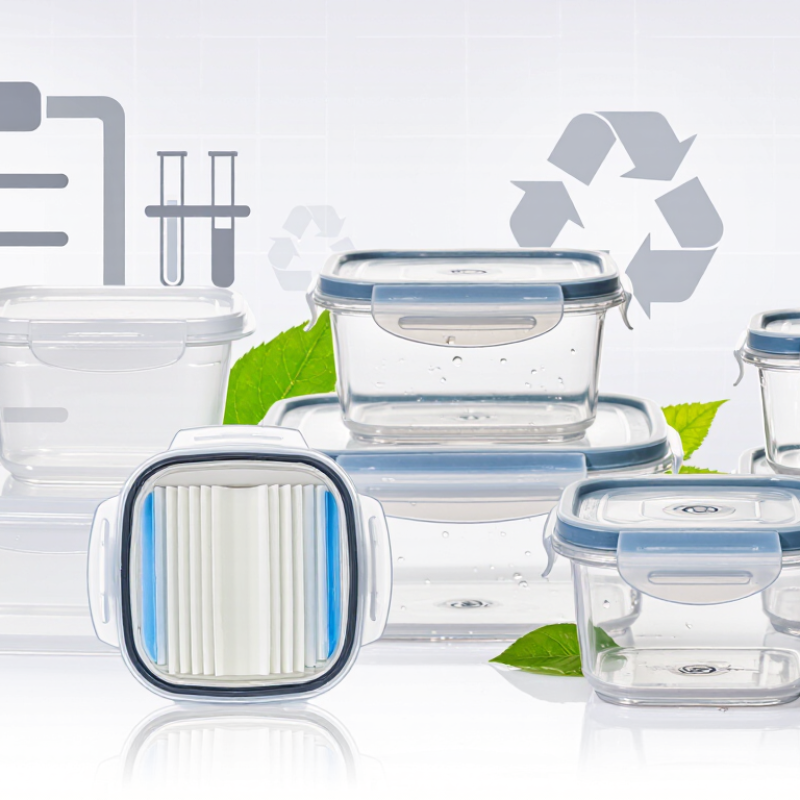
What Defines a Leading Plastic Food Container Manufacturer in China
A leading plastic food container manufacturer in China is defined by controlled performance, not attractive catalogs. Experienced factories trace each resin lot, record mold changes, and test containers under real conditions. These tests include leakage, drop resistance, stacking pressure, freezer exposure, and microwave heating. Food-contact materials should also meet applicable Chinese standards, including GB 4806 requirements, with migration reports from qualified laboratories.
Material judgment matters. Polypropylene suits many hot-food applications, while PET supports clear, cold-use packaging. However, neither choice is automatically better. Wall thickness, sealing temperature, additives, and repeated handling can change performance. The OECD Global Plastics Outlook reported that only 9% of global plastic waste was recycled in 2019. PlasticsEurope reported global plastic production of 413.8 million tonnes in 2023. These figures make lightweight design and responsible material planning practical priorities, not marketing phrases.
A reliable supplier should provide production samples, inspection records, and corrective-action reports. ISO 9001 systems help, but certificates alone cannot prove daily discipline. I would inspect the factory floor, not only the audit folder. A perfect zero-defect claim deserves skepticism. Small issues, such as warped lids or inconsistent sealing, often appear after shipping. Strong manufacturers measure these failures, explain their causes, and improve the mold, process, or packaging before large-scale delivery.
China Best Plastic Food Container Manufacturers? - What Defines a Leading Plastic Food Container Manufacturer in China
| Evaluation Dimension | Verified Industry Benchmark | What a Leading Manufacturer Should Demonstrate | Why It Matters to Buyers |
|---|---|---|---|
| Food-Contact Compliance | Applicable requirements such as China GB 4806, EU Regulation (EC) No. 1935/2004, or U.S. FDA requirements, depending on the destination market. | Current test reports, material declarations, traceability records, and documentation matched to the target market. | Reduces regulatory, customs, and product-safety risks. |
| Common Food-Grade Materials | PP, HDPE, LDPE, PET, and Tritan-type copolyesters are commonly used for food-contact applications, subject to formulation and compliance requirements. | Clear material identification, controlled resin sourcing, and suitability data for the intended food and temperature range. | Material selection affects strength, clarity, chemical resistance, heat performance, and recyclability. |
| Temperature Performance | Performance varies by resin, wall thickness, design, and use conditions; polypropylene generally offers better heat resistance than polyethylene. | Published use-temperature guidance and application-specific testing rather than a generic temperature claim. | Helps prevent deformation during hot filling, refrigeration, reheating, or freezing. |
| Leak-Resistance Testing | Testing may include liquid leakage, inverted storage, pressure, drop, and seal-integrity checks using defined procedures. | Documented test methods, acceptance criteria, sample records, and corrective-action procedures. | Protects against spills, contamination, returns, and poor customer experience. |
| Dimensional Consistency | Critical dimensions should be controlled against approved drawings and product tolerances. | Inspection plans covering length, width, height, wall thickness, lid fit, weight, and volume. | Consistent dimensions improve stacking, automated filling, sealing, and retail presentation. |
| Closure and Seal Design | Typical solutions include snap-fit lids, hinged lids, threaded closures, gasket seals, and tamper-evident features. | Validated lid-container compatibility, repeatable closing force, and performance after transport and temperature changes. | A reliable closure improves freshness, portability, and shelf-life protection. |
| Manufacturing Process Control | Injection molding, blow molding, thermoforming, and compression molding are established processes for plastic food containers. | Controlled molding parameters, preventive maintenance, tooling records, and in-process quality checks. | Process stability supports repeatable quality across large production runs. |
| Quality Management | A documented quality system commonly includes incoming inspection, first-article approval, in-process inspection, final inspection, and batch records. | Defined sampling plans, nonconformance handling, traceability, and measurable quality objectives. | Provides evidence that quality is managed systematically rather than by visual inspection alone. |
| Customization Capability | Customization may cover dimensions, colors, textures, lids, labels, printing, embossing, and tooling. | Engineering support, design-for-manufacturing review, prototype approval, and controlled change management. | Allows buyers to develop packaging suited to product, logistics, and market requirements. |
| Production Capacity Planning | Capacity depends on machine count, mold cavities, cycle time, labor, resin supply, and inspection requirements. | Capacity calculations based on approved specifications, realistic lead times, and documented production scheduling. | Improves delivery reliability during seasonal demand or product launches. |
| Sustainability Options | Relevant options include lightweighting, mono-material construction, recycled content where legally suitable, and designs that support recycling. | Specific material declarations, recyclability guidance, and evidence supporting environmental claims. | Helps meet retailer requirements and avoid unsupported sustainability statements. |
| Packaging and Logistics | Protective export packaging should control dust, moisture, deformation, and transit damage. | Validated carton specifications, palletization plans, loading procedures, and shipment traceability. | Proper logistics planning reduces damage, contamination, and avoidable freight costs. |
| Technical Documentation | Useful documents include drawings, material specifications, certificates, inspection reports, and care instructions. | Consistent, revision-controlled documentation available before mass production and shipment. | Clear documentation supports purchasing, compliance, quality control, and after-sales service. |
| Commercial Reliability | Supplier evaluation should consider quotation clarity, sampling process, production lead time, payment terms, and communication response. | Transparent commercial terms, realistic schedules, accountable project management, and documented corrective actions. | Reliable coordination is essential for long-term procurement and repeat orders. |
© 2025 Cardboard Tubes | Registered in England and Wales.
Company Number 2402078