
Choosing a cardboard packaging manufacturer is about more than comparing unit prices. Global buyers need dependable quality, clear communication, and packaging that can withstand storage and transport. A carton may look sturdy on a sample table, yet arrive crushed after a long journey. Small details matter.
This guide introduces ten manufacturers serving different markets and business needs. It considers factors buyers can verify, including product range, customization options, production capabilities, quality controls, and export experience. These details help teams assess whether a supplier can make regular shipping cartons, retail-ready boxes, or custom-sized packaging. Ask for material specifications and samples. Check how suppliers handle artwork approval, lead times, and repeat orders before making a commitment.
No single company is right for every buyer. Order volumes, product weight, branding needs, and delivery locations all shape the decision. A lower quote may not include the same board grade, printing finish, or freight terms. That deserves a closer look. The manufacturers in this list offer a starting point, not a universal ranking or a guarantee of suitability. Buyers should confirm current capabilities directly and compare written quotations on equal terms. With careful checks, cardboard packaging can protect products, support a consistent customer experience, and fit practical shipping requirements. A useful supplier relationship also depends on follow-through: clear updates, accurate specifications, and reliable handling when plans change.
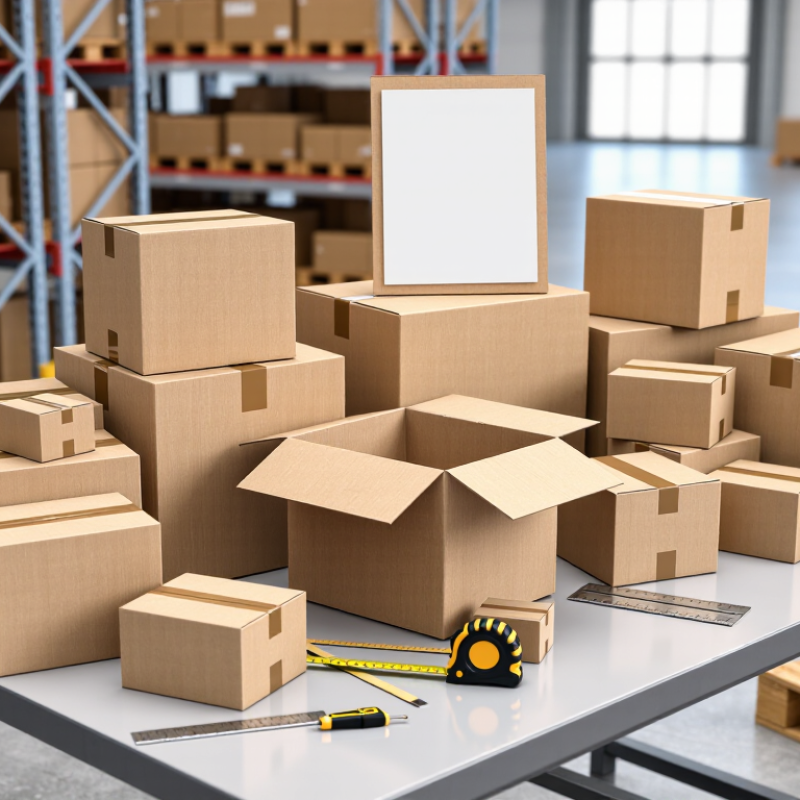
Cardboard packaging is a broad term for protective containers and inserts made from paper-based board. Corrugated cartons use fluted inner layers between flat sheets, helping cushion goods during handling and transport. Folding cartons are lighter and often used for retail products. The right choice depends on product weight, shipping distance, storage conditions, and presentation needs. Small details matter: a snug insert can stop glass jars from knocking together, while an oversized box may waste space and increase freight costs. Not every shipment needs the strongest carton.
For global buyers, packaging affects more than product protection. It can influence shipping efficiency, warehouse space, unpacking, and how clearly handling instructions are understood. Materials and recycling systems differ by destination, so a package that works well in one market may be less suitable in another. Check samples under realistic conditions, including stacking and moisture exposure. Paperboard can weaken when damp. That is easy to overlook.
Tips: Share product dimensions, packed weight, and shipping route with your supplier. Ask for carton specifications and physical samples, then test them with the actual product. Consider print readability, pallet fit, and whether local recycling facilities accept the material. Keep a record of test results; one trial may not represent every shipment.
Typical Corrugated Board Flute Thickness
Flute profiles help buyers match cushioning, stacking strength, and package size to shipping needs. Bars show approximate midpoints of commonly cited thickness ranges; actual values vary by manufacturer and board construction.
Evaluating cardboard packaging manufacturers takes more than comparing unit prices. Start with the packaging’s job: protecting a glass jar, stacking safely on a pallet, or presenting a product on a retail shelf. Ask for board grade, flute profile, dimensions, and load or compression test results. A sample should fit the product snugly, close cleanly, and withstand realistic handling. Small gaps matter.
Check how the manufacturer controls consistency. Request details about proof approval, color matching, production tolerances, and inspection records. Ask how defects are handled and whether repeat orders can match the approved sample. A polished sample is useful, but it does not prove every production run will be identical. That distinction is easy to overlook.
Capacity and lead time deserve practical questions. Can the supplier manage seasonal volume without changing materials or missing agreed dispatch dates? Clarify minimum order quantities, delivery terms, and who coordinates packaging changes. For sustainability claims, look for specific information about recycled content, material sourcing, and recyclability in the intended market; broad claims alone are hard to assess. Compare the full landed cost, including tooling, freight, storage, and waste from poor-fitting cartons. Then test a small order. It may reveal problems the quote cannot.
How Do the Top 10 Cardboard Packaging Manufacturers Compare?
The strongest manufacturers differ less in basic box strength than in fit, speed, and supply coverage. Smithers’ The Future of Global Packaging to 2028 values the global packaging market at about $1.17 trillion in 2023, reflecting a large, varied supply landscape. For buyers, compare regional production sites, recycled-fiber options, print quality, and ability to handle seasonal volume changes. Ask for test data on compression and moisture resistance, not just a sample box. A clean-looking prototype can still fail on a damp loading dock.
Cost needs a wider lens. Request quotes for the same dimensions, board grade, print coverage, order quantity, and delivery terms. Then compare tooling charges, minimum order quantities, lead times, and freight. Certification claims should be checked against current certificates and their scope. Some suppliers offer excellent customization but require longer setup; others ship standard formats quickly, with fewer design options. Neither trade-off is automatically better. I would not rank a manufacturer on a single quote, especially when shipping distance can change the real cost.
Tips: Send each supplier the same product weight, packing method, and storage conditions. Request a physical transit sample and clarify how defects are handled. Keep one variable open: packaging needs often change after the first production run.
Leading cardboard packaging manufacturers offer more than standard shipping boxes. Their product ranges often include regular slotted cartons, die-cut mailers, retail-ready trays, paper inserts, and heavy-duty corrugated cases. Buyers can also request custom dimensions, printed graphics, moisture-resistant coatings, and prototypes for fit testing. Small details matter. A loose insert can let glass products knock together during transit.
Design support is a key service. Engineers assess product weight, stacking height, shipping distance, and handling conditions before recommending board grade and flute profile. FEFCO’s European Database reports annual corrugated-board production of roughly 50 billion square metres in Europe, reflecting the scale of this widely used packaging format. Large manufacturers may also provide automated packing trials, print proofing, inventory planning, and delivery schedules across multiple sites. Yet a strong sample is not proof of consistent production; buyers should check specifications and quality-control procedures.
Sustainability services increasingly include recycled-fibre options, material reduction, and packaging redesign. The U.S. Environmental Protection Agency reported that paper and paperboard containers and packaging had a corrugated-box recycling rate of 96.5% in 2018. That figure is specific to the United States and year, not a guarantee for every market or package. Ask manufacturers for current material data and clear recycling guidance. Some designs still use more board than necessary. That deserves a second look.
| Manufacturer Profile | Typical Products | Common Services | Material and Design Capabilities | Typical Applications | Global Buyer Considerations |
|---|---|---|---|---|---|
| Integrated corrugated packaging producer | Regular slotted cartons, shipping boxes, die-cut cases, corrugated sheets | Structural design, print preparation, prototyping, production planning | Single-, double-, and triple-wall corrugated board; flexographic printing | Consumer goods, appliances, food distribution, industrial shipments | Confirm board strength, box dimensions, print specifications, and delivery locations |
| Retail-ready packaging specialist | Display-ready cases, shelf trays, counter displays, printed outer cartons | Retail packaging design, display testing, artwork coordination, packing guidance | Corrugated structures designed for shelf presentation and retail handling | Grocery, personal care, household products, promotional campaigns | Check retailer requirements, display dimensions, and whether assembly is needed |
| Folding carton manufacturer | Folding cartons, sleeves, tuck-end boxes, window cartons | Prepress support, dieline development, finishing recommendations | Paperboard grades with options such as coating, embossing, and foil decoration | Cosmetics, pharmaceuticals, packaged foods, consumer electronics | Specify board grade, carton style, product-contact requirements, and finish |
| Protective packaging converter | Corrugated inserts, partitions, edge protectors, cushioning components | Packaging assessments, transit testing coordination, protective design | Custom-cut corrugated components and paper-based protective structures | Fragile goods, machinery parts, furniture, electronics | Share product weight, fragility, shipping method, and expected handling conditions |
| Food packaging supplier | Food cartons, produce boxes, bakery boxes, corrugated shipping cases | Packaging specification support, print services, supply planning | Paperboard and corrugated options; food-contact suitability depends on design and materials | Fresh produce, bakery products, dry foods, foodservice distribution | Verify food-contact compliance, moisture needs, ventilation, and storage conditions |
| E-commerce packaging producer | Mailing boxes, self-locking cartons, shipping cases, paper-based inserts | Right-sizing support, packaging design, sample development | Corrugated board and paper-based protective components in a range of formats | Online retail, subscription shipments, direct-to-consumer orders | Evaluate parcel carrier requirements, packing speed, dimensional weight, and returns |
| High-graphics packaging printer-converter | Printed corrugated boxes, litho-laminated cartons, branded displays | Artwork preparation, color management, proofing, print production | Flexographic or lithographic print processes, depending on facility and job | Branded consumer products, retail displays, promotional packaging | Request print proofs and confirm color standards, finishes, and artwork ownership |
| Industrial packaging manufacturer | Heavy-duty corrugated cases, pallet boxes, large-format cartons, dividers | Load assessment, packaging specification support, export-pack planning | Multi-wall board and reinforced corrugated designs selected for load requirements | Automotive components, equipment, spare parts, bulk shipments | Provide load data, pallet pattern, route conditions, and applicable export requirements |
| Sustainable packaging-focused producer | Recyclable corrugated boxes, paperboard cartons, molded-fiber or paper inserts | Material selection guidance, packaging reduction reviews, design optimization | Fiber-based formats; recyclability depends on coatings, adhesives, and local systems | Retail, e-commerce, consumer goods, replacement of selected plastic components | Ask for material composition and substantiation for environmental claims |
| Custom packaging design and manufacturing partner | Made-to-order cartons, prototypes, display packaging, protective inserts | Concept development, CAD design, sampling, testing coordination, production | Multiple paper-based packaging formats selected around product and shipping needs | New product launches, specialized goods, low-to-medium volume projects | Confirm tooling costs, minimum order quantities, sample lead times, and production capacity |
This comparison summarizes common manufacturer profiles and industry offerings; actual product ranges, certifications, production capabilities, and service availability vary by supplier and location.
Selecting a cardboard packaging manufacturer is about more than comparing prices. Start with the box’s job: protecting glass jars, keeping apparel neat, or stacking heavy parts on a pallet. Ask for samples in the intended board grade and size. Fold them, load them, and check whether flaps stay closed after repeated handling. A polished sample is useful, but a production run can reveal different results.
Review the manufacturer’s equipment, quality checks, and experience with your order volume. Ask how it manages color variation, board strength, and changes in lead time. Request clear specifications, such as dimensions, flute type, and weight tolerance. Confirm that the supplier can provide test records where relevant. Communication matters, too. If replies are vague before an order, resolving a defect later may be harder. I have seen buyers focus on unit cost and overlook freight, storage, or minimum-order quantities.
Tips: Send the same brief to each candidate. Include product weight, packing method, delivery location, and expected annual volume. Compare landed costs, not just quoted prices. Ask for a small trial order before committing to a large run. Keep one approved sample on file; it gives both sides a practical reference when production varies. Be cautious of promises that sound unusually precise. Cardboard responds to moisture, handling, and storage, so performance is not always identical from batch to batch.
© 2025 Cardboard Tubes | Registered in England and Wales.
Company Number 2402078