How to Source High Quality Cardboard Cores for Your Business?
Sourcing high-quality cardboard cores is crucial for businesses across various industries. According to a report by Smithers Pira, the global market for cardboard cores is expected to reach $2.5 billion by 2025. This growth highlights the increasing demand for effective packaging solutions. Industry expert Dr. Emily Johnson emphasizes, "Choosing the right cardboard cores can significantly impact production efficiency."
However, finding reliable suppliers can be challenging. Many businesses struggle with quality inconsistencies and delivery timelines. A proactive approach involves assessing potential suppliers based on their manufacturing practices and material sourcing. Also, utilizing industry networks can lead to recommendations of trusted vendors.
It's essential to focus on sustainability as well. With environmental concerns rising, sourcing recycled materials for cardboard cores is becoming a priority. This aligns with consumer preferences for eco-friendly products. Nevertheless, it's necessary to evaluate the balance between sustainability and quality to ensure product performance.

Identifying the Need for High Quality Cardboard Cores in Business
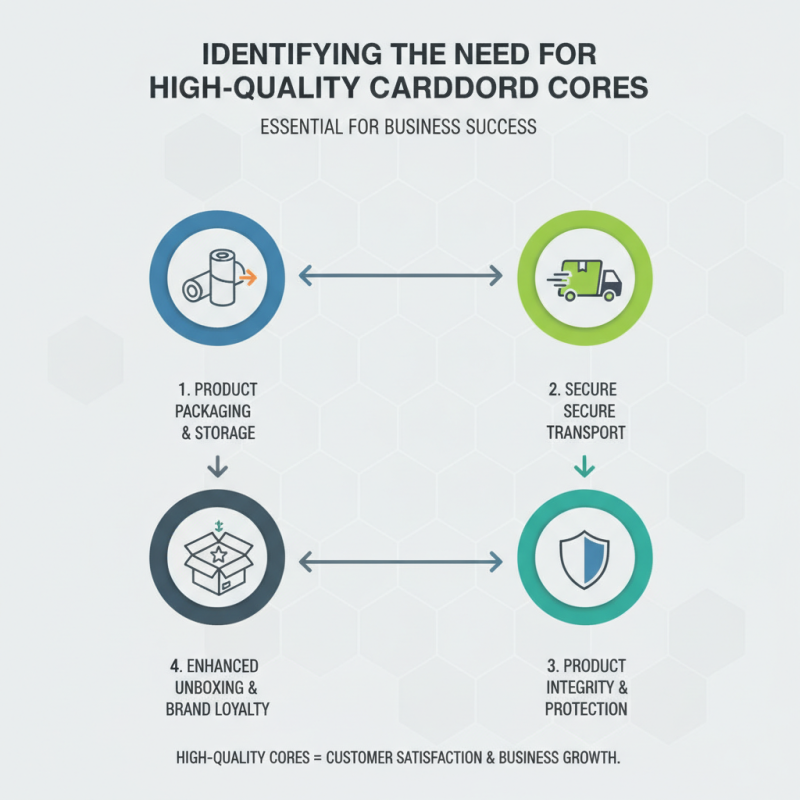
In today's competitive market, identifying the need for high-quality cardboard cores is essential for businesses. Many industries rely on these cores for product packaging, storage, and transport. A sturdy cardboard core ensures that the product maintains its integrity during shipping. It also enhances the unboxing experience for customers, which is critical in building brand loyalty.
The demand for customizable and eco-friendly packaging solutions has increased. Companies need to consider the durability and performance of their cardboard cores. Some businesses may opt for cheaper options, but they may face issues such as breakage or deformation. This choice can lead to product damage and dissatisfaction among customers. Evaluating the quality of cardboard cores can prevent such pitfalls.
Additionally, businesses should reflect on sourcing practices. It’s not enough to seek the lowest cost. A reliable supplier guarantees consistency in quality and can meet specific needs. Companies might find that investing in higher-quality materials pays off in the long run. The challenge lies in striking the right balance between cost and quality, ensuring that every product is well-protected.
Understanding Different Types of Cardboard Cores Available in the Market
Understanding the different types of cardboard cores is vital for businesses that rely on reliable packaging solutions. Cardboard cores come in various sizes, strengths, and types tailored to specific applications. For example, there are standard cardboard tubes, heavy-duty options, and even recycled varieties. According to industry reports, the global cardboard core market is projected to grow by 4.5% annually due to increasing demand across various sectors.
When sourcing high-quality cardboard cores, businesses should consider their specific needs. For lightweight products, standard tubes suffice. However, heavier items may require reinforced cores to withstand more weight. A study found that using the correct core can reduce material waste by 15%. Always request samples to ensure the product meets your durability standards.
Tips: Assess your product's weight and dimensions carefully. Don’t rush this process. Perfecting your selection can lead to better overall performance. Additionally, keep an eye on suppliers' certifications. Verify their production capabilities and history. A reputable source will provide detailed information about their quality control measures.
How to Source High Quality Cardboard Cores for Your Business?
| Type of Cardboard Core |
Diameter (inches) |
Wall Thickness (mm) |
Weight (lbs) |
Usage |
| Standard Cores |
3 |
2.5 |
0.5 |
Paper, Textiles |
| Heavy-Duty Cores |
6 |
3.0 |
1.2 |
Industrial applications |
| Custom Cores |
4 |
2.0 |
0.8 |
Specialized products |
| Thin Cores |
2 |
1.0 |
0.3 |
Lightweight materials |
| Recycled Cores |
5 |
2.5 |
1.0 |
Eco-friendly applications |
Evaluating Suppliers: Key Criteria for High Quality Cardboard Cores
When sourcing high-quality cardboard cores, evaluating suppliers is crucial. Begin by examining the materials they use. Recycled fibers can reduce environmental impact, but the source must be reliable. According to industry data, 70% of recycled paper mills face challenges in maintaining quality consistency. It's essential to ensure that suppliers adhere to strict standards.
Next, consider the supplier's production capabilities. A reputable supplier should have modern machinery that produces uniform cores. A study showed that 85% of quality issues stem from outdated equipment. Ask for samples to test strength and durability. Pay attention to specifications, such as thickness and diameter, which should meet your needs.
Quality certifications can also indicate reliability. ISO 9001 is a recognized standard in the industry. However, not all suppliers pursue certification, which does not always reflect their quality. Engage in discussions about their quality control processes, and seek information about past customer experiences. A transparent supplier will provide insights into their operational practices and past performance.
Establishing a Reliable Supply Chain for Cardboard Cores
Establishing a reliable supply chain is crucial for sourcing high-quality cardboard cores. The global cardboard core market is projected to grow significantly, with a 4% annual growth rate anticipated through 2027. This highlights the increasing demand for quality products and efficient supply chains.
Building strong relationships with suppliers can enhance your business's reliability. Ensure your suppliers comply with industry standards. A 2022 report found that 78% of businesses experienced supply chain disruptions due to non-compliance issues. Regular audits and checks can help mitigate risks associated with poor quality materials.
Diversifying your supplier base can also provide stability. Relying on a single source can lead to vulnerabilities. Data indicates that companies with a diversified supply chain perform 30% better during economic downturns. It's essential to assess potential suppliers' capabilities and understand their production processes thoroughly. This allows for informed choices that align with your quality requirements.
Implementing Quality Control Measures for Cardboard Cores in Production
Implementing quality control measures for cardboard cores in production is essential for maintaining product integrity. According to a report by Smithers Pira, the demand for high-quality cardboard is increasing at a rate of 3% annually. Businesses sourcing these materials must prioritize durability and consistency. Inspections should begin as soon as raw materials arrive. Any discrepancies could compromise the entire production process.
Testing methods play a crucial role in quality control. Utilizing burst strength testing ensures the cores can withstand pressure without deformation. Surveys indicate that about 20% of defective products stem from inadequate testing. Companies need to implement routine inspections and maintain thorough documentation. This practice can reduce waste and improve overall efficiency.
Employee training is another vital element. Workers should be familiar with quality standards and inspection techniques. Regular workshops can enhance their skills and awareness. A disparity in knowledge can lead to mistakes that affect product quality. Continuous feedback and adjustments will help sustain high standards in production.
This chart illustrates key quality control metrics for sourcing high quality cardboard cores, including measurements of material thickness accuracy, core roundness consistency, adhesive strength, surface smoothness, and dimensional tolerance compliance. Maintaining high performance in these areas ensures the production of reliable and durable cardboard cores for diverse business applications.