

A Pvc Wearlayer is the clear protective layer above a vinyl floor’s printed design. It faces shoes, chair legs, grit, spills, and daily cleaning. Without it, a realistic wood or stone image can fade quickly. The layer is usually made from transparent PVC and measured in mils or millimetres. Thickness matters, but it is not the whole story. Formulation, surface treatment, embossing, installation, and maintenance also influence performance.
Industry reports show why this subject deserves attention. Grand View Research’s resilient flooring analysis identifies vinyl products as a major growth segment, supported by residential renovation and commercial construction. The Freedonia Group also links flooring demand with replacement cycles, design upgrades, and durability expectations. These reports do not prove that a thicker wearlayer always performs better. That assumption needs testing. A poorly installed floor can fail at its seams, even when its protective layer looks substantial.
In practical terms, a 12-mil layer may suit lighter residential traffic, while heavier commercial areas often require higher specifications. However, buyers should compare the complete technical sheet, not one impressive number. Look for abrasion ratings, coating technology, warranty limits, and cleaning requirements. ASTM and ISO test methods can provide useful comparison points, although laboratory results cannot recreate every busy hallway. That is the uncomfortable detail. Performance depends on real conditions. A sandy entrance, metal chair wheel, or harsh cleaner may challenge the surface faster than expected. Understanding Pvc Wearlayer helps architects, contractors, and homeowners choose flooring with clearer evidence, fewer assumptions, and more realistic service expectations.
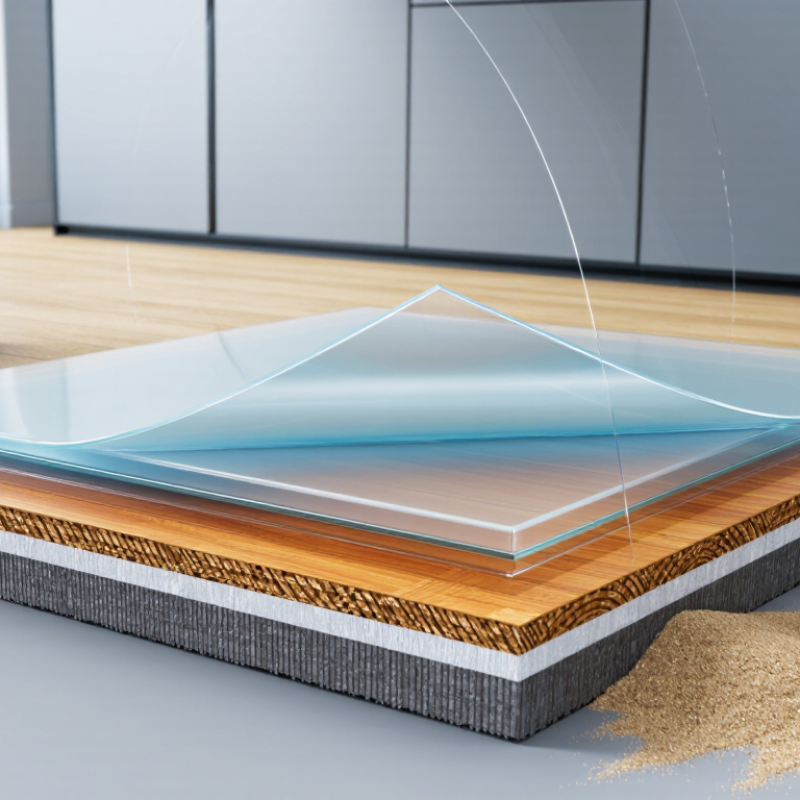
A PVC wear layer is the transparent or lightly printed surface protecting a vinyl floor. It sits above the decorative pattern and core structure. Its main job is to resist daily abrasion from shoes, chair legs, grit, and cleaning tools.
Think of it as a clear shield, not the entire floor.
During installation checks, I look closely at wear-layer thickness, surface texture, and finish consistency. Thicker layers usually offer better protection, but thickness alone does not guarantee performance. A poorly bonded layer can still fail. A textured surface may hide small scratches, while a smooth finish often feels easier to clean. These details matter in hallways, kitchens, and busy commercial rooms.
The wear layer also affects appearance. A stable finish helps preserve color under regular light exposure and repeated cleaning. However, no PVC surface is indestructible. Sharp furniture feet can leave dents, and loose grit can behave like sandpaper under moving chairs. I once assumed a thicker layer would solve every durability problem. That was too simple. Subfloor preparation, furniture protection, and routine cleaning can matter just as much. Check the technical specification before choosing a product, especially when comparing residential and high-traffic applications. A practical test is simple: inspect sample edges, press the surface gently, and ask how the flooring should be maintained. Manufacturers’ stated performance should be matched with the room’s actual use, not just an attractive number.
A PVC wear layer is built as a clear protective surface above the decorative pattern. In many resilient floors, manufacturers first produce a stable PVC film. They control its thickness, flexibility, and transparency during processing.
The decorative image sits below this film. Heat and pressure then bond the layers into one structure. Some products use a calendered PVC sheet. Others apply PVC through a coating process. The difference affects clarity, surface feel, and dimensional stability.
A protective finish may be added above the PVC. It can improve resistance to scuffs, stains, and everyday cleaning. Embossing rollers press a texture into the warm surface. This texture can resemble wood grain or stone pores. The pattern must align with the printed design. Small mismatches can make the floor look artificial.
Manufacturers usually check thickness, adhesion, abrasion resistance, and color stability. These tests help predict performance, but they cannot copy every real room. Chair wheels, grit, moisture, and poor cleaning can change results. That limitation matters.
A thicker layer is not automatically better. Its formulation and bonding quality also matter. Installation is part of the system. A well-constructed wear layer may still fail over a damp or uneven subfloor. Experienced installers inspect the surface before laying the material. That simple step is often overlooked.
What Is PVC Wearlayer and Why Does It Matter?
What Functions Does the PVC Wear Layer Provide?
The PVC wear layer is the transparent or patterned surface layer on many vinyl floors. It receives daily traffic before the printed design or core does. Shoes, chair legs, dust, and dragged toys can all test this surface.
Its main function is abrasion resistance. A suitable wear layer helps preserve the floor’s color and pattern in busy rooms. It also reduces damage from minor scratches, small spills, and household stains. The surface can make cleaning easier, too. Dirt is less likely to settle into a dense, finished layer.
It can improve appearance. Embossed textures may imitate wood grain or stone pores with surprising detail. Some finishes also reduce glare and add slip resistance. However, the wear layer is not magic. A thicker layer is not automatically better for every room. Subfloor movement, poor installation, sharp furniture feet, and trapped grit can still cause damage. Moisture protection also depends on seams, edges, and the flooring’s full construction. That detail is often overlooked.
In practice, choose the wear-layer thickness according to traffic levels and maintenance habits. A quiet bedroom needs less protection than a busy hallway or retail space. Check the product specifications carefully. Marketing language can sound impressive, but measurable thickness and tested performance offer more reliable guidance.
The PVC wear layer is the transparent or printed protective surface of resilient flooring. Its thickness is commonly selected according to the expected traffic level and helps protect the design layer from abrasion, scuffing, staining, and everyday wear.
The ranges shown are typical industry thickness ranges for resilient PVC flooring. Actual specifications vary by construction, test method, and manufacturer. A thicker wear layer generally provides more material for resisting surface wear, but it does not replace proper installation, cleaning, and maintenance.
PVC Wear Layer Performance: Which Factors Matter?
PVC wear layer performance depends on more than thickness. Traffic intensity, rolling loads, grit, moisture, and cleaning chemicals all influence service life. A thicker layer usually offers more protection, but thickness alone can mislead. A poorly fused surface may wear faster than expected. EN 660-2 classifies abrasion resistance by volume loss: T is up to 2.0 mm³ per 100 cycles, while F can reach 15.0 mm³. These figures provide useful guidance, not a guaranteed lifespan.
Surface finish also matters. A textured layer can hide scuffs, but its grooves may hold abrasive dirt. Hard particles under footwear act like sandpaper near entrances. ASTM F925 evaluates resistance to common stains, while ASTM F970 measures performance under static loading. Together, these tests show why installation quality, furniture protection, and maintenance routines affect real results. Laboratory performance is controlled. Buildings are not.
Tips: Match the wear layer to traffic, not room size. Place walk-off mats at entrances. Use non-staining pads under furniture. Check cleaner compatibility before regular use.
Temperature can change flexibility and dimensional stability. Direct sunlight may also increase surface stress over time. Industry guidance from resilient flooring test standards supports evaluating abrasion, staining, and load resistance together. Still, test results can be overinterpreted. A product passing one test may perform poorly under combined grit, moisture, and heavy carts. That uncomfortable detail deserves attention during specification.
| Performance Dimension | What It Means | Typical Data or Range | Effect on Service Performance | Relevant Evaluation Method |
|---|---|---|---|---|
| Wear Layer Thickness | The thickness of the transparent or printed protective PVC layer above the design layer. | Approximately 0.10–0.70 mm for many resilient flooring products | Thicker layers generally provide more material to absorb abrasion, scratching, and traffic-related wear. Thickness alone does not guarantee superior performance. | Measured in millimetres using a calibrated thickness gauge or optical cross-section measurement. |
| Abrasion Resistance | The ability of the wear layer to resist material loss caused by repeated rubbing, foot traffic, and moving loads. | Performance depends on product construction, surface finish, and test classification | Higher abrasion resistance helps preserve the printed pattern, surface appearance, and protective function over time. | Commonly assessed with standardized abrasion or wear tests, including ISO 10582 and EN 660 methods where applicable. |
| Surface Treatment | A factory-applied coating or finish designed to protect the PVC surface from scuffing, staining, and maintenance damage. | May include polyurethane-based or other protective finishes | A suitable treatment can reduce routine polishing requirements and improve resistance to black marks and everyday soiling. | Evaluated through stain resistance, chemical resistance, scuff testing, and maintenance trials. |
| Plasticizer and Formulation Stability | The ability of the PVC formulation to retain flexibility and dimensional stability without excessive migration or degradation. | Varies according to resin, plasticizer system, stabilizers, and processing conditions | Stable formulations help reduce embrittlement, shrinkage, surface tackiness, and long-term changes in appearance. | Assessed through dimensional stability, aging, flexibility, and migration-related testing. |
| Scratch and Scuff Resistance | Resistance to visible marks caused by footwear, furniture legs, grit, and wheeled equipment. | Strongly influenced by surface hardness, finish, texture, and cleaning practices | Improved resistance helps maintain gloss uniformity and reduces visible traffic lanes in busy areas. | Evaluated using controlled scratch, scuff, furniture-leg, or wheeled-load tests. |
| Stain and Chemical Resistance | The ability to resist discoloration or surface damage from common spills and cleaning chemicals. | Resistance varies by chemical type, concentration, contact time, and temperature | Good resistance is especially important in healthcare, education, retail, hospitality, and food-service environments. | Typical tests use substances such as oils, dyes, disinfectants, alkaline cleaners, and acidic solutions. |
| UV and Light Stability | The ability of the wear layer and printed design to resist color change caused by light exposure. | Affected by pigments, stabilizers, surface chemistry, and exposure intensity | Better light stability reduces fading and color mismatch near windows, glass doors, and strongly illuminated areas. | Can be assessed with accelerated light-exposure methods and color-difference measurements. |
| Embossing and Surface Texture | The physical texture pressed into the surface to create visual realism, slip characteristics, or a specific tactile effect. | Texture depth and pattern vary by product construction | Texture can improve appearance and traction, but deep or complex textures may retain more dirt and require more detailed cleaning. | Consider texture depth, cleanability, slip performance, and visual wear together. |
| Slip Resistance | The level of traction provided by the finished surface under dry or wet conditions. | Depends on surface texture, contamination, footwear, and test conditions | Appropriate slip performance can reduce the risk of slips while maintaining cleanability and appearance. | Use the applicable regional slip-resistance standard and test conditions for the intended installation area. |
| Dimensional Stability | The ability of the flooring to retain its original dimensions when exposed to heat, moisture, and environmental changes. | Affected by backing, reinforcement, installation, temperature, and humidity | Good stability helps limit gaps, curling, joint movement, and stress on the wear layer during service. | Commonly checked after controlled heat or moisture exposure using dimensional-change measurements. |
| Traffic and Load Type | The intensity and nature of use, including pedestrian traffic, rolling loads, point loads, and abrasive dirt. | Light residential, general commercial, and heavy commercial use require different performance levels | High-traffic areas need a wear layer and construction designed for frequent abrasion, concentrated loads, and more demanding maintenance. | Select products using the applicable use classification and the expected traffic profile. |
| Installation Quality | The quality of subfloor preparation, adhesive application, seams, acclimation, and installation workmanship. | A critical field factor that cannot be represented by wear layer thickness alone | Moisture, unevenness, poor bonding, or incorrect seams can cause premature damage even when the wear layer is well designed. | Verify subfloor moisture, flatness, temperature, adhesive compatibility, and installation procedures. |
| Cleaning and Maintenance | The routine removal of abrasive soil, spills, stains, and residues using suitable equipment and chemicals. | Frequency should match traffic intensity and contamination level | Regular dust removal and correct cleaning reduce abrasive particles that can accelerate wear and dull the surface. | Follow the flooring manufacturer’s approved maintenance instructions and chemical limits. |
| Expected Service Life | The period during which the flooring is expected to retain acceptable appearance and functional performance under defined conditions. | No universal lifespan; it depends on traffic, maintenance, installation, and product construction | Service-life comparisons are meaningful only when use conditions, cleaning routines, and performance requirements are similar. | Use laboratory classification, field references, warranty conditions, and project-specific traffic estimates together. |
PVC wear layers should be selected by traffic, not appearance alone. ISO 10874 classifies flooring from residential classes 21–23 to commercial classes 31–34. Light industrial areas use classes 41–43. A hallway with rolling carts needs stronger protection than a quiet bedroom.
Check wear-layer thickness, surface treatment, slip resistance, and expected maintenance together. Commercial specifications commonly list 0.30, 0.55, or 0.70 millimetre layers. Thicker is not automatically better. The backing, installation quality, and cleaning plan also affect service life. ASTM F1700 and related resilient-flooring guidance support comparing construction, dimensional stability, and performance testing. I have seen buyers choose thickness first, then struggle with poor subfloor preparation.
Maintenance should remove grit before it becomes abrasive. Use entrance mats, dry dust-mop daily, and clean with a neutral-pH solution. Avoid excessive water, harsh solvents, and abrasive pads. The Resilient Floor Covering Institute recommends following the flooring manufacturer’s tested cleaning method, because incompatible chemicals can dull polyurethane finishes. Replace damaged mats quickly. Small stones can act like sandpaper under wheels.
Review the area every six months. Look for grey traffic lanes, edge lifting, gloss loss, and black rubber marks. These details reveal whether the selected class matches real use. Sometimes the original traffic estimate is wrong. That mistake deserves attention, not concealment. A practical maintenance log should record cleaning frequency, products used, equipment settings, and visible wear.
© 2025 Cardboard Tubes | Registered in England and Wales.
Company Number 2402078

