

Choosing sustainable packaging is no longer a minor detail for beauty brands. Buyers want containers that protect formulas, look polished, and reduce avoidable waste. Yet “eco-friendly” can mean very different things. A recyclable jar may still be difficult to process where local collection systems do not accept it.
The scale of the problem deserves attention. The OECD’s Global Plastics Outlook (2022) reports that global plastic waste more than doubled between 2000 and 2019, reaching 353 million tonnes. Only 9% was ultimately recycled. These figures describe plastics broadly, not cosmetic packaging alone, but they show why material choices and end-of-life plans matter. A heavy glass bottle, a lightweight refill pouch, and a mono-material tube each have trade-offs. There is no perfect container.
For brands and sourcing teams, finding Eco Friendly Cosmetic Containers Wholesale requires more than comparing unit prices. Ask suppliers for material specifications, recycled-content documentation, minimum order quantities, and samples. Check whether pumps, caps, liners, and bottles can be separated or recycled together. Also ask how packaging performs during filling and shipping; a container that leaks in transit creates waste, too.
Claims need checking. A supplier’s brochure is a starting point, not independent proof. Compare documentation, test samples with your actual formula, and confirm that disposal guidance fits your target markets. This guide explains how to assess wholesale suppliers and make practical packaging decisions. Some choices will remain imperfect. Being transparent about those limits is better than promising a solution that the evidence cannot support.
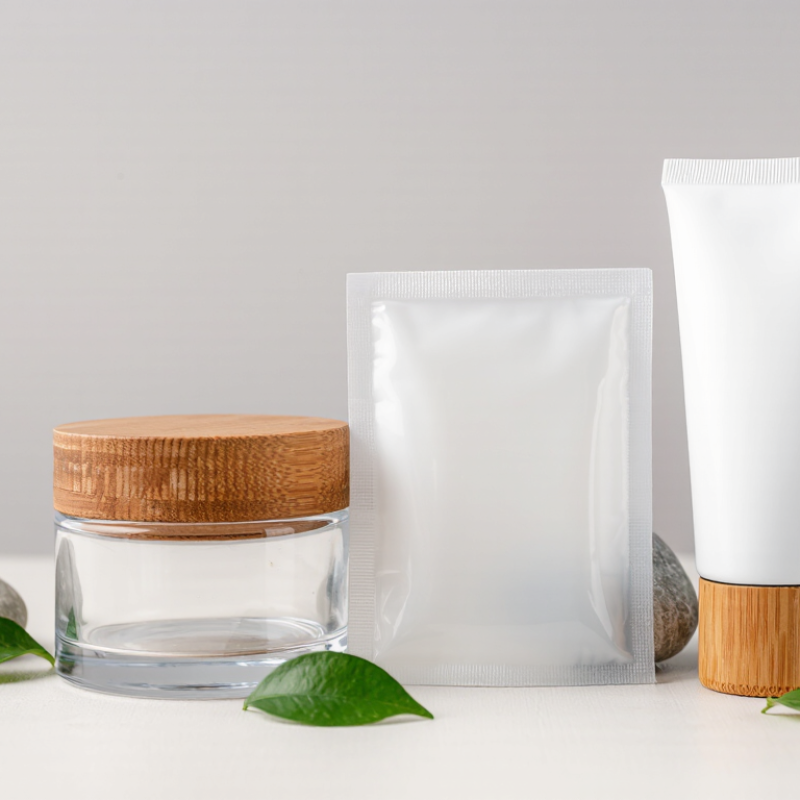
How to Find Eco Friendly Cosmetic Containers Wholesale
Set Sustainability Criteria Using OECD’s 9% Global Plastics Recycling Baseline
A wholesale search needs measurable criteria, not vague green claims. The OECD’s Global Plastics Outlook reports that only 9% of plastic waste was recycled worldwide in 2019. About 19% was incinerated, while nearly half went to landfill. That baseline is sobering. It shows why a container labeled “recyclable” does not guarantee it will be recycled where customers live.
Ask suppliers for material specifications, verified recycled-content figures, and details about container parts. A jar may use recyclable plastic, yet its lid, liner, or dark pigment can complicate sorting. Check whether local recycling systems accept the full package. Request samples, too: inspect the seams, closure, and label after repeated handling. Small details matter.
Set practical purchasing thresholds, then review evidence against them. UNEP’s 2023 report Turning off the Tap estimates that coordinated system changes could reduce plastic pollution by 80% by 2040; it is a scenario, not a promise. Ask for documentation behind environmental claims and compare like-for-like packaging weights. A supplier may not have every answer. The checklist will not be perfect. I would still rather record an unresolved question than treat an attractive claim as proof.
For 2030, the EU PPWR sets a 35% minimum recycled-plastic-content target for “other plastic packaging.” The percentage concerns the plastic part, not the whole container. It is not a universal target for every cosmetic pack: some cosmetics packaging may fall into a separate contact-sensitive category. Confirm the classification for each format before comparing wholesale quotes.
Compare recycled-content options such as rPET, rPP, and rHDPE against the container’s actual job. A cream jar needs a compatible liner and a reliable seal; a pump bottle adds a mixed-material closure that can complicate recycling. Glass and aluminum avoid plastic-content targets, but their weight and transport impact matter too. Refill systems can help, but only when customers reuse them. A green-looking sample proves little.
Ask suppliers for written recycled-content figures, material breakdowns, and supporting documentation—not just a sustainability claim. Check whether the quoted percentage applies to the bottle, cap, or complete pack, and request production samples to test leaks, color variation, and dispensing. A neat sample can mislead. Recycled resin may vary between batches, so allow time for checks and keep records of agreed specifications. Before placing a large order, confirm current PPWR requirements with a qualified compliance professional.
Compare the EU PPWR’s minimum recycled-plastic-content targets by packaging category when evaluating wholesale container materials.
For cosmetic-container sourcing, the 35% target applies only when packaging is classified as “other plastic packaging.” Contact-sensitive packaging may fall under a different target, so confirm the category and applicable rules for each container. Targets shown are minimum recycled-content percentages for 2030 under Regulation (EU) 2025/40.
When comparing eco-friendly cosmetic containers wholesale, treat recycled-content claims as details to verify, not just marketing language. ISO 14021 sets guidance for self-declared environmental claims; it does not certify a container or supplier. Ask whether the stated percentage refers to pre-consumer or post-consumer material, and which parts it covers. A jar may contain recycled resin while its pump, cap, or liner does not. Small gaps matter.
Request batch-specific traceability records, such as material declarations, purchase records, and production documents linking recycled resin to the containers offered. Check that the documented percentage matches the claim on the quotation or product sheet. If records cover only a factory’s general output, ask how the supplier connects them to your order. A clear chain of evidence is more useful than a polished certificate alone. In practice, paperwork can be incomplete; note what remains unverified before approving samples or placing a large order.
Tips: Ask for the ISO 14021 claim wording in writing. Compare it with the supplier’s records, component by component. Keep dated copies, and revisit the evidence when specifications or production sites change.
When comparing wholesale suppliers for eco-friendly cosmetic containers, start with the minimum order quantity (MOQ). A low MOQ can help test a new jar or pump without filling a storeroom.
Ask whether the quoted quantity applies to one size, color, and closure combination. Small changes may affect pricing. Check unit cost at several order levels, such as 1,000 and 5,000 pieces, and include freight, samples, and any setup fees.
The cheapest quote may not be the lowest landed cost. Not always.
Lead time needs the same close inspection. Ask for separate estimates for sample approval, production, and shipping, then confirm what happens if a component is delayed. A printed timeline is useful, but it is not a guarantee.
Review the supplier’s material specifications and request current certification documents relevant to the packaging, such as recycled-content or compostability claims. Confirm which component each document covers; a certificate for a bottle may not apply to its cap or liner.
I have seen buyers overlook that detail. It can change the whole comparison.
Request a physical sample and check the feel of the closure, label area, and container wall before committing to a large run. Compare suppliers using the same specifications, or the numbers will mislead you.
When comparing eco-friendly cosmetic containers wholesale, request samples made from the same materials and components as the quoted production order. Fill each container with your actual formula, not just water. Oils, acids, and fragrances can interact differently with packaging. Leave filled samples upright and on their sides overnight, then check the cap, pump, seams, and surrounding surface for leaks. Small drips matter. Note any change in color, scent, texture, or dispensing. A container that looks suitable may still clog or soften after repeated use.
Test durability during ordinary handling. Twist caps repeatedly, press pumps, and pack samples in a padded box to mimic shipping. For recyclability, identify each material, including lids, liners, and pumps; mixed components may need separating. Ask the supplier for material specifications and clear sorting instructions, then check whether local recycling programs accept those materials. Keep a simple test log with dates, formula, and results. A neat sample test is not a full production run, and results can vary between batches. Still, a few careful checks can reveal problems before a large wholesale order.
| Test Area | What to Check | Sample Test Procedure | Record | Example Buyer Acceptance Criteria |
|---|---|---|---|---|
| Product compatibility | Changes to the formula, container, closure, pump, liner, or decoration during contact and storage. | Fill samples with the intended formula. Keep a control sample in a compatible reference container. Inspect at the start and at agreed intervals, such as 2 and 4 weeks at room temperature and 40°C. Treat elevated-temperature storage as a screening test, not proof of shelf life. | Formula color, odor, appearance, pH or viscosity where relevant; container swelling, softening, cracking, discoloration, stress marks, and component function. | No visible damage or unacceptable change versus the control; dispensing and closure function remain acceptable. Set formula-specific limits before testing. |
| Leakage and closure integrity | Leaks at the neck, seams, pump, cap, gasket, or other closure points; unintended dispensing during handling. | Fill and close samples using the intended production method. Wipe dry, weigh, then store upright and inverted for 24 hours at room temperature. Repeat after the agreed shipping or temperature-conditioning test. Use absorbent material to help identify leaks. | Sample ID, fill weight, closure setting, orientation, test conditions, visible leakage, and weight change beyond the balance's measurement uncertainty. | No visible leakage, closure loosening, or unintended product release in the tested samples. Define the required sample count and any allowable weight change before the test. |
| Durability and handling | Resistance to cracking, denting, cap damage, label wear, and loss of function during filling, packing, and ordinary handling. | Inspect filled samples before and after a buyer-defined drop sequence on a hard surface, covering relevant orientations such as base, side, and closure. Separately test opening, closing, and dispensing for the intended use cycle count. | Drop height and surface, impact orientation, number of drops, cracks or deformation, closure condition, and dispensing performance. | No breakage, sharp fragments, leakage, or loss of required function under the agreed test conditions. Set the drop height and cycle count to match the product's expected handling. |
| Recyclability and material identification | Resin or material type for each component, separability of mixed materials, coatings, labels, pumps, liners, and other parts. | Request a component-level material list and review the full package against recycling guidance for the intended sales markets. Check whether consumers can separate components and whether labels or finishes may affect sorting or processing. | Material and resin identification for each part; component weight; separation steps; available local collection and processing guidance; supporting supplier documentation. | Materials are identified and claims are limited to what local collection and recycling systems support. Do not describe packaging as recyclable everywhere based only on its resin code. |
| Wholesale sample review | Consistency between samples and the quoted specification, including dimensions, capacity, finish, components, and packing method. | Measure several samples from the same batch. Compare them with the approved drawing or specification and confirm that the tested samples represent the proposed production configuration. | Sample quantity and batch reference; dimensions; component materials; finish; defects; specification differences; confirmation of production equivalence. | Samples match the agreed specification within its stated tolerances. Document any approved deviations before placing a wholesale order. |
Note: Acceptance criteria are buyer-defined screening examples, not universal regulatory limits. Confirm test conditions, sample size, and market-specific recycling guidance before evaluation.
© 2025 Cardboard Tubes | Registered in England and Wales.
Company Number 2402078

