How to Choose the Right Cardboard Roll for Packaging?
Choosing the right cardboard roll is a practical packaging decision, not a simple purchasing task. The roll must match product weight, wrapping equipment, storage conditions, and shipping distance. A weak grade may split around a sharp edge. An oversized grade may waste fiber, space, and money.
The American Forest & Paper Association reported a 93.6% U.S. corrugated recycling rate in 2022. This figure shows cardboard’s recovery strength, but recycling performance does not excuse poor material selection. Smithers’ packaging research also identifies lightweighting, e-commerce, and fiber efficiency as major market pressures. These trends make roll width, caliper, basis weight, and moisture resistance increasingly important. Small differences matter. A 5-millimeter width error can create uneven wrapping or costly production stoppages.
Packaging specialist Walter Soroka defines packaging as “a coordinated system of preparing goods for transport, distribution, storage, sale, and use.” His statement is useful here. A cardboard roll should protect the product throughout that entire journey. It should also run smoothly through the machine. That balance is often missed.
Before choosing, test the roll on the actual line. Check edge strength, tensile performance, dust levels, and unwind stability. Ask suppliers for technical specifications and recycled-fiber details. Do not trust appearance alone. A bright surface can hide weak structure.
There is no perfect roll.
The best choice depends on evidence, not habit. Evaluate performance first, then price, sustainability, and supplier reliability. Even experienced buyers sometimes choose a familiar grade too quickly. That deserves another look.
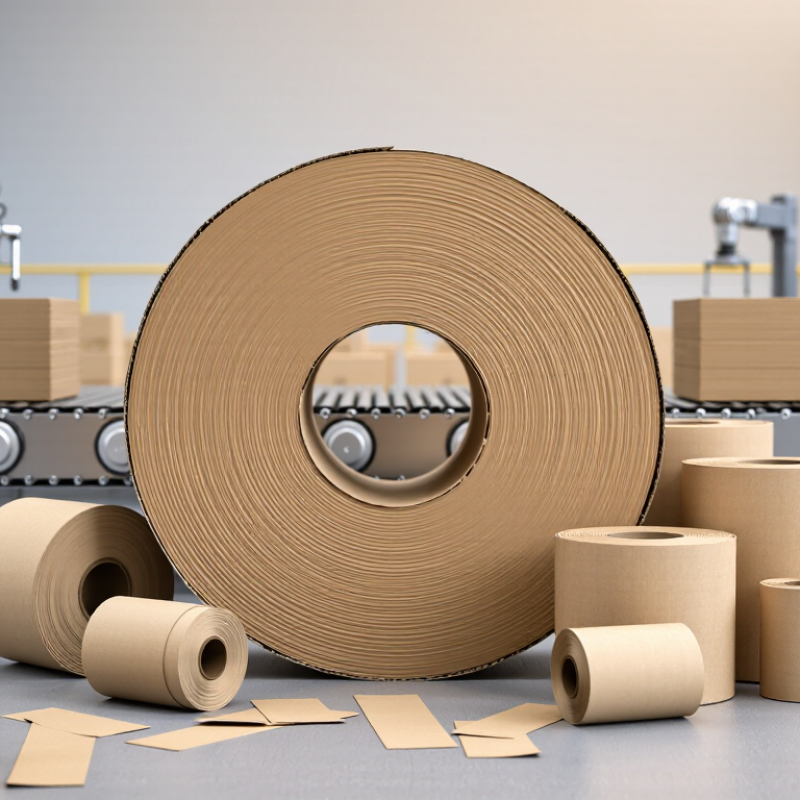
Define Packaging Requirements Before Choosing a Cardboard Roll
Before choosing a cardboard roll, define what the packaging must protect, carry, and withstand. Start with the product’s weight, dimensions, shape, and surface sensitivity. A roll for lightweight clothing will differ greatly from one for glass jars or spare machine parts. Measure the required sheet width and thickness carefully. A narrow mismatch can create waste, jams, or weak folds. Consider the packaging line too. Roll diameter, core size, winding direction, and feeding speed must match the equipment. I once saw a trial fail because the roll fit the carton design but not the machine. That detail was missed.
Moisture and storage conditions also influence the specification. High humidity can reduce stiffness and make edges curl. Ask for tested values such as grammage, caliper, burst strength, and compression performance. These figures provide a clearer basis than appearance alone. If the package will contact sensitive goods, confirm applicable safety documentation before production. Request samples from the same grade and production method, then test them under real handling conditions. Drop tests, stacking trials, and folding checks reveal problems early. A roll may look strong in a dry warehouse yet soften after overnight storage. Keep records of test results, supplier declarations, and batch details. Specifications can be revised after testing; treating the first choice as perfect is rarely practical.
Compare Cardboard Grades, Thicknesses, and Structural Strength
How to Choose the Right Cardboard Roll for Packaging?
Cardboard grade controls how a roll performs during packing, storage, and delivery. Virgin kraft paper usually offers cleaner surfaces and consistent strength. Recycled grades can perform well, but fiber quality may vary between batches. For heavier products, check compression strength and edge crush performance. A glossy finish looks attractive, yet it may reduce recyclability or complicate printing. Practical testing matters more than appearance.
Thickness is only one part of the decision. A thicker roll may resist crushing, but it can increase material use and shipping costs. Measure caliper and grammage together. Then examine stiffness, winding tension, and moisture resistance. In my experience, a small increase in wall thickness often protects fragile goods better than adding excessive outer layers. I once selected a very thick tube that still collapsed because its inner layers were poorly bonded. That mistake was avoidable.
Tips: Match the roll diameter to the product and packing equipment. Test samples under realistic loads, including stacking and humidity changes. Ask suppliers for recent strength data, not only general specifications. Check the cut edges and inner wall for cracks. Keep tolerances clear. If the packaging will face vibration, use compression testing before approval. A simple trial often reveals weaknesses that a data sheet misses.
How to Choose the Right Cardboard Roll for Packaging? - Compare Cardboard Grades, Thicknesses, and Structural Strength
| Cardboard Grade / Construction |
Typical Paper Composition |
Typical Basis Weight
(g/m²) |
Typical Thickness
(mm) |
Indicative Edge Crush Test
(kN/m) |
Relative Structural Strength |
Recommended Packaging Applications |
| Single-Face Corrugated Board |
One linerboard bonded to one fluting medium |
180–350 |
1.0–3.5 |
Not usually rated |
Low |
Protective wrapping, cushioning layers, surface protection, and lightweight inner packaging. |
| E-Flute Single Wall |
Fine flute with kraft or recycled linerboard |
300–450 |
1.0–1.8 |
4–7 |
Low to medium |
Retail-ready cartons, printed packaging, small parcels, and products requiring a smooth printed surface. |
| B-Flute Single Wall |
Medium-size flute with kraft or recycled linerboard |
400–650 |
2.5–3.2 |
5–9 |
Medium |
General shipping cartons, die-cut boxes, consumer goods, and packaging needing good puncture resistance. |
| C-Flute Single Wall |
Coarser flute with kraft or recycled linerboard |
450–750 |
3.5–4.0 |
6–10 |
Medium to high |
Standard transport cartons, heavier products, stacking applications, and packaging requiring cushioning. |
| BC-Flute Double Wall |
B-flute and C-flute combined between three linerboards |
800–1,100 |
6.0–7.0 |
10–16 |
High |
Heavy-duty shipping cases, export packaging, fragile products, and loads requiring strong stacking performance. |
| Heavy-Duty Double Wall |
Two substantial fluting layers with high-strength linerboards |
950–1,300 |
6.5–8.0 |
14–20 |
Very high |
Industrial parts, machinery components, dense products, and long-distance or palletized shipments. |
| Solid Cartonboard |
Dense, non-fluted paperboard; may be coated or uncoated |
400–1,000 |
0.5–1.5 |
Not normally rated |
Medium |
Folding cartons, product sleeves, labels, inserts, dividers, and applications prioritizing print quality and die-cut accuracy. |
Selection note: The figures shown are typical working ranges rather than guaranteed specifications. Actual performance depends on paper quality, moisture content, flute profile, adhesive bonding, roll width, converting conditions, box dimensions, load weight, and stacking duration. Request a supplier test certificate when a specific compression, puncture, or stacking requirement must be met.
Match Roll Width, Diameter, and Core Size to Your Equipment
How to Choose the Right Cardboard Roll for Packaging?
Match Roll Width, Diameter, and Core Size to Your Equipment
Choosing a cardboard roll starts with the packaging machine, not the roll supplier. Measure the usable roll width, maximum diameter, and core holder before ordering. A roll that is too wide may rub against guides. A small core can slip on the spindle. Both problems create uneven feeding and wasted material. Smithers’ The Future of Corrugated Packaging to 2028 estimates the global market reached approximately US$205 billion in 2023. That scale makes machine efficiency increasingly important.
Check width in millimeters, not by visual comparison. Confirm the roll’s outer diameter against your unwinder’s clearance. Then match the core size precisely, including its actual inside diameter. Some machines accept 76 mm cores, while heavier systems use 152 mm cores. Ask for roll weight and winding tension, too. These details affect startup performance. I have seen operators choose a larger roll to reduce changeovers, only to overload the shaft. Bigger is not always better.
Tips: Record three measurements from your machine manual. Test one roll during a normal production shift. Watch edge tracking, noise, and splice behavior. Leave safety clearance around the roll. Recheck your choice after changing paper grade, because a denser board can alter diameter and weight. PMMI packaging machinery research continues to identify automation and flexible equipment as major industry priorities. Still, specifications on paper cannot replace a practical trial.
How to Choose the Right Cardboard Roll for Packaging?
Match the roll width to the machine's working width, confirm that the outside diameter fits the unwind capacity, and select the correct core size for the shaft or chuck. The dimensions shown represent commonly used packaging-roll configurations; always verify the equipment specifications before ordering.
Verify Supplier Quality, Cost, and Delivery Performance
Choosing a cardboard roll requires more than comparing prices. Supplier quality affects sealing, printing, machine speed, and waste. Ask for GSM, caliper, moisture content, burst strength, and recycled-fiber percentages. These figures should match a recent certificate of analysis, not only a sales sheet.
The U.S. Environmental Protection Agency reported a 96.5% recycling rate for corrugated boxes in 2018. That figure supports fiber recovery, but recycled material can vary between batches. Request sample rolls from different production dates. Test them on your actual equipment. Check edge damage, telescoping, dust, and roll hardness. One supplier once passed our visual inspection, yet caused frequent web breaks. We had overlooked moisture variation.
Cost needs a wider calculation.
Include trim loss, rejected rolls, storage, freight, and emergency deliveries. The European Paper Recycling Council reported a 79.3% paper recycling rate in Europe for 2022. Strong recovery systems can support responsible sourcing, but they do not guarantee consistent quality. Verify mill location, capacity, backup production, and packaging protection. Review delivery records for at least six months. Track on-time delivery, lead-time accuracy, claim response, and minimum order quantities. Delivery promises can look excellent until peak season.
Tips:
Build a weighted scorecard. Give quality 40%, delivery 30%, total cost 20%, and service 10%. Request two references. Add a small trial order before signing a long contract. The cheapest roll is sometimes the most expensive one.