Why Choose Industrial Cardboard for Your Packaging Needs?
When considering packaging options, industrial cardboard stands out for various reasons. It is a versatile material, adapting to different shapes and sizes. Many industries rely on this material for its durability and strength. Its ability to protect products during transit is unmatched. Industrial cardboard can withstand considerable pressure without compromising integrity.
Choosing industrial cardboard also means embracing sustainability. It is often made from recycled materials, making it an eco-friendly option. Companies committed to reducing their environmental footprint find this appealing. Additionally, it is cost-effective, helping businesses save on packaging expenses. However, not all industrial cardboard is created equal. Understanding the specifications is essential for optimal use.
Quality matters. Relying on reputable suppliers ensures you receive top-grade industrial cardboard. Mismatched materials can lead to damaged goods and wasted resources. Therefore, careful consideration in selection is key. Choosing the right industrial cardboard can elevate your packaging strategy and enhance your brand’s image. Embracing this material can lead to meaningful changes in operations.

Understanding Industrial Cardboard: Composition and Types
Industrial cardboard plays a crucial role in packaging. Its composition and types vary widely, serving different needs. Generally, industrial cardboard consists of layers of recycled or virgin pulp. This composition provides durability and strength. According to a 2021 report by Smithers Pira, the corrugated cardboard market is projected to reach 200 million tons by 2024, highlighting its significance.
There are different types of industrial cardboard. For instance, single-wall, double-wall, and triple-wall corrugated cardboard each serve distinct purposes. Single-wall is lightweight, suitable for less fragile products. On the other hand, double and triple-wall options provide more protection for heavier items. However, selecting the appropriate type can be challenging. Often, businesses overlook their specific requirements, leading to product damage.
Sustainability is another vital aspect. While industrial cardboard is often recyclable, not all options are equally eco-friendly. Some variations may involve harmful adhesives or coatings that make recycling difficult. According to the Environmental Protection Agency (EPA), efficiently designed cardboard packaging can yield up to 90% recyclability. Businesses must stay informed to make sustainable choices.
Why Choose Industrial Cardboard for Your Packaging Needs?
| Type of Industrial Cardboard |
Composition |
Common Uses |
Strength Rating (WAB)** |
Environmental Impact |
| Single Wall Cardboard |
1 layer of fluted paper between 2 liners |
Shipping boxes, retail packaging |
32-44 ECT |
100% recyclable, biodegradable |
| Double Wall Cardboard |
2 layers of fluted paper and 4 liners |
Heavy-duty shipping containers |
44-56 ECT |
Recyclable and reduces landfill waste |
| Triple Wall Cardboard |
3 layers of fluted paper and 6 liners |
Heavy industrial parts, machinery packaging |
56+ ECT |
Highly sustainable, eco-friendly |
| Sustainable Cardboard |
Made from recycled fibers |
Eco-conscious packaging solutions |
Varies based on grade |
Creates less environmental pollution |
Advantages of Using Industrial Cardboard for Packaging Solutions
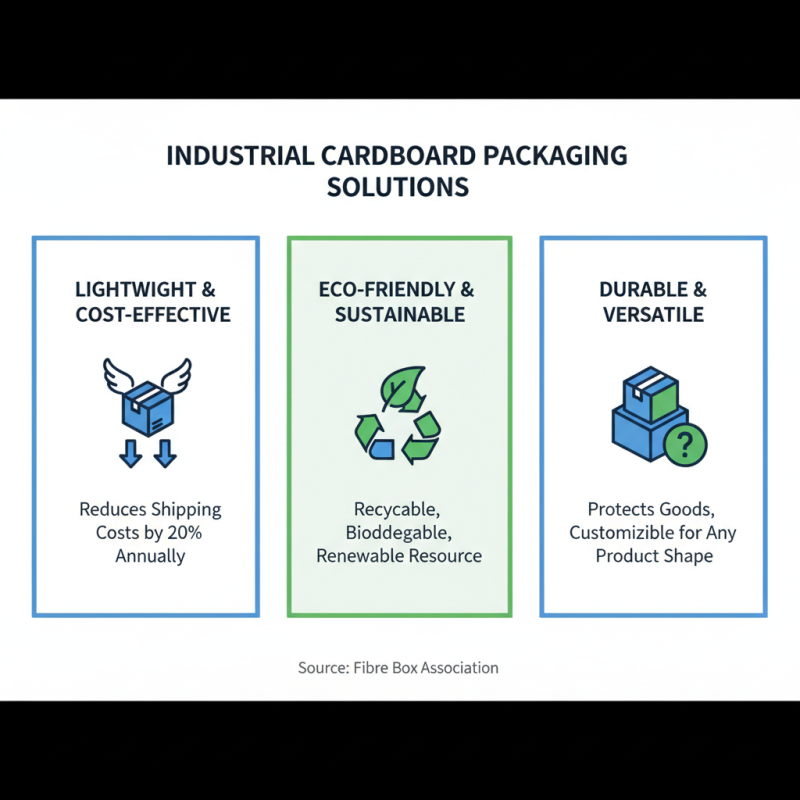
Industrial cardboard has become a preferred choice for packaging due to its numerous advantages. Research from the Fibre Box Association shows that corrugated cardboard represents over 90% of the total box production in the United States. This is mainly due to its lightweight nature, which reduces shipping costs. In fact, studies indicate that companies can save about 20% annually on shipping by using cardboard over other materials.
Durability is another key feature. Industrial cardboard is designed to withstand rough handling during transport. Its multi-layered structure provides strength and resilience. According to a report by Smithers Pira, 35% of packaging failures occur due to inadequate material performance. Companies can mitigate these risks by choosing high-quality cardboard solutions. Additionally, the material is recyclable, with over 75% of cardboard boxes being reused or recycled. This aligns with the growing demand for sustainable packaging options.
While cardboard offers numerous benefits, there are considerations to keep in mind. Weather exposure can affect the integrity of cardboard, making it less suitable for certain environments. Proper storage and protective measures are essential to maximize performance. Furthermore, not all cardboard is created equal. Understanding the specific requirements of your product can prevent waste and optimize your packaging solution. Overall, industrial cardboard provides an effective and eco-friendly option for various packaging needs.
Environmental Benefits of Choosing Industrial Cardboard
The choice of industrial cardboard for packaging is increasingly popular due to its environmental benefits. According to the American Forest & Paper Association, corrugated cardboard comprises about 80% of the total container board production in the U.S. This material is not only made from renewable resources but also highly recyclable. In fact, approximately 91% of cardboard is recycled in the country, which significantly reduces landfill waste.
Using industrial cardboard also supports lower carbon emissions. A study by the Corrugated Packaging Alliance indicated that the production and recycling of cardboard generate far lower greenhouse gases compared to plastic alternatives. The process of creating cardboard requires less energy and contributes to cleaner air. However, there are challenges. Recycling rates can vary by region, and the infrastructure for recycling might not always be sufficient. This inconsistency calls for improvements in community recycling programs.
Moreover, while cardboard is biodegradable, it still faces issues in composting settings, especially if contaminated with food or oil. This underscores the need for better education on proper disposal methods. A balance must be struck between effective packaging and its environmental impact. Investing in education and infrastructure can enhance the sustainability of cardboard packaging, leading to more positive environmental outcomes.
Comparative Analysis: Industrial Cardboard vs. Other Packaging Materials
When evaluating packaging materials, industrial cardboard stands out for several reasons. It is lightweight yet strong, providing excellent protection for a variety of products. Unlike plastic, it is biodegradable, making it a more environmentally-friendly option. Cardboard also offers versatility; it can be easily cut, folded, and shaped to fit specific packaging needs.
In contrast, plastic packaging offers durability and moisture resistance. However, it contributes to environmental pollution, which is becoming a major concern. Wooden crates are sturdy but can be heavy and may not be as cost-effective. Industrial cardboard strikes a balance between weight and strength, making it suitable for shipping and storage.
Tips: Always consider your product's specific needs when choosing packaging materials. Think about how the packaging will be handled during transportation. Note that while cardboard is generally protective, delicate items may require additional cushioning. Proper packaging can lead to fewer damages and lower costs in the long run.
Applications of Industrial Cardboard in Various Industries
Industrial cardboard has emerged as a preferred choice for packaging across various sectors. Its applications extend from food packaging to electronic goods. In the food industry, industrial cardboard ensures the safe transport of products. It is lightweight yet sturdy enough to prevent damage. The use of grease-resistant coatings enhances its performance with oily or wet items.
In retail, cardboard displays are highly effective. They not only serve functional purposes but also attract customers with vibrant designs. Many retailers find that cardboard creates engaging shopping experiences. However, designing these displays requires careful consideration to balance aesthetics and durability. Striking a balance can be challenging, as overemphasis on appearance may compromise stability.
In the electronics sector, cardboard packaging provides necessary protection for fragile items. It can be customized to fit various device sizes. Yet, achieving the right level of cushioning is always an area for improvement. Over-packing may lead to increased costs, and under-packing risks damage. Continuous assessment of packaging techniques is vital for ensuring optimal protection without excessive resource use.