What Are the Best Cupstock Board Types in 2026?
Cupstock Board selection in 2026 is not just a choice between coated and uncoated sheets. It affects cup forming, seam strength, print clarity, and the feel of a rim in a customer’s hand. A board that runs smoothly on one forming line may cause trouble on another. Small details matter: coating consistency, stiffness, moisture resistance, and how cleanly the cup separates after use. There is no universal winner.
Packaging expert David Luttenberger has long written about packaging materials and performance. The following is an editorial summary, not a verbatim quotation from him: “Choose board for the cup’s real job, not the specification sheet alone.” That principle is useful, but it does not settle every decision. Beverage temperature, filling conditions, storage, printing needs, and production speed can all change which grade performs best. A cold-drink cup and a hot-coffee cup do not face identical demands.
This guide compares common Cupstock Board types and the trade-offs buyers should check before choosing. It considers coated grades, barrier options, stiffness, forming behavior, print finish, and end-of-life claims. Ask suppliers for current technical data and test samples on your own equipment. Then inspect formed cups, seams, and rims—not just flat sheets. One honest caveat: published specifications cannot predict every production issue. Real trials still matter.
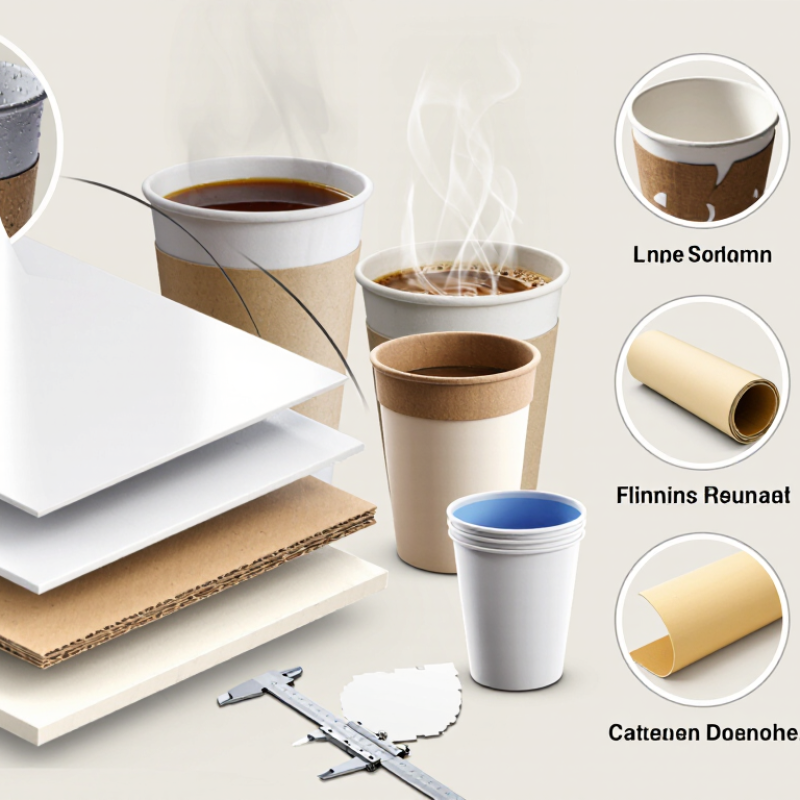
How Cupstock Board Is Classified for Disposable Cups
What Are the Best Cupstock Board Types in 2026?
How Cupstock Board Is Classified for Disposable Cups
Cupstock board is commonly classified by its fiber, number of layers, coating, and weight. These details affect stiffness, print quality, and resistance to liquid. A sample cross-section can reveal more than a product label: look for a dense paper core and an even barrier layer. Simple, but useful.
Single-wall board usually has one paper layer, while multi-ply grades combine layers for added rigidity or a different surface finish. The barrier may be polyethylene, a compostable polymer, or a water-based coating. Each behaves differently during forming and when exposed to hot drinks. A coating that works well for cold beverages may not perform as expected with heat or long holding times.
Basis weight, often stated in grams per square metre, helps compare grades, but it cannot predict cup performance on its own. Fiber source matters too; recycled and virgin fibers can differ in strength and consistency. Check the intended cup size, forming conditions, and supplier specifications together. Then test filled cups for leaks, seam strength, and rim stiffness. Labels can be confusing. Even a well-described board may need a practical trial, since equipment settings and storage conditions can change the result.
Cupstock Board Types in 2026: Barrier-Coated Faces
A practical way to classify cupstock is by how many paperboard faces carry a barrier coating.
Values show coated faces per board, not coating weight or performance. Uncoated board has no barrier face; single-side PE, PLA, and aqueous-coated boards typically have one; double-side PE-coated board has two. Actual constructions vary by product. The right choice depends on the drink, required leak and heat resistance, and local recycling or composting infrastructure.
Which Cupstock Board Types Are Available in 2026
In 2026, cupstock board is available in several forms, shaped by its paper fibers and barrier coating. Virgin-fiber board is widely used for consistent strength and a clean printing surface. Recycled-content options are also available, but their suitability depends on the intended use and relevant food-contact requirements. Single-sided polyethylene-coated board is a common choice for cups needing a liquid barrier. Double-sided coatings can help where moisture exposure is greater.
Other options include paperboard with aqueous dispersion coatings or polylactic acid coatings. Their performance varies by formulation, cup design, and use conditions. A coating described as plant-based does not automatically make a cup suitable for home composting. Likewise, a board that works well for cold drinks may soften with prolonged heat or contact with oily contents. Check technical data and test samples on the actual forming equipment; small changes in board stiffness can affect seams and rims.
Tips: Match the board to the drink, fill temperature, and expected holding time. Fit matters. Ask for barrier, forming, and food-contact documentation, then run a practical trial. A neat sample cup is useful, but it may not reveal every production issue.
How Board Structure Affects Strength, Coating, and Recyclability
In 2026, the best cupstock board depends on how its layers perform together. A stiff paperboard body helps a filled cup keep its shape, especially around the rim and base. Virgin-fiber grades often provide consistent stiffness and a smooth surface for printing. Recycled-fiber content can reduce reliance on fresh fiber, but fiber quality and board caliper matter; a thin wall may soften when it meets a hot drink. Feel the difference at the rim. It is often where weak stiffness first shows.
The coating is just as important. A polymer lining can resist leaks, while water-based barrier coatings may support easier repulping when correctly formulated. Neither coating guarantees recyclability everywhere. CEPI’s 2023 European Paper Recycling Monitoring Report puts Europe’s overall paper-and-board recycling rate at 79.3%. That figure covers paper and board broadly, not disposable cups specifically. Collection systems, coating separation, and mill equipment all affect whether cup fibers can be recovered. There is no perfect stack-up: adding barrier layers may improve leak resistance but complicate fiber recovery. Cup designers should test filled cups for rim stiffness, seam integrity, and leakage, then confirm repulpability with the intended recycling route. One detail is easy to miss: a coating that performs well in a lab may not behave the same in a local mill.
Where Each Cupstock Board Type Performs Best
Single-sided polyethylene (PE) cupstock is a practical choice for everyday hot drinks, such as coffee served at a counter. Its inner coating helps resist leaks, while the uncoated outer surface accepts printing. A practical default. For cold drinks, though, condensation may soften exposed board, especially near the base and seams.
Double-sided PE board performs better when moisture reaches both sides. It suits chilled beverages, iced drinks, and longer service times, where droplets collect on the cup exterior. The added barrier can improve resistance, but it may complicate recycling in some local systems. Check the actual collection and processing options rather than assuming every coated cup is accepted.
Aqueous barrier-coated board can suit operators seeking an alternative coating, provided it passes forming, leakage, and food-contact checks for the intended use. PLA-lined board is often chosen when a plant-based lining is specified, but hot-drink performance depends on the formulation and cup design. Plant-based does not automatically mean compostable in local facilities. Small details matter: test filled cups at serving temperature, inspect the bottom seam, and leave them standing long enough to reveal leaks. A sample that looks fine when empty can still disappoint. The best fit depends on drink temperature, hold time, condensation, and available end-of-life routes.
What Are the Best Cupstock Board Types in 2026? — Where Each Cupstock Board Type Performs Best | Cupstock board type | Typical barrier structure | Where it performs best | Main advantages | Key considerations | End-of-life notes |
| Single-sided PE-coated board | Paperboard with a polyethylene coating on the liquid-contact side | Cold cups and many hot-drink cups where the outside does not need a second barrier layer | Established cup-converting option; provides a moisture barrier and supports heat-sealed side seams and bottoms | Barrier performance depends on coating weight, board design, cup construction, and intended use | Paper fibers may be recoverable where facilities accept and process PE-coated cups; acceptance varies by location |
| Double-sided PE-coated board | Polyethylene coating on both the inner and outer paperboard surfaces | Hot drinks, longer service periods, and applications that need added resistance to outside condensation or moisture | Provides barriers on both surfaces and is compatible with widely used cup-forming and heat-sealing processes | Uses more polymer than a single-sided construction; the required barrier level should be matched to the beverage and use conditions | Recycling depends on local collection and pulping systems designed to handle coated paper cups |
| PLA-coated board | Paperboard coated with polylactic acid, a plant-derived polymer | Selected cold-cup and food-service applications where PLA is compatible with the converter’s forming and sealing process | Can provide a moisture barrier and is made with a polymer derived from renewable feedstocks | Plant-derived does not automatically mean home-compostable or suitable for every cup application; heat and sealing performance must be verified for the specific construction | Industrial composting is available only where accepted facilities and collection programs exist; it is not universally compostable or recyclable |
| Aqueous or dispersion-barrier board | Paperboard treated with a water-based barrier coating; formulation and coating design vary | Applications designed around a fiber-based cup structure and compatible with the supplier’s validated converting process | Some constructions are designed to support fiber recovery in suitable recycling systems | Barrier, heat-seal, and forming performance are formulation-specific; confirm suitability for hot or cold use and the intended contents | Recyclability depends on the coating, cup design, and the capabilities and acceptance rules of local paper-recycling facilities |
| Uncoated cupstock board | Paperboard without a dedicated polymer or dispersion barrier layer | Dry packaging components or applications in which a separate liner or barrier system provides liquid containment | Avoids a coating on the board itself and can suit components that do not directly hold liquid | Uncoated board alone is generally not suitable for holding beverages because it absorbs liquid | Fiber recovery depends on any attached materials, contamination, and local recycling rules |
How to Select Cupstock Board for a Specific Cup Application
Cupstock selection starts with the drink, not the board label. A small espresso cup needs reliable heat handling and a clean rim; a tall iced-drink cup faces condensation and longer liquid contact. Grand View Research’s Paper Cups Market report estimates a 2023 market value of US$10.2 billion and projects 4.7% annual growth through 2030. That expansion brings more formats, but no single board suits them all.
For hot drinks, single-sided polyethylene-coated board is common, with the coating facing the liquid. Cold drinks may need a stronger moisture barrier, such as double-sided coating, to resist condensation and seam leaks. Coating choice affects forming and end-of-life processing, so check the converter’s technical data and local collection options. A typical cupstock range is roughly 170–350 g/m²; heavier board can improve stiffness, but it may also complicate forming and increase material use. More grams do not automatically mean a better cup.
Test the actual cup on the filling line. Check side-seam integrity, rim curl, stiffness, and leakage after the intended hold time. For hot service, test with the real beverage temperature; for iced service, include a wet exterior and repeated handling. TAPPI’s Cobb test measures water absorption, but a lab result alone cannot predict every cup’s performance. I still see teams choose by stiffness first. It is an easy shortcut, and sometimes the wrong one.