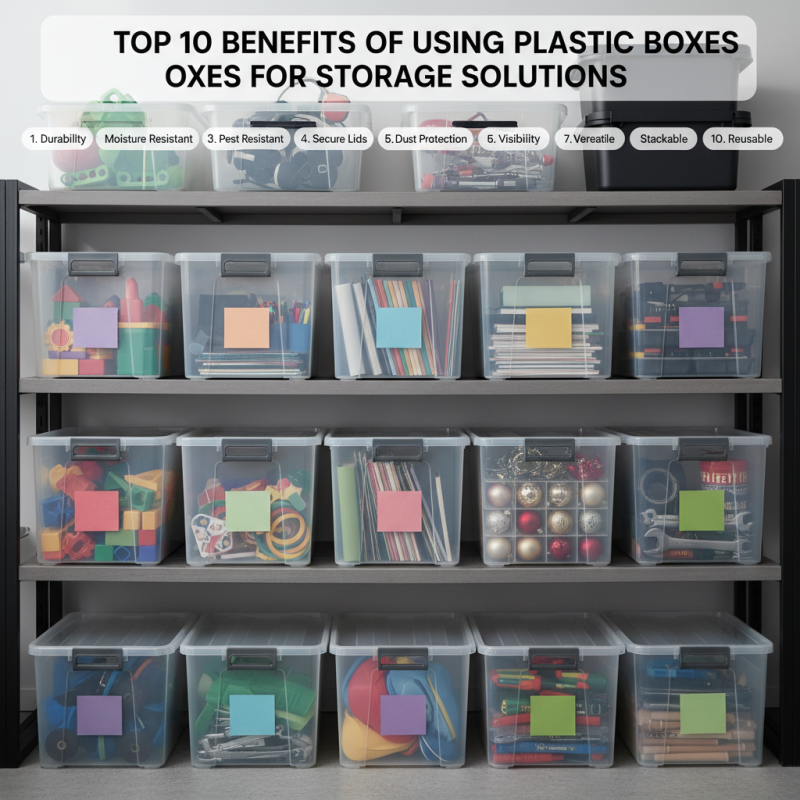
Top 10 Benefits of Using Plastic Boxes for Storage Solutions?
Plastic boxes have become a popular choice for storage solutions in many households and businesses. Their versatility makes them suitable for various needs. Whether organizing a garage or storing office supplies, these containers provide a practical approach to decluttering.
One major benefit of using a plastic box is their durability. Unlike cardboard, plastic boxes resist moisture and pests. This feature helps protect your items over time. Additionally, many plastic boxes come with secure lids. This keeps contents safe from dust and damage, enhancing their longevity.
However, as helpful as plastic boxes can be, over-reliance on them may lead to clutter. Individuals might fill them without proper organization. This makes it essential to find a balance. Using plastic boxes effectively requires mindful sorting and labeling. By doing so, you maximize their benefits and maintain an orderly space.
Advantages of Plastic Boxes for Organizing Home Spaces
When organizing home spaces, plastic boxes stand out as a versatile storage option. Their lightweight nature makes carrying and rearranging simple. According to a market research report by Smithers Pira, the global demand for plastic boxes has increased by 4.5% annually, reflecting their growing popularity. These boxes help in decluttering areas, turning chaotic spaces into organized havens.
Beyond just storage, plastic boxes offer various sizes and styles. This flexibility aids in maximizing space efficiency. For instance, a residential study revealed that homes utilizing stackable plastic boxes reduced their clutter by up to 30%. Homeowners often underestimate the impact of such practical solutions. The clarity of transparent containers also allows for easy viewing of contents. Yet, some may overlook the importance of labeling, which can lead to future confusion.
Environmental concerns do arise with plastic use. While many plastic boxes are recyclable, awareness of proper disposal methods is crucial. Additionally, some people may find that certain designs do not fit their specific needs, highlighting the importance of experimenting with different styles. Thoughtfully selecting storage solutions can significantly enhance organization, yet one must remain mindful of sustainability and utility.
Durability and Longevity of Plastic Storage Solutions
Plastic storage solutions offer remarkable durability and longevity, making them a popular choice across various industries. According to a report by Smithers Pira, the global market for plastic packaging is projected to grow to $500 billion by 2024. This underscores the reliability of plastic materials in storage applications. Unlike wood or cardboard, plastic resists moisture, mold, and pests, which enhances the lifespan of the items within.
When assessing durability, plastic storage boxes can withstand extreme temperatures. They remain stable in both cold and hot environments, unlike traditional materials that may warp or degrade. For instance, a study from Packaging Technology and Science indicates that certain plastics can maintain structural integrity at temperatures ranging from -40°F to 140°F. This extreme resilience makes them ideal for varied storage conditions.
However, it's important to consider that not all plastics are created equal. Some may become brittle over time, especially if exposed to harsh sunlight. Users must be cautious and choose the right type of plastic for specific needs. This awareness leads to improved decision-making regarding storage solutions. As the market evolves, exploring advanced materials will further enhance durability, but understanding existing limitations is vital for long-term use.
Versatility of Plastic Boxes for Various Storage Needs
Plastic boxes offer incredible versatility for various storage needs. They come in different shapes, sizes, and colors, making them ideal for organizing almost anything. From keeping seasonal clothes to storing toys, their adaptability is unmatched. You can easily label them, enhancing clarity in your storage system. It simplifies retrieval and keeps your space tidy.
Moreover, these boxes are lightweight yet durable. This balance allows for easy transport, even when fully packed. However, not all plastic boxes are created equal. Some may warp or crack over time, especially under heavy use. It’s important to consider the weight limits of each box. Being mindful of this can prevent accidents and extend the life of your storage solutions.
Additionally, plastic boxes are easy to clean, a major advantage in maintaining hygienic storage. Spilled substances can often be wiped off easily, reducing the need for frequent replacements. Yet, one must be cautious with heat exposure, as prolonged sunlight can cause fading or brittleness. Understanding these limitations helps you maximize their utility without compromising quality.
Cost-Effectiveness of Using Plastic Boxes Over Other Materials
Plastic boxes offer a cost-effective storage solution compared to traditional materials like wood and metal. According to the Plastic Industry Association, plastic has a lower initial cost, which can save consumers up to 30% on purchases. This affordability makes plastic boxes a popular choice for both personal and professional use. Their lightweight nature also reduces shipping costs, further enhancing their cost benefits.
Durability plays a significant role in this cost-effectiveness. Research from the American Plastics Council indicates that plastic boxes can last up to five times longer than their wooden counterparts when properly maintained. This longevity means fewer replacements over time, leading to substantial savings. However, consumers must consider the environmental impact of increased plastic production. Not every plastic option is recyclable, and this can contribute to long-term waste issues.
While plastic boxes stand out in price and sustainability, buyers should evaluate their specific needs. In some cases, cheaper isn't always better. Quality varies widely among plastics, and choosing low-quality boxes can lead to premature wear. This choice may require replacement sooner than expected, negating any initial savings. Balancing cost with quality is essential for a wise investment in storage solutions.
Ease of Maintenance and Cleaning for Plastic Storage Options
Plastic boxes are a popular choice for storage solutions. One significant advantage is their ease of maintenance and cleaning. Unlike wooden or metal storage options, plastic does not warp or rust. This means you can easily wipe them down with a damp cloth. A simple mixture of mild soap and water can work wonders for tough stains.
Regularly check your plastic boxes for any signs of wear. Cracks or discoloration may indicate it's time for a replacement. This is crucial for maintaining a tidy storage area. Additionally, ensure that you allow the boxes to dry thoroughly after cleaning to prevent mold buildup.
Tips: Use colored labels to mark contents. This way, you can quickly identify what’s inside each box. Consider assigning a specific box for seasonal items. Rotate them as seasons change. This method can keep your storage area organized and efficient. Using plastic boxes for storage simplifies your cleaning routine, saving you time and effort in the long run.
Top 10 Benefits of Using Plastic Boxes for Storage Solutions