

The 2026 Top Pet Food Container Manufacturers Worldwide report examines the companies shaping safer, smarter, and more practical pet-food storage. A Pet Food Container is not simply a box, pouch, jar, or drum. It protects nutrition from moisture, oxygen, sunlight, insects, and handling damage. It also influences portion control, freshness, transport efficiency, and household convenience.
Dr. Oscar E. Chavez, a veterinarian and pet nutrition specialist, has said, “Food quality depends on more than the recipe; storage matters too.” That observation gives this industry useful direction. A strong container should support the food, not distract from it. Think of a resealable pouch beside a kitchen bowl, a rigid tub stacked in a warehouse, or a lightweight container surviving a long delivery route. Small details matter.
This overview considers material selection, sealing performance, durability, hygiene, design flexibility, and manufacturing consistency. It also reviews how leading producers respond to changing consumer expectations. Recyclability is important. Yet it is not the only answer. A poorly designed recyclable container may waste food through leaks or weak barriers. That contradiction deserves more attention.
Manufacturers must balance protection, cost, weight, appearance, and environmental impact. No single format serves every diet or distribution channel. Some claims in this market also require closer verification. Marketing can move faster than evidence. Therefore, this guide compares industry capabilities carefully, using practical performance rather than polished promises as the central measure.
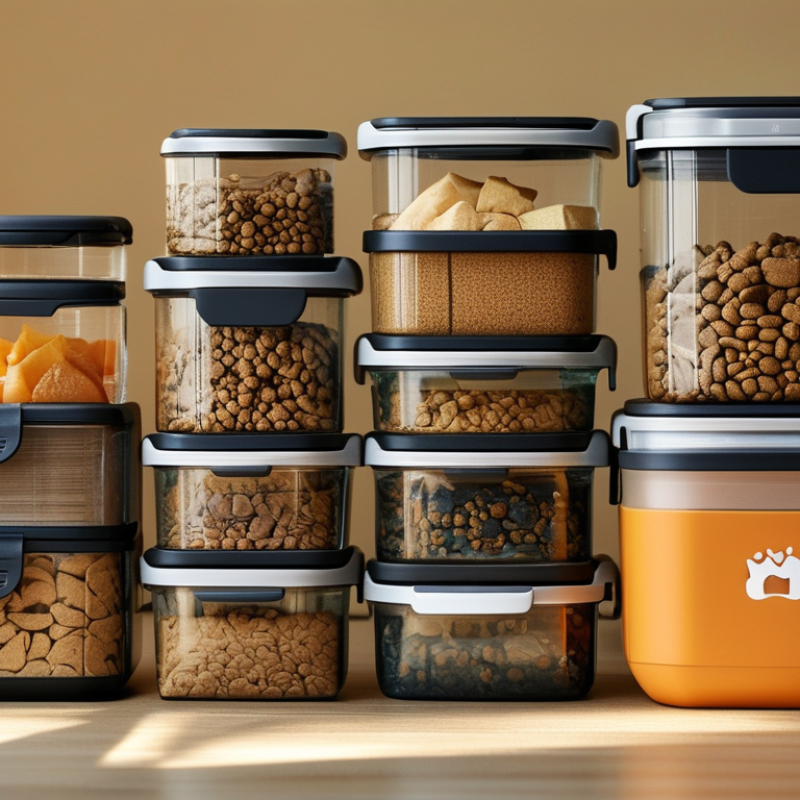
The pet food container market covers packaging designed to store, protect, and dispense food for domestic animals. It includes dry-food bags, cans, pouches, tubs, jars, and reusable storage bins. Manufacturers worldwide serve households, shelters, farms, retailers, and food-service operators. Container size ranges from small trial packs to large bulk units.
Size matters.
The market scope includes materials such as plastic, metal, glass, paper-based laminates, and emerging fiber structures. Evaluation usually considers barrier performance, seal quality, durability, portability, and compatibility with filling equipment.
Containers must help control moisture, oxygen, light, odors, and pest exposure during storage. Some formats support resealing or measured dispensing. Others prioritize low weight and efficient shipping.
In practical packaging assessments, the closure often fails before the container body. That detail deserves attention.
The boundary is not perfectly clean. A feeding bowl may support serving, but it usually falls outside the core container market. Likewise, transport crates and general household storage products are normally excluded unless they are specifically designed for pet food.
Market analysis should also separate primary packaging from secondary cartons and pallets. This distinction prevents inflated estimates and improves comparisons among manufacturers.
Recyclability, material reduction, and food-contact suitability increasingly influence product development, although performance targets can conflict with sustainability goals. Industry definitions must remain flexible, because regional habits and packaging infrastructure vary.
When evaluating 2026’s global pet food container manufacturers, begin with material safety and production consistency.
Look for food-contact documentation, migration testing, and clear batch traceability. A reliable manufacturer should explain how containers resist moisture, odors, oils, and repeated handling. Ask for physical samples, not only digital specifications. Small details matter, such as lid alignment and the sound of a secure seal.
Manufacturing experience also deserves careful review.
Examine factory audits, quality-control procedures, export records, and production capacity. A strong supplier can provide inspection reports and explain how defects are isolated before shipment. Sustainability claims need evidence, too. Check recycled content, packaging reduction, and end-of-life guidance.
The cheapest quotation can hide weaker materials or unstable lead times. That assumption is easy to miss.
Even approved samples may not represent every production batch, so independent inspection remains useful.
Tips:
Request test reports before signing. Compare samples from different production runs. Confirm minimum order quantities and replacement procedures.
Ask how the manufacturer handles odor retention after washing. Evaluate communication during a small trial order; delayed answers may reveal future service problems.
A practical checklist should include seal performance, drop resistance, labeling accuracy, and storage conditions. No single certificate proves overall reliability. Dig deeper.
Leading Pet Food Container Manufacturers in 2026
The leading pet food container manufacturers in 2026 will compete on protection, precision, and measurable sustainability. Grand View Research valued the global pet food packaging market at about USD 10 billion in 2023. Its forecast also indicates steady growth through 2030. This demand favors manufacturers producing lightweight cans, resealable pouches, and durable plastic containers. APPA reported that United States pet industry spending reached approximately USD 152 billion in 2024. More spending creates stronger pressure for reliable packaging.
Manufacturers with food-grade production lines, traceability systems, and flexible minimum orders deserve closer attention. Containers must resist oxygen, moisture, sunlight, and repeated handling. A poor seal can quietly damage texture and nutrition. That risk is easy to underestimate. Leading suppliers increasingly use recycled content, thinner structures, and packaging designs that reduce transport weight. However, sustainability claims need evidence. Life-cycle data matters more than attractive wording. Smithers packaging research also highlights automation and recyclable material development as major industry priorities. Regional recycling systems remain inconsistent, though.
Tips: Request migration testing, seal-strength results, and batch traceability before approving a supplier. Compare container performance after storage, not only after production. Ask for recycled-content certificates and disposal guidance. Check whether the manufacturer can maintain quality during seasonal demand. A cheaper container may create higher waste. Pilot testing is still necessary.
| Rank Tier | Manufacturer Region | Primary Container Types | Common Materials | Typical Capacity Range | Key Manufacturing Strength | Food-Contact Compliance Frameworks | Sustainability Options | Typical Export Coverage |
|---|---|---|---|---|---|---|---|---|
| Tier 1 | North America | Metal cans, flexible pouches, plastic tubs | Tinplate steel, aluminum, PP, multilayer films | 70 g–20 kg | High-volume production and automated filling-line compatibility | FDA food-contact requirements; applicable ASTM packaging tests | Recyclable steel and aluminum; downgauged films; PCR plastic where permitted | North America, Latin America, Asia-Pacific |
| Tier 1 | Western Europe | Pouches, trays, cans, composite containers | Steel, aluminum, PP, PET, paper-based laminates | 85 g–15 kg | Advanced barrier structures and retail-ready packaging formats | EU Framework Regulation 1935/2004; GMP Regulation 2023/2006 | Mono-material PE or PP pouches; recyclable metal; lightweighting | Europe, Middle East, Africa, Asia-Pacific |
| Tier 1 | East Asia | Dry-food bags, stand-up pouches, plastic jars, cans | BOPP, PE, PET, PP, aluminum foil, tinplate | 100 g–25 kg | Large-scale flexible packaging capacity and competitive tooling | Export-market food-contact requirements; ISO-based quality systems | Recyclable mono-PE structures; reduced-gauge packaging; water-based inks | Global |
| Tier 1 | Southeast Asia | Flexible bags, laminated pouches, plastic containers | PE, PET, PP, nylon, aluminum foil | 100 g–20 kg | Flexible order volumes and contract-packaging support | Local food-contact rules plus destination-market requirements | Lightweight films; recyclable PE/PP formats; recycled resin integration | Asia-Pacific, Europe, North America |
| Tier 2 | Central and Eastern Europe | Metal cans, trays, paperboard cartons, pouches | Steel, aluminum, PP, PET, coated paperboard | 85 g–10 kg | Regional supply chains and short-to-medium production runs | EU food-contact legislation and HACCP-based controls | Recyclable steel; fiber-based secondary packaging; material reduction | Europe and Central Asia |
| Tier 2 | Latin America | Metal cans, plastic pails, bags, stand-up pouches | Tinplate steel, PP, HDPE, PE films | 100 g–25 kg | Durable packaging for transport and humid storage conditions | National food-contact regulations; HACCP and ISO 22000 commonly applied | Steel recycling; reusable bulk containers; reduced plastic thickness | Latin America and North America |
| Tier 2 | Middle East and Africa | Flexible sacks, pouches, plastic tubs, metal cans | PE, PP, PET, tinplate steel, laminated films | 100 g–20 kg | High-barrier packaging designed for heat and moisture protection | Destination-market food-contact rules; HACCP-based manufacturing practices | Lightweight plastic formats; recyclable metal; packaging redesign | Regional and international markets |
| Tier 2 | Oceania | Pouches, cans, plastic tubs, bulk bags | Steel, aluminum, PP, PE, PET and barrier laminates | 85 g–20 kg | Premium presentation, shelf-life protection and regional distribution | Australia and New Zealand food-contact requirements; HACCP controls | Recyclable rigid plastics; metal recycling; lightweight flexible formats | Oceania and Asia-Pacific |
Data note: The table presents anonymized regional manufacturer segments and commonly observed product capabilities. Capacity ranges and compliance references are typical industry ranges rather than company-specific disclosures.
Materials, designs, and production technologies now define pet food container performance. The American Pet Products Association reported that U.S. pet industry spending reached 152 billion dollars in 2024. Pet food and treats accounted for 65.8 billion dollars. This scale increases demand for safer, lighter, and more convenient packaging.
Material selection must match the product. Multilayer films protect dry food from oxygen and moisture. Recyclable mono-PE structures can simplify recovery, but their barrier performance still needs careful testing. Rigid PP containers resist impact and tolerate repeated opening. Paperboard adds a natural appearance, though it needs an effective inner barrier. Small details matter. A weak zipper can make a premium container useless.
Manufacturers are combining injection molding, blown-film extrusion, thermoforming, and automated vision inspection. Nitrogen flushing helps reduce oxygen exposure in selected formats. Digital printing supports shorter production runs and faster design changes. Smithers’ packaging research continues to identify flexible packaging as a major area of development, especially where weight reduction lowers transport emissions. However, “recyclable” claims can become confusing when local collection systems cannot process complex structures. This remains an industry weakness. Better manufacturers should publish barrier tests, seal-strength results, recycled-content percentages, and traceable production data. That evidence matters more than attractive graphics.
In 2026, leading pet food container manufacturers are treating sustainability as a design requirement, not a marketing phrase. They test recycled plastics, metal, fiber, and barrier films for odor retention, moisture control, and structural strength. A useful audit checks resin origin, factory energy records, migration testing, and cleaning procedures. Small details matter. A loose lid can waste food during transport. This is practical expertise, not decoration.
Safety expectations are rising across global markets. Manufacturers must match container materials with dry kibble, wet food, treats, or supplements. Food-contact documentation, batch traceability, tamper evidence, and microbial control support reliable purchasing decisions.
However, standards differ between regions, and one certificate may not satisfy every importer. That gap deserves more attention. Buyers should request current test reports, not old promotional claims.
Market demand is also changing through e-commerce, smaller households, and premium nutrition formats. Lightweight packs reduce shipping emissions, yet thinner walls may increase puncture risks. Reusable systems can work well, but collection networks remain uneven outside major cities. Manufacturers are exploring mono-material designs, refill models, and recycled content with clearer labeling. Progress is visible. It is not perfect. A responsible supplier should measure total lifecycle impact, including transport, reuse rates, and end-of-life recovery. The difficult question is often overlooked: will pet owners actually use the system correctly?
© 2025 Cardboard Tubes | Registered in England and Wales.
Company Number 2402078

