2026 How to Choose Fragrance Paper Tube for Global Buyers?

Choosing the right Fragrance Paper Tube in 2026 requires more than attractive printing. Global buyers must assess protection, material quality, supplier reliability, and environmental claims. A tube may look premium under showroom lights, yet fail during humid ocean transport.

Robert Lockyer, founder of Delta Global and a packaging industry specialist, has said, “Packaging must protect the product and express the brand.” This principle remains practical for fragrance packaging. Buyers should examine the inner diameter, wall thickness, closure strength, and fit around the perfume bottle. Small gaps can create movement, noise, and damage. Poorly sealed ends may also weaken after temperature changes.

A dependable Fragrance Paper Tube supplier should provide clear specifications, production samples, and documented quality checks. Ask about paper sourcing, recycled content, coating composition, print durability, and odor neutrality. FSC certification may support responsible sourcing, but buyers should verify the certificate and its scope. Sustainability language alone proves little.

Factory experience matters. Request drop-test results, compression data, and moisture-resistance details. Confirm minimum order quantities, lead times, color tolerances, and inspection procedures. A supplier that answers vaguely creates unnecessary risk.

No tube is perfect. A thicker wall may improve protection but increase shipping weight. A water-based coating may support sustainability goals but require stricter drying control. Buyers must balance design, cost, performance, and regional logistics. The best choice is not always the cheapest one. It is the tube that performs consistently after leaving the factory.

2026 How to Choose Fragrance Paper Tube for Global Buyers?

What Is a Fragrance Paper Tube and Why Does It Matter?

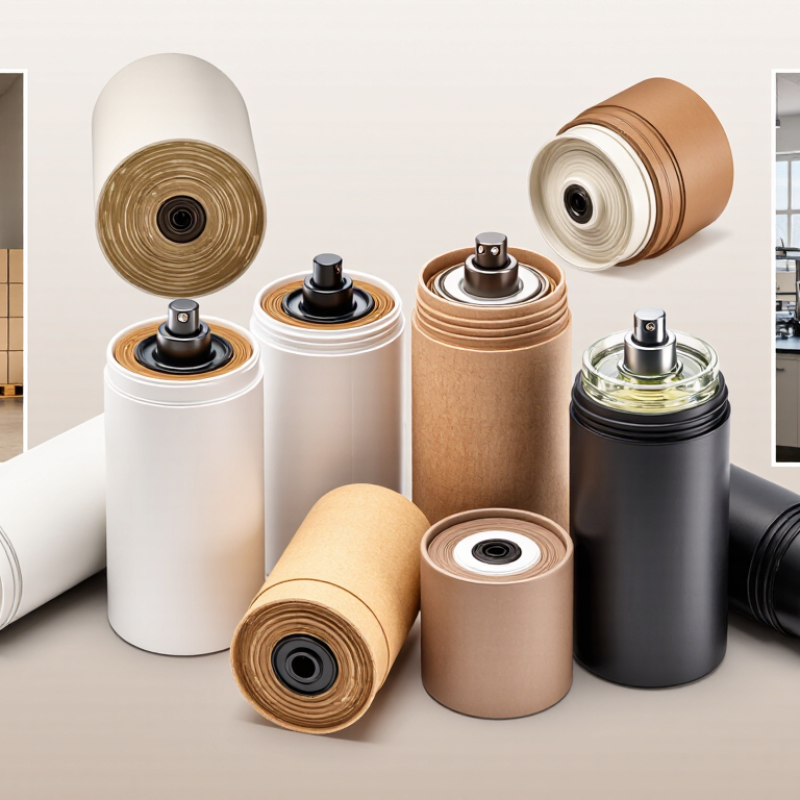
A fragrance paper tube is a rigid, cylindrical package made from wound paper layers. It usually holds a bottle, sample vial, or small gift set. Unlike a simple carton, it creates a round, tactile structure around the product. The tube may include a paper lid, insert, shoulder, or metal-free closure. Its job is practical. It protects the container from scratches, light exposure, and minor impact during handling. It also provides space for scent notes, usage guidance, batch details, and recycling instructions.

For global buyers, the tube matters because packaging performance changes across shipping routes and climates. In humid warehouses, weak paper can soften and lose its fit. In dry conditions, poorly bonded layers may separate at the edge. I have seen attractive samples fail after repeated lid tests. That experience makes compression strength, seam quality, inner fit, and moisture resistance more important than appearance alone. Ask for test samples, dimensional tolerances, material specifications, and transit-testing results. A reliable supplier should explain these points clearly, not hide them behind decorative finishes.

Choose paper thickness according to bottle weight and filling method. A heavy glass bottle needs a stable insert, not merely a thicker tube. Check whether the printed surface rubs against other packages during transport. Confirm odor neutrality, because adhesives and inks can influence a delicate fragrance experience. Recyclability also deserves careful review; mixed materials can complicate disposal. I would not approve a design from photographs alone. Small flaws appear at the lid. Sometimes, the “premium” option is simply overbuilt, costly, and less practical.

How to Define Your Fragrance Paper Tube Requirements

How to Define Your Fragrance Paper Tube Requirements

Start with the product, not the tube. Record the bottle diameter, height, cap clearance, and filling tolerance. A tube that fits beautifully on a sample may fail during fast packing. Leave practical space for inner protection, especially when glass bottles travel through humid or cold routes.

Define the visual experience next. Decide whether the tube should feel soft-touch, textured, matte, or naturally fibrous. Specify color limits, print coverage, opening style, and acceptable surface marks. Some imperfections can support a handmade appearance. Others simply look careless.

Material choices need evidence. The McKinsey 2023 global packaging survey, covering more than 8,000 consumers, reported that 60–70% of respondents were willing to pay more for sustainable packaging. However, “paper-based” does not automatically mean recyclable. Ask suppliers about paper composition, adhesive type, coating coverage, and recycling guidance. A glossy finish may look premium, but it can complicate recovery.

Smithers’ sustainable packaging research identifies paper and board as important growth materials in the shift toward lower-impact packaging. That does not remove the need for testing. Request compression, drop, humidity, and abrasion samples. Check whether the printed tube keeps its shape after standing in a bathroom. Confirm the target quantity, artwork method, production tolerance, and delivery region before approving the structure. A small mismatch in cap clearance can create large waste during production.

2026 How to Choose Fragrance Paper Tube for Global Buyers? - How to Define Your Fragrance Paper Tube Requirements

Use the following requirement matrix to define the paper tube structure, dimensions, appearance, protection level, testing plan, and shipment conditions before requesting quotations or pre-production samples.

Requirement Dimension Typical Specification Range Recommended Requirement for Fragrance Packaging Why It Matters Buyer Verification Method
Tube Inner Diameter 30–90 mm
Defined by the bottle, insert, or secondary packaging.
Specify the actual product diameter plus the required clearance. Confirm whether the tube holds one bottle, a bottle with an insert, or a complete gift set. An incorrect inner diameter can cause movement, difficult insertion, or excessive pressure on the glass bottle. Measure the packed product at its widest point and approve a physical fit sample before mass production.
Tube Height 70–220 mm
Commonly matched to perfume bottles and discovery sets.
Define the usable internal height, lid overlap, base clearance, and any allowance required for an insert or cushion. Height affects product protection, visual proportion, pallet efficiency, and shipping volume. Measure the complete packed height and check lid closure, internal clearance, and overall presentation.
Wall Thickness 1.0–3.0 mm
Varies with paperboard layers and required compression resistance.
Use a thicker wall for heavier glass bottles, premium gift sets, long-distance transport, or high stacking loads. Wall thickness influences rigidity, edge protection, compression performance, and perceived quality. Record the agreed tolerance and perform compression and drop testing on the finished tube.
Paperboard Structure Spiral-wound or convolute-wound paper tube with paperboard body and separate or integrated components. Choose a structure that balances stiffness, surface smoothness, decoration requirements, and recyclability goals. Different winding structures affect dimensional accuracy, seam appearance, strength, and production cost. Request a construction diagram or cross-section sample showing the body, shoulder, base, and lid layers.
Material Recycled Content Declared percentage
May vary by paper grade and supplier sourcing.
State the minimum recycled-content percentage required by the project and request supporting documentation when environmental claims are used. Material content affects sustainability communication, appearance, strength, and eligibility for certain customer policies. Review the material declaration, paper specification, and any applicable chain-of-custody documentation.
Surface Finish Uncoated, matte coating, gloss coating, soft-touch coating, or textured paper wrap. Select the finish according to the desired tactile effect, scratch resistance, ink appearance, and recycling requirements. Fragrance packaging is frequently handled at retail and during fulfillment, so surface durability affects its appearance. Approve a color-and-finish sample under consistent lighting and conduct rub and scratch checks.
Color Reproduction Defined by an approved color reference and production tolerance. Provide a physical color reference or a recognized color standard, and define whether the result is solid, metallic, gradient, or textured. Paper absorbency, coating, and printing method can change color appearance compared with a digital design file. Approve a printed proof or production sample rather than relying only on screen colors.
Decoration Method Offset printing, flexographic printing, digital printing, foil stamping, embossing, debossing, or labeling. Choose the method based on order volume, artwork detail, metallic effect, tactile requirements, and required registration accuracy. Decoration choices affect minimum order quantities, tooling, lead time, cost, and the final visual hierarchy. Confirm artwork dimensions, bleed, safe area, foil or embossing depth, and approval sample requirements.
Closure and Lid Fit Slip-fit lid, shoulder lid, telescopic lid, friction-fit closure, or magnetic-assisted presentation structure. Specify opening force, lid overlap, anti-loosening requirements, and whether the lid must remain secure during export shipment. A closure that is too loose can open in transit; one that is too tight can damage the tube or reduce usability. Carry out repeated opening-and-closing checks and test the packed tube after vibration or drop exposure.
Bottle Retention Paperboard insert, molded-pulp insert, cardboard partition, foam alternative, or precision-fit interior. Use an insert when the bottle has clearance inside the tube or when the product requires extra protection against impact and movement. Retention prevents rattling, reduces impact transfer, and helps keep the product centered during transport. Test the complete set in its final orientation and check movement after repeated handling.
Barrier and Moisture Protection Uncoated paper structure or paper structure with a functional coating or inner barrier. Define whether the tube is only secondary packaging or must tolerate elevated humidity, condensation, or contact with oily surfaces. Paperboard can lose stiffness when exposed to moisture, which may affect dimensional stability and surface quality. Specify the intended storage and transport environment, then conduct humidity or conditioning tests when necessary.
Odor and Product Compatibility Low-odor packaging materials with no unwanted transfer to the fragrance presentation. Require material samples to be checked for residual odor, ink odor, coating odor, and compatibility with the packed fragrance format. Unwanted packaging odor can interfere with the consumer’s fragrance experience, especially when the package is opened close to the product. Evaluate the empty tube and packed tube after conditioning in a clean, odor-controlled area.
Drop and Compression Performance Test level based on package weight, distribution method, stacking pattern, and destination conditions. Define the packed weight, drop orientation, stacking duration, and acceptance criteria before testing. Protection requirements differ between retail handling, parcel delivery, palletized freight, and mixed-load export shipping. Test the final production-equivalent package, not only an empty tube or a laboratory mock-up.
Dimensional Tolerance Commonly agreed by component and manufacturing process; tighter tolerances may require additional controls. Set tolerances for diameter, height, lid fit, insert position, print registration, and component alignment. Clear tolerances reduce disputes and ensure that the bottle, insert, and tube work together consistently. Use a calibrated measurement method and define the sample size and inspection level in the purchase specification.
Flat-Pack or Assembled Delivery Rigid assembled tube or partially assembled component set. Select assembled delivery when shape protection and fast packing are priorities; consider component delivery when logistics volume is critical. Packaging format affects storage space, freight efficiency, assembly labor, and the risk of deformation. Compare cubic volume, assembly time, handling damage, and total landed cost for both options.
Carton and Pallet Requirements Export carton dimensions, gross weight, carton quantity, pallet pattern, and labeling defined per shipment. Specify maximum carton weight, carton marking language, pallet dimensions, stacking limits, and moisture protection for the destination. Transport packaging affects warehouse handling, freight utilization, customs processing, and damage rates. Approve a packing specification showing inner quantity, carton quantity, gross weight, dimensions, and shipping marks.
Regulatory and Sustainability Claims Claims must be supported by the applicable market rules and documented material information. Define required statements such as recycled content, recyclability, paper source, or disposal guidance before artwork approval. Environmental and packaging claims may require evidence and may be interpreted differently across destination markets. Review claim wording with the responsible compliance team and retain supporting declarations for the shipment.
Sampling and Approval Gates Structural sample, printed proof, pre-production sample, and final production inspection. Do not release mass production until dimensions, fit, color, finish, closure, insert, and packing method are approved. Early approval gates reduce the risk of expensive corrections after tooling, printing, or international shipment. Use a signed specification sheet with reference samples, measurable tolerances, and documented acceptance criteria.
Commercial Planning Data Target quantity, annual forecast, tooling needs, sampling cost, production lead time, and replenishment schedule. Provide the expected first order, repeat order frequency, peak-season demand, and required delivery window. Volume and forecast affect material purchasing, printing setup, production scheduling, inventory, and landed cost. Request a quotation that separates tooling, sampling, unit price, packaging, freight assumptions, and lead time.

Recommended buyer checklist: Finalize the product dimensions, tube construction, closure, insert, decoration, protection level, sustainability claims, testing plan, packing method, and acceptance tolerances before confirming the purchase order.

Which Materials and Structures Suit Global Fragrance Packaging?

2026 How to Choose Fragrance Paper Tube for Global Buyers?

Which Materials and Structures Suit Global Fragrance Packaging?

A fragrance paper tube should protect the bottle, preserve its presentation, and survive international handling. The outer body commonly uses rigid paperboard, while the inner layer may include foil, coated paper, or a certified polymer barrier. Material choice depends on fragrance oils, humidity, filling temperature, and transport duration. A beautiful tube can still fail when its inner barrier is poorly matched.

Spiral-wound tubes offer efficient production and reliable compression strength. Convolute-wound structures provide smoother walls and a more premium appearance. A rigid shoulder can hold the bottle firmly, while a shaped insert reduces movement inside the tube.

Test the fit with real samples. Small gaps can create loud rattling during shipment. Loose lids may also weaken the opening experience.

In packaging evaluations, I check drop resistance, edge crushing, moisture exposure, and repeated lid removal. I also inspect glue lines and printing durability under humid conditions. Recyclability needs careful review. Mixed materials may improve protection but complicate local recycling systems. Paper from responsible forestry sources can support sourcing goals, yet certification alone does not prove the entire package is sustainable. No structure is perfect. A thinner tube may reduce material use, but it can feel fragile and lose its shape. Regional regulations and recycling infrastructure should be verified before production.

How to Evaluate Suppliers, Quality, and Sustainability Standards

2026 How to Choose Fragrance Paper Tube for Global Buyers?

A reliable supplier should explain material choices, testing methods, and production limits clearly. Request a physical sample, specification sheet, and recent quality records. Check paper thickness, inner diameter, cap fit, and surface finishing under real warehouse conditions. The tube should resist fragrance oils, moisture, compression, and light handling during transport. Ask for drop tests, stacking tests, and leakage observations. Small details matter.

Supplier assessment needs more than a polished presentation. Review ISO 9001 procedures, batch traceability, corrective-action records, and inspection checkpoints. Ask who supplies the paper, adhesives, coatings, and closures. FSC certification may support responsible forestry, but verify its scope and certificate status. Recycled content claims also need supplier declarations or test evidence. A confident answer is useful. A vague answer is a warning.

Sustainability requires honest scrutiny. A paper tube may contain plastic liners, metallic layers, or difficult-to-separate coatings. Request the material structure and recycling guidance for each target market. Measure paper weight, shipping volume, and production waste instead of trusting attractive claims. Some suppliers offer low-impact options but cannot provide consistent color or barrier performance. That trade-off deserves discussion. No scorecard is perfect. I still question whether every “eco” feature improves the full package life cycle. Run pilot production before committing to large global orders.

2026 How to Choose Fragrance Paper Tube for Global Buyers?

Supplier evaluation benchmark based on quality control, compliance evidence, sustainability documentation, and delivery capability.

This 100-point procurement model prioritizes product consistency and documented compliance. Buyers should request batch inspection records, material traceability, chemical compliance declarations, environmental management evidence, and verified delivery performance. Relevant references may include ISO 9001, ISO 14001, ISO 18606, EN 13432, applicable packaging legislation, and recognized chain-of-custody certification.

How to Compare Costs, Regulations, and Shipping for Global Markets

How to Choose Fragrance Paper Tube for Global Buyers?

Compare landed cost, not the factory quotation alone. Ask for separate prices for the tube, lid, insert, printing, tooling, testing, and export cartons. A thicker wall may reduce dents, but it can increase weight and freight charges. Request a pilot batch, then inspect compression strength, color consistency, lid fit, and humidity resistance. Small details matter. Calculate cost per sellable unit after defects, not per manufactured unit.

Regulations can change the cheapest design. The EU Packaging and Packaging Waste Regulation, adopted as Regulation (EU) 2025/40, introduces stronger recyclability requirements from 2030. Therefore, review coatings, laminations, adhesives, inks, and mixed-material lids before production. Ask suppliers for material declarations, migration information where relevant, and test records. Claims such as “recyclable” need evidence in each target market. Requirements differ across countries, and assumptions create expensive redesigns.

Shipping deserves equal attention. UNCTAD’s Review of Maritime Transport 2024 states that maritime transport carries over 80% of global merchandise trade by volume. Tubes should be tested in export cartons, especially against compression, vibration, and moisture. Compare pallet patterns, carton dimensions, container utilization, and delivery terms. If the fragrance contains alcohol, confirm its transport classification through the Safety Data Sheet and carrier requirements. Air freight may solve urgent shortages, but it can erase the packaging cost advantage. I have seen attractive samples fail after humid warehouse storage. That uncomfortable lesson is worth budgeting for.

© 2025 Cardboard Tubes | Registered in England and Wales.
Company Number 2402078