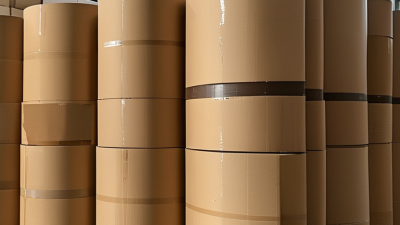

2026 Best Industrial Cardboard Types for Global Buyers

Global buyers will enter 2026 with a sharper question: which industrial cardboard type truly fits the application?

The answer depends on load weight, moisture exposure, stacking duration, printing needs, and shipping distance. Corrugated fiberboard suits transport cartons, retail-ready cases, and export packaging. Its flute profile changes cushioning and compression strength. Double-wall board offers stronger protection for machinery parts and bulky components. Solid board provides a smoother surface for folding cartons and demanding print applications. Honeycomb board can support heavy pallets while reducing unnecessary material use.

Packaging author Walter Soroka wrote, “Packaging is the means of ensuring safe delivery of a product to the ultimate consumer.” That principle remains practical, not decorative. A buyer should inspect edge crush values, burst strength, basis weight, recycled content, and moisture resistance. Factory samples matter more than attractive brochures.

Small details decide performance.

A box stored beside an open loading dock may soften overnight. A pallet with uneven weight may collapse during inland transport. These failures often come from incorrect board selection, not poor manufacturing alone. Global purchasing teams should also review mill consistency, lead times, certifications, and regional availability. Standards and test methods can vary between suppliers, so comparisons must use equivalent specifications.

This guide examines the best industrial cardboard options for 2026, including their strengths, limitations, and practical buying conditions. Some recommendations remain imperfect. Cost, sustainability, and durability rarely align perfectly. A thinner board may reduce material use, yet demand better design and stricter handling. The most reliable choice is not always the cheapest.
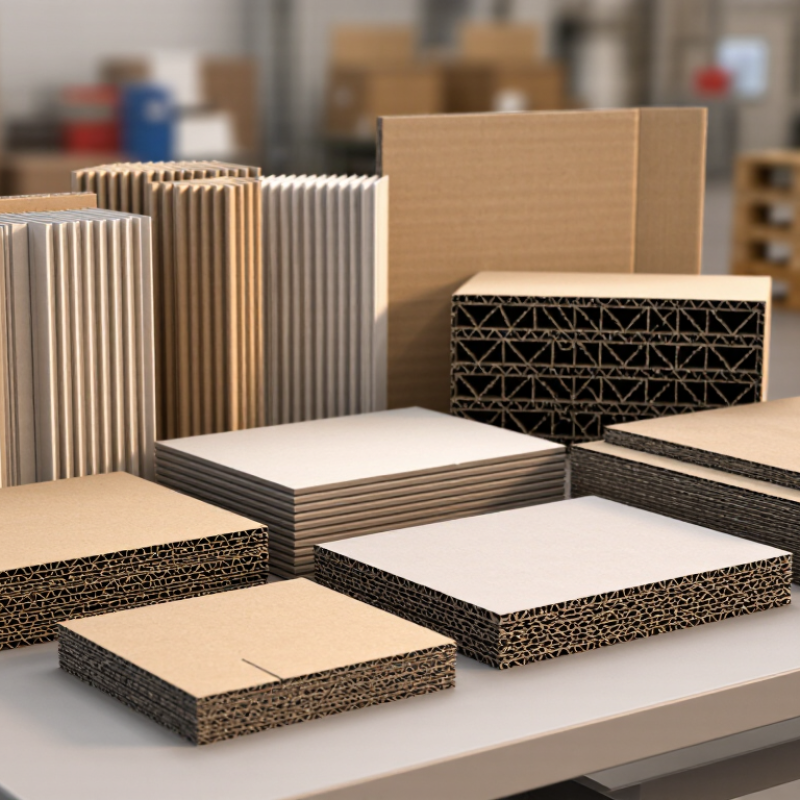
2026 Best Industrial Cardboard Types for Global Buyers

Classify Industrial Cardboard by Fiber, Structure, and 200–800 g/m² Basis Weight

Industrial cardboard is not one universal material. Global buyers should classify it by fiber, structure, and basis weight before comparing prices. The FAO Forestry Production and Trade database records more than 400 million tonnes of global paper and paperboard production annually. That scale hides major performance differences.

Fiber affects strength, moisture response, and sustainability claims. Virgin kraft fibers usually provide better compression and tear resistance. Recycled fibers can reduce resource demand, but repeated recycling may shorten fiber length. Mixed-fiber grades balance cost and performance. Check the technical sheet, not only the recycled content percentage. A neat classification still fails sometimes.

Structure determines how the board behaves in real handling. Solid board suits dividers, heavy wraps, and rigid panels. Corrugated board uses liners and fluting to improve cushioning and stacking strength. Honeycomb structures reduce weight while supporting large surfaces. For a practical range, 200–350 g/m² often fits lighter partitions, while 400–800 g/m² supports heavier industrial handling. Basis weight alone cannot predict durability. Moisture, flute profile, and converting quality matter too. Tests should follow ISO 536 for grammage, ISO 3037 for edge crush strength, and ISO 2759 for bursting strength. CEPI Key Statistics 2023 reported 79.5 million tonnes of paper and board production among its member countries, showing why consistent specifications matter across supply chains. Ask for sample testing under expected humidity. It is slower, but safer.

Corrugated Board: Compare Flutes, 44 ECT, and 32 ECT Export Performance

For global buyers, corrugated board selection starts with flute geometry, not only paper weight. The Fibre Box Association’s 2023 industry statistics recorded approximately 396 billion square feet of corrugated shipments in the United States. That scale reflects one reality: small specification errors become expensive during export.

C flute offers stronger stacking and cushioning for appliances, machinery, and long-distance pallets. B flute has a flatter surface, better print stability, and useful puncture resistance. E flute is thinner and suits small cartons, inserts, and retail-facing packs. A 44 ECT board generally resists greater edge compression than 32 ECT. It can protect heavier loads and tolerate rougher handling. However, 44 ECT is not automatically better. It may increase material cost, pallet weight, and freight charges. A well-designed 32 ECT box can perform better than a poorly sized 44 ECT box. The TAPPI T 811 method measures edge crush, while ASTM D4169 and ISTA export protocols examine vibration, drops, and compression. ECT is only one part of the decision.

Tips: Check box dimensions, stacking height, and container humidity before choosing 32 or 44 ECT. FEFCO’s 2023 recycling data work highlights the importance of fiber recovery, but wet cartons still lose strength quickly. Use C or BC flute for heavy pallet loads, and test samples at 80% relative humidity. I would not trust a laboratory result alone. Real loading habits often differ. That difference deserves another test.

2026 Best Industrial Cardboard Types for Global Buyers

Corrugated board selection depends on both flute structure and compression strength. A, C, B, E, and F flutes show representative nominal flute heights, while 32 ECT and 44 ECT indicate standardized edge-crush resistance in pounds per linear inch.

Larger flutes generally provide better cushioning and stacking clearance. 44 ECT board offers a higher edge-crush rating than 32 ECT and may provide greater load capacity for export shipments, although moisture, box dimensions, pallet configuration, and transport conditions also affect actual performance.

Kraftliner vs Testliner: Assess 70–100% Virgin Fiber Content and Strength

Kraftliner and testliner are not interchangeable, even when both look clean and brown. Kraftliner usually contains 70–100% virgin fiber, giving longer fibers, higher burst strength, and better resistance to repeated handling. Testliner commonly uses recycled fiber, although some grades include virgin fiber. Its performance depends on furnish quality, moisture, and refining.

CEPI’s Key Statistics 2023 reported a European paper recycling rate of about 80%, showing why recycled fiber remains central to packaging supply.

Strength must be measured, not guessed. Ask suppliers for basis weight, ring crush, edge crush test, burst, and moisture results.

ISO 3037 and TAPPI T 811 are widely used for compression testing. A high edge crush value can protect stacked cartons during sea freight, but humidity may reduce board strength sharply.

Smithers’ corrugated packaging forecasts also identify transport efficiency and e-commerce protection as major demand factors. The figures matter.

Virgin fiber is not automatically superior. Recycled fibers can shorten after repeated cycles. Still, well-managed recycled furnish may perform adequately for lighter loads and dry climates.

My practical concern is consistency. Two testliners with identical grammage may behave differently after storage.

Buyers should request recent laboratory reports, not only product brochures, and test samples under expected temperature and humidity.

Content percentages need verification. A claimed 90% virgin fiber grade is useful only when its testing method and supply documentation are clear.

SBS, FBB, and Recycled Board: Select 200–600 g/m² Grades by End Use

2026 Best Industrial Cardboard Types for Global Buyers

SBS, FBB, and Recycled Board: Select 200–600 g/m² Grades by End Use

Global buyers should select board by converting conditions, not grammage alone. In 2026, solid bleached sulfate (SBS), folding boxboard (FBB), and recycled board serve different packaging demands. The best grade depends on stiffness, print surface, folding behavior, moisture exposure, and recovery targets. A 200–600 g/m² sheet can serve many formats. At 300–400 g/m², cartons gain stronger compression resistance. Grades near 500–600 g/m² support rigid structures, but increase material and shipping costs. End use decides the balance.

SBS provides a clean, bright surface for detailed graphics and sharp folding cartons. Use 200–350 g/m² for sleeves, inserts, and compact retail packs. Choose 400–600 g/m² for display cards or stronger presentation boxes. FBB combines a smooth outer layer with a sturdy middle. It suits food cartons, household packaging, and retail inserts. From carton trials, accurate scoring improves folding more than extra thickness. That result surprised me.

Recycled board can reduce virgin fiber demand in shipping cartons and secondary packs. It may also suit everyday sleeves, depending on appearance requirements. Color, fiber formation, and moisture response can vary between mills. Request samples before approving a 250–400 g/m² grade. Test caliper, edge crush, ink drying, odor, and fold cracking. A 500–600 g/m² sheet works only when converting equipment accepts its thickness. Do not assume higher weight means better protection. I would verify recycled-content records and batch consistency, even when the first sample looks perfect. Humidity can weaken any board.

Choose by Moisture, Compression, and Recyclability Using ISO 536 and ISO 12048

2026 Best Industrial Cardboard Types for Global Buyers

Choose by Moisture, Compression, and Recyclability Using ISO 536 and ISO 12048

For global buyers in 2026, industrial cardboard selection should begin with measured performance, not appearance. Corrugated board suits shipping cases, while solid fiberboard supports flat, rigid applications. ISO 536 defines grammage, measured in grams per square metre. This value helps compare material quantity, but it does not prove strength. A heavier sheet can still fail when humidity weakens its fibers. Keep that in mind.

Moisture changes compression behavior during storage and transit. Ask suppliers for conditioning data and test samples at realistic humidity levels. ISO 12048 evaluates compression and stacking performance of filled transport packages. It can reveal crushed corners, panel buckling, or sudden box collapse under load. Use the actual box design, contents, pallet pattern, and closure method during testing. A laboratory result may mislead if the sample is too perfect. I have seen promising cartons fail after one wet warehouse night. That is not a universal rule, but it deserves investigation. Recyclability also matters. Prefer fiber-based structures with limited coatings, compatible adhesives, and easily removable components. Local recycling systems vary, so confirm acceptance before committing to large volumes.

Tips: Request the ISO 536 grammage report and ISO 12048 test configuration. Record moisture exposure, load duration, and failure mode. Compare at least three samples. Do not judge by hand feel alone. Inspect recycled content carefully; high recycled fiber can improve circularity, yet it may reduce compression consistency. Balance both goals. Good purchasing decisions leave room for retesting when climate, weight, or pallet height changes.

2026 Best Industrial Cardboard Types for Global Buyers - Choose by Moisture, Compression, and Recyclability Using ISO 536 and ISO 12048

Indicative technical comparison for industrial packaging selection. Grammage should be verified according to ISO 536; package compression should be validated with ISO 12048 under the buyer’s actual dimensions, stacking pattern, humidity, and test conditioning.
Cardboard Type Typical Industrial Structure Typical Grammage
(g/m², ISO 536)
Moisture Performance Compression Potential Indicative BCT Range*
(N)
Recyclability Best-Fit Applications Main Selection Watchpoint
Single-Wall Corrugated Board One fluted corrugating medium bonded between two linerboards; common flute profiles include B, C, and E. 300–650 Low to moderate in untreated form; paper fibers lose stiffness as relative humidity rises. Wax, barrier coating, or water-resistant sizing can improve surface resistance. Moderate; strongly affected by flute height, edge crush strength, board moisture, and box geometry. 1,000–4,000 High when made from paper fibers and free from non-fiber laminates; recyclable through standard corrugated-paper systems where accepted locally. General shipping cartons, spare parts, consumer goods, and palletized secondary packaging. Humidity exposure and long-term stacking can reduce compression strength substantially.
Double-Wall Corrugated Board Two fluted mediums and three linerboards; commonly configured with combinations such as BC or EB flute. 600–1,100 Low to moderate without treatment; better moisture-resistant grades are available, but exposed cut edges remain vulnerable. High; provides greater stacking strength and puncture resistance than typical single-wall board. 2,500–8,000 High for fiber-based constructions; coatings, wet-strength additives, and mixed-material laminations may affect mill acceptance. Heavy machinery parts, automotive components, export cartons, and high-load pallet cases. Higher board weight and cube may increase freight cost; verify compression after conditioning.
Triple-Wall Corrugated Board Three fluted mediums and four linerboards, designed for very high load-bearing and impact protection. 900–1,600 Low to moderate when untreated; moisture can weaken several bonded paper layers and reduce edge performance. Very high relative to single-wall grades; suitable for demanding stacking and long-distance handling when correctly designed. 5,000–12,000 Generally high for all-paper construction; recovery depends on local collection infrastructure and coating content. Industrial equipment, large castings, engines, dense metal parts, and reusable export packaging. Requires accurate box design, die-cutting, handling equipment, and pallet load planning.
Solid Bleached or Unbleached Fiberboard Dense, flat paperboard made from multiple fiber layers; may be coated for printability, scuff resistance, or barrier performance. 350–1,000 Low in untreated form; surface coatings improve liquid resistance but can reduce fiber recovery if they are difficult to separate or repulp. Moderate to high in flat-panel applications; not equivalent to corrugated board for large-box stacking. 800–3,500 High for uncoated, all-fiber grades; check local rules for plastic films, foil layers, and heavy barrier coatings. Die-cut trays, sleeves, industrial dividers, small cartons, and flat protective components. Panel buckling and moisture-induced warping may limit use in tall stacked cartons.
Paper Honeycomb Board Expanded paper-cell core bonded between kraft-paper facings or used as a structural protective insert. 250–900 Low without a barrier; open cell edges can absorb water quickly. Moisture-resistant facings improve performance but may affect recycling. High strength-to-weight ratio in the intended loading direction; performance is sensitive to cell geometry and facing quality. 1,500–6,000 High when produced from paper-only components; adhesive and facing composition should be checked before large-scale recycling claims. Pallet decks, edge protectors, void fillers, furniture protection, and lightweight load-spreading panels. Poor resistance to prolonged liquid contact and concentrated point loads unless reinforced.
Molded Fiber Packaging Three-dimensional molded pulp formed from recycled or virgin cellulosic fibers; commonly engineered with ribs and nesting features. 500–1,500 Low to moderate; water-resistant treatments are possible, but untreated molded fiber absorbs moisture and can soften. Moderate for shaped inserts and trays; load capacity depends on geometry, wall thickness, and rib design. 500–2,500 High when free from plastic films, foams, and incompatible coatings; molded form may require local collection acceptance. Protective inserts, component trays, end caps, cushioning, and shaped industrial product supports. Dimensional tolerances, surface smoothness, and moisture conditioning must be confirmed for precision parts.
Wet-Strength or Water-Resistant Corrugated Board Corrugated construction using water-resistant sizing, wet-strength fiber treatment, or a compatible barrier coating. 400–1,200 Moderate to high for brief exposure to condensation, splashing, or cold-chain environments; not automatically waterproof. Moderate to high after humidity conditioning, depending on the treatment and board design. 1,500–6,500 Variable; water-resistant chemistry and polymer, wax, or film barriers can reduce repulpability and recycling acceptance. Cold-chain shipments, agricultural produce, marine transport, and humid warehouse conditions. Request repulpability or recyclability evidence; moisture resistance does not replace sealed packaging or pallet protection.
Technical notes: ISO 536 is used for determining paper and paperboard grammage. ISO 12048 evaluates compression strength and stacking performance of complete transport packages under defined test conditions. The BCT figures above are indicative engineering ranges for typical corrugated or paper-based packages, not guaranteed product specifications. Actual results vary with box dimensions, flute profile, liner strength, joint style, pallet pattern, storage duration, temperature, and relative humidity.
Buyer selection guide: Choose single-wall board for general loads, double-wall or triple-wall board for high stacking loads, honeycomb board for lightweight load spreading, molded fiber for shaped protection, and water-resistant grades only when the moisture exposure and recycling route have been validated.

© 2025 Cardboard Tubes | Registered in England and Wales.
Company Number 2402078